
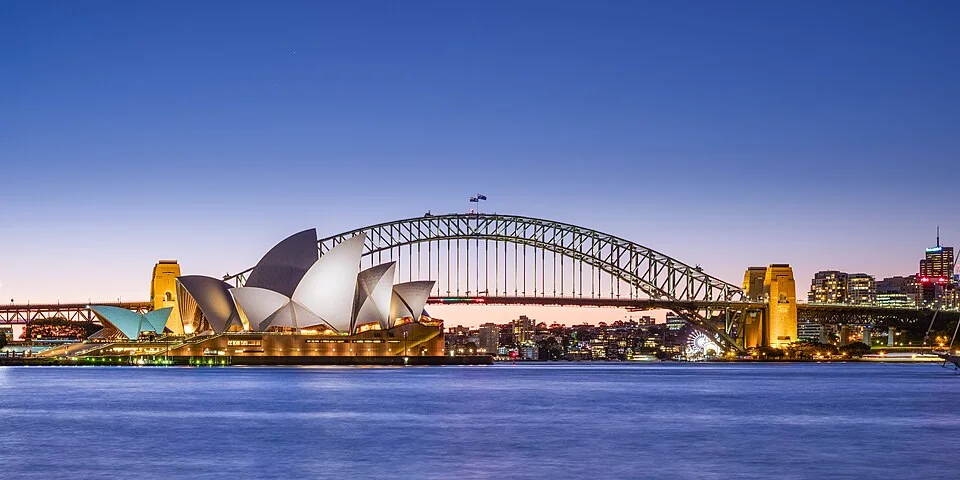
Australia's cultural life is shaped by its outdoor character, its multicultural cities, and a year-round climate in most regions that makes outdoor activity a default rather than an exception. Sydney, Melbourne, Brisbane, Perth, and Adelaide are each distinct enough in personality and cultural emphasis that describing the country as a single entity does not capture how different the experience of each city actually is. Regional areas and smaller cities carry their own events cultures that are genuinely worth exploring beyond the urban concentrations.
Live Music
Australia has produced a disproportionately large number of internationally significant musicians across rock, pop, jazz, country, and electronic music, and that creative productivity feeds a healthy and committed domestic live scene. Melbourne has a long-standing and well-documented reputation for supporting local artists through a dense network of small venues, independent promoters, and a listener culture that turns up for original material. The city's contribution to post-punk, indie rock, and jazz over several decades is genuinely significant in global terms. Sydney's venue circuit is larger and more commercially oriented but has depth across multiple genres. Brisbane, Perth, and Adelaide all maintain active local scenes, and the isolation from the rest of the world that characterises Australian geography has historically encouraged homegrown creativity rather than simply importing trends from overseas.
Nightlife
Australian nightlife is concentrated in inner-city neighbourhoods in each capital city and varies significantly in character from one city to another. Melbourne's laneway culture has been celebrated internationally: the dense network of small streets behind the main thoroughfares contains an ecosystem of cocktail bars, live music rooms, and late-night dining venues that makes the city genuinely interesting to explore on foot after dark. Sydney's late-night geography is shaped by the harbour and its inner suburbs, with rooftop bars, basement clubs, and live music venues operating across the week. Brisbane's Fortitude Valley is the designated entertainment precinct, concentrating venues in a walkable area. There have been ongoing debates and legislative battles in several Australian cities about late-trading licences, particularly following lockout law changes in Sydney that affected the inner-city scene significantly, but the culture remains active and is gradually recovering.
Arts, Culture, and Indigenous Heritage
Australia's arts sector is distinctive in part because it sits at the intersection of Indigenous cultural traditions that are among the oldest continuous cultures on earth and influences from Europe, Asia, and the Pacific. Major cities host significant public galleries that include both Western art traditions and extensive collections of Indigenous Australian art and material culture, which is increasingly central to how the country presents itself culturally. Theatre, dance, and performance reflect this complexity: major companies program Indigenous Australian work alongside contemporary and classical repertoire. Sydney's cultural institutions including the Opera House, the Museum of Contemporary Art, and the Art Gallery of NSW are internationally significant and freely or affordably accessible. Each capital city runs major arts festivals that draw both domestic and international audiences.
Food, Drink, and Markets
Australian food culture is one of the most genuinely multicultural in the world, built by successive waves of immigration from Britain, Europe, Asia, and the Middle East, and shaped by access to exceptional local produce from land and sea. Vietnamese food in Melbourne's Richmond, Lebanese food in Sydney's Lakemba, Italian food in Carlton, Japanese food across multiple Sydney neighbourhoods: the diversity is genuine and the quality is consistently high. The coffee culture that developed from Italian espresso traditions imported by postwar immigrants is now a defining part of Australian urban identity, with independent cafes and specialty roasters operating at a level that surprises most international visitors. Wine regions in South Australia, Victoria, and Western Australia produce wines of global significance. Craft beer has grown into a substantial domestic industry. Weekend farmers' markets operate in most suburbs of the major cities, connecting urban residents with regional producers.
Sport
Sport is not simply a recreational activity in Australia; it is a central and recurring way that the country defines itself and argues about its values. Australian Rules Football (AFL) dominates the southern states with a fervour that is difficult to overstate: the Grand Final at the Melbourne Cricket Ground is one of the largest single-day sporting events in the world in terms of domestic audience. Cricket defines summer in a way that is more about culture than the game itself, with Test matches at the MCG, SCG, and Adelaide Oval functioning as social events that last for five days. Rugby league leads in New South Wales and Queensland, rugby union has a devoted following nationally, and the Wallabies and State of Origin are genuinely important cultural events. Football (soccer) has grown significantly in the past decade. Surfing, swimming, running events, and outdoor endurance competitions reflect the country's relationship with its landscape and climate.
Festivals and Outdoor Events
Australia's festival season is at its strongest in the warmer months from November through March, when outdoor events of all sizes are common across every state. Major multi-day music festivals draw large crowds and have historically been significant enough to attract international headliners making their only Southern Hemisphere appearance. The comedy festival circuit, particularly in Melbourne, is internationally significant: the Melbourne International Comedy Festival is one of the largest comedy festivals in the world and has launched careers that have subsequently travelled globally. Cultural festivals representing different communities within Australia's multicultural population run throughout the year, from Chinese New Year celebrations in Sydney and Melbourne to Greek and Italian community festivals that have been running for generations. Arts festivals in each capital city and in many regional centers sustain a year-round calendar of performance, exhibition, and public events. Australia also operates a substantial professional and business events sector. Sydney and Melbourne are both ranked among the top convention destinations in the Asia-Pacific region. The Melbourne Convention and Exhibition Center and the International Convention Center Sydney both host major international congresses across medical, legal, engineering, and scientific fields. Australia's mining, agriculture, and financial services industries generate specialist trade events. The country's time zone position, between Asia and the Americas, makes it a practical host for events drawing attendees from across the Pacific.