
This guide is written for event organizers running shows in India. Regulatory requirements, payment options, and operational considerations vary by state. Always verify local requirements before your event.
India's live music and cultural event scene is one of the most diverse in the world
A Bollywood tribute night in Mumbai, a classical Carnatic music concert in Chennai, a Bhangra and dhol evening in Punjab, a garba night during Navratri in Gujarat, a fusion jazz set in Bengaluru, a Sufi music gathering in Delhi: India's live entertainment landscape spans genres, regional traditions, and cultural occasions that have no equivalent anywhere else. Each format has a specific audience with specific expectations, a specific promotional community, and specific operational requirements at the door.
ShowRave supports event creation in India, with Indian rupee pricing and payout to Indian bank accounts. This guide covers the specific ticketing considerations for Indian music and cultural performance events, from the tier structure that works for each format to the promotional channels that reach each audience most effectively.
Ticket structure for Bollywood and popular culture events
Bollywood tribute nights, DJ nights featuring film music, and mainstream popular culture events in India attract large, socially motivated audiences who are highly responsive to social proof and peer recommendation. The early commitment dynamic that drives ticket sales in other markets applies strongly here: buyers who see their social group committing to a Bollywood night are significantly more likely to book than those who receive a general promotional post with no peer signal.
Configure an Early Bird tier at a genuine discount below the standard rate for the first committed buyers. For Bollywood events with a strong social group character, where large tables and group bookings are common, add a group ticket type that covers a table of four to six people at a combined price. The group organizer makes one purchase decision for the whole table, which is both commercially efficient for the organizer and practically convenient for the buyer who is coordinating the outing.
For premium Bollywood events with celebrity appearances, live stage performances, or headline DJs, a VIP tier with reserved seating or an exclusive lounge area is expected by a segment of the audience and justifies a significant premium. Keep VIP quantities tight and ensure the experience genuinely differs from standard admission: dedicated entry, a superior viewing position, and any hospitality inclusions should be specific and confirmed rather than aspirational.
Classical Indian music and formal performances
Sabhas, classical music concerts, and formal performance events in India have a different audience character from popular entertainment events. Classical music audiences, whether attending a Hindustani vocal recital in the north or a Carnatic violin performance in the south, tend to be older, more deliberate in their booking decisions, and more responsive to the artistic credentials of the performers than to social proof from peer networks.
For classical music events, the event page description should lead with the performer's credentials, training lineage, and previous performance record rather than with the event's entertainment value. A Carnatic vocalist who has performed at the Madras Music Academy, a tabla player who studied under a specific gharana, or a violinist with a competition record is communicating musical authority to an audience that evaluates these credentials seriously before committing to attend.
Reserved seating is the expected format for classical performances. Configure seating zones in ShowRave that reflect the hall's layout, with front and center rows at a premium and rear or gallery positions at a lower price. For sabha-format events where season ticket arrangements are common, the specific season pass feature is not yet available on ShowRave; individual performances should be configured as separate events with clear series identification in the title.
Garba, Bhangra, and folk music events
Garba evenings during Navratri, Bhangra nights with live dhol, and folk music performances tied to regional festivals are among the highest-energy and most socially dense events in the Indian calendar. These events fill quickly when well-promoted through the specific community channels that serve each regional audience.
For garba nights, capacity management is particularly important because the traditional circular dance format requires floor space proportional to the number of participants. A garba event that sells to the venue's seated capacity but uses the floor for dance produces a fundamentally different experience from one that matches the participant count to the available dance floor. Set the capacity limit to reflect the dance floor area rather than the venue's maximum occupancy, and communicate clearly in the event description what type of garba format is planned.
For Bhangra nights with live dhol performance, the early and mid-evening timing often differs from standard nightlife formats: families with children attend the early session while the evening transitions to a younger adult crowd for the later performance. Session-based ticket types with separate capacity limits handle this format cleanly: an early family session ticket and a late evening ticket are distinct products with distinct audiences that should not be mixed in a single undifferentiated capacity pool.
Promotional channels for Indian music and cultural events
Indian event promotion runs through a combination of WhatsApp group networks, Instagram, Facebook community groups, and the diaspora media that serves specific regional communities. WhatsApp is particularly effective for event promotion in India because group-based communication is the dominant social coordination mechanism for both urban and semi-urban communities. A well-placed post in the right WhatsApp community group can generate significant ticket sales within hours of the announcement.
For classical music and cultural performance events, the established arts organizations, cultural institutions, and sabha networks in each city are the most credible and effective distribution channels. An announcement in the right arts community newsletter, a listing in a city's cultural events calendar, or a recommendation from a respected cultural figure carries more weight with the classical arts audience than any social media campaign.
Affiliate links through ShowRave work specifically well for Bollywood and popular culture events where performers, DJs, and community organizers can promote to their own following with tracked, commission-based links. Configure unique links for every performer and key community contact before the announcement goes public.
UPI and digital payment for Indian audiences
India's digital payment ecosystem is dominated by UPI, with Google Pay, PhonePe, and Paytm as the primary consumer interfaces. Card payment through Visa and Mastercard is available and widely used for higher-value purchases. ShowRave's payment processing supports standard card networks for Indian transactions. Indian buyers are comfortable with online purchases and familiar with digital checkout flows.
For events targeting audiences who may be less comfortable with international card payment interfaces, including the payment option clearly in the event description reduces query volume. A note confirming that standard cards and major digital payment methods are accepted at checkout addresses the most common pre-purchase uncertainty for first-time ShowRave buyers in India.
Configure your event at/create/create-venue-event. Review payout and payment information specific to Indian organizers at/payment-and-payout.
Building a recurring Indian music event community
Indian music events in India have some of the most loyal recurring audiences of any entertainment format. The devotees of classical music who attend every concert of a specific vocalist across a season, the Bhangra community who return to every major celebration night, and the Bollywood film music fans who follow specific DJ or live performance series all represent recurring audiences whose re-acquisition cost for successive editions is minimal compared to cold audience acquisition.
The operational practice that builds this loyalty is consistent regardless of the music genre: export the ShowRave attendee list after every show, send the post-show follow-up email within 48 hours while the experience is fresh, give past attendees early access to the next show before the public announcement, and treat the returning audience as the community it represents. Over multiple shows, the compounding database of verified buyers becomes the most valuable promotional asset available to any Indian music promoter or cultural event organizer.
For classical music events tied to specific performance traditions such as the Hindustani or Carnatic gharana systems, the audience relationship extends across decades rather than months. A classical music audience that attends every concert of a specific vocalist in a city builds a personal relationship with the performer and the concert series that is deeper than the transactional relationship of standard entertainment ticket buying. Treating this audience with the respect it deserves, through quality communication, early access, and honest programming, produces the kind of long-term audience loyalty that commercial entertainment events rarely achieve.
Post-show data and the Indian music event community
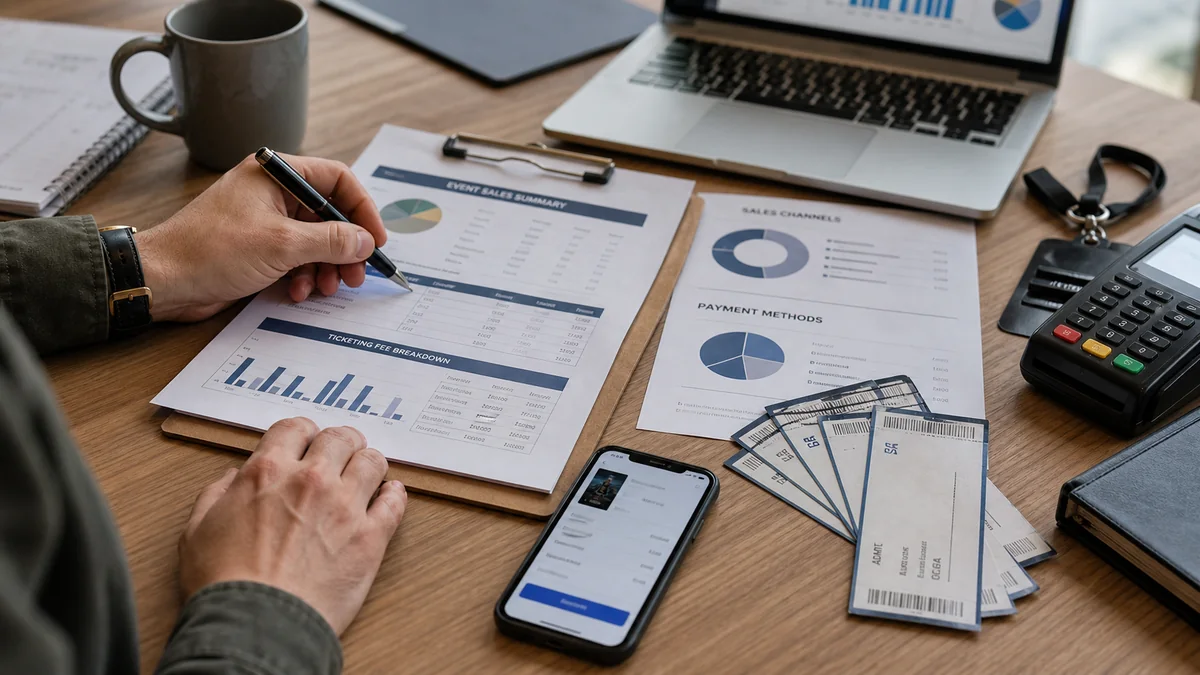
The data from every Indian music or cultural show should be reviewed with the same discipline as any other show program. Which affiliate link, performer, or community partner drove the most attributed ticket sales? What was the no-show rate, and was it higher for particular ticket types or acquisition channels? What was the AddOn attachment rate, and which food, merchandise, or experience AddOns converted at the highest rate?
For Indian cultural events where the community promotion network is the primary acquisition channel, the attribution data from affiliate links tells the organizer which community organizations, cultural institutions, and community leaders are the most commercially effective promotional partners. This data is the basis for prioritising relationships and allocating promotional resources in future campaigns. The community partner who drove 40 ticket sales through their unique affiliate link is a relationship worth investing in. The partner who was given a link but produced no attributed sales may need different support or may not be the right match for this specific show.
Configure your Indian music or cultural event at/create/create-venue-event. Review payment and payout specifics for India at/payment-and-payout. Current platform pricing is at/pricing.
\n\nUsing the platform effectively in this market
Every market has its own audience behavior, cultural calendar, and promotional ecosystem. The organizers who succeed consistently in their specific market are those who combine platform discipline, the consistent use of attendee data, affiliate links, and post-show follow-up, with local cultural intelligence: knowing which occasions matter, which channels reach the right audience, and what the specific audience expects from the checkout experience. ShowRave provides the operational infrastructure; the local knowledge is the organizer's contribution. Together, they produce a show program that builds in commercial efficiency and audience loyalty with every edition.
\n\nThe show program that builds on itself, using each edition's data to improve the next, treating every buyer as a long-term audience member rather than a transactional ticket sale, and respecting the cultural character of the occasions it serves, is the program that lasts. Configure your next show at/create/create-venue-eventand build it on the operational foundation that makes every subsequent show easier to fill than the last.