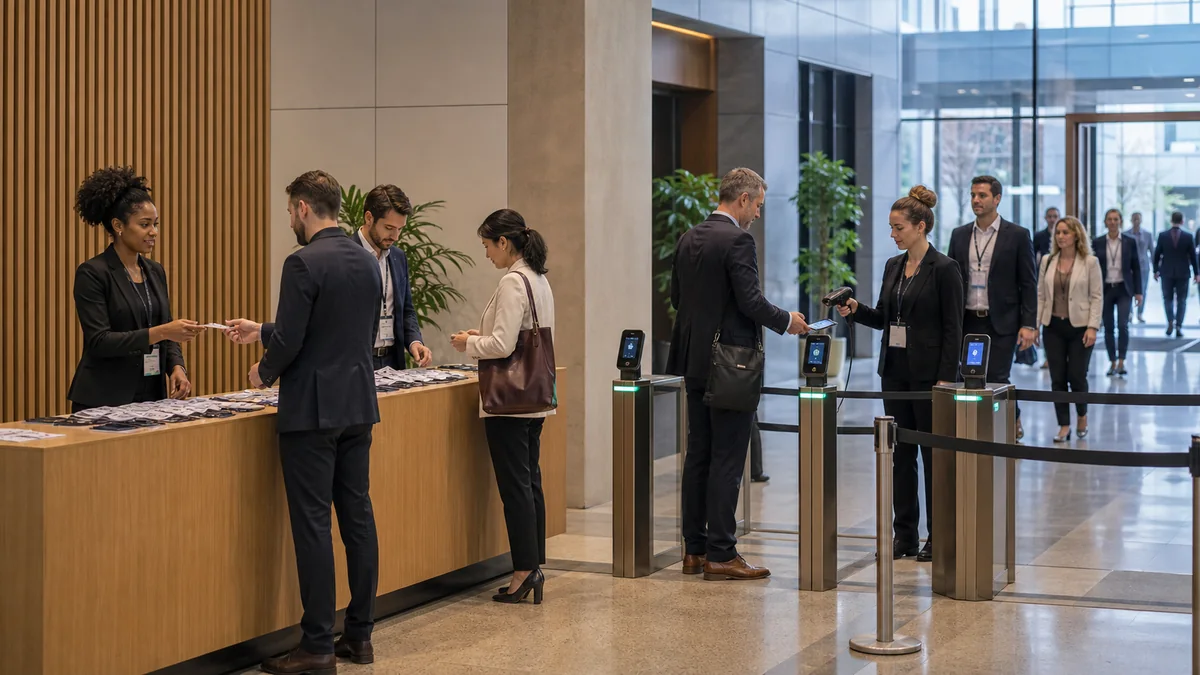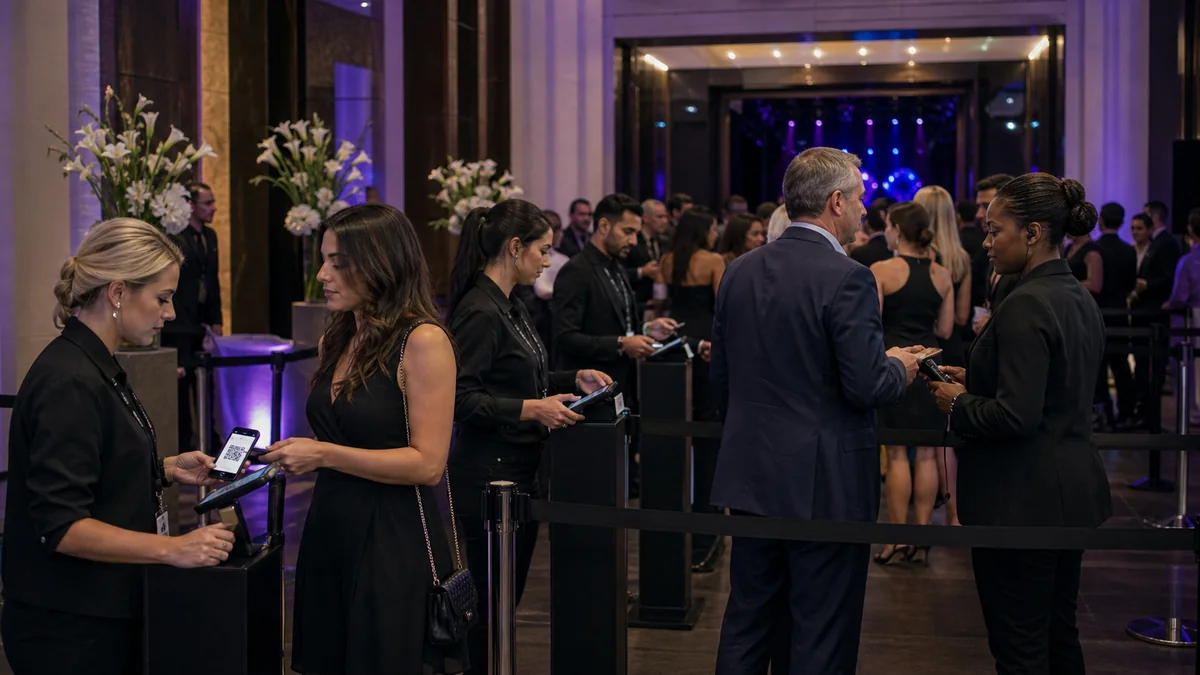
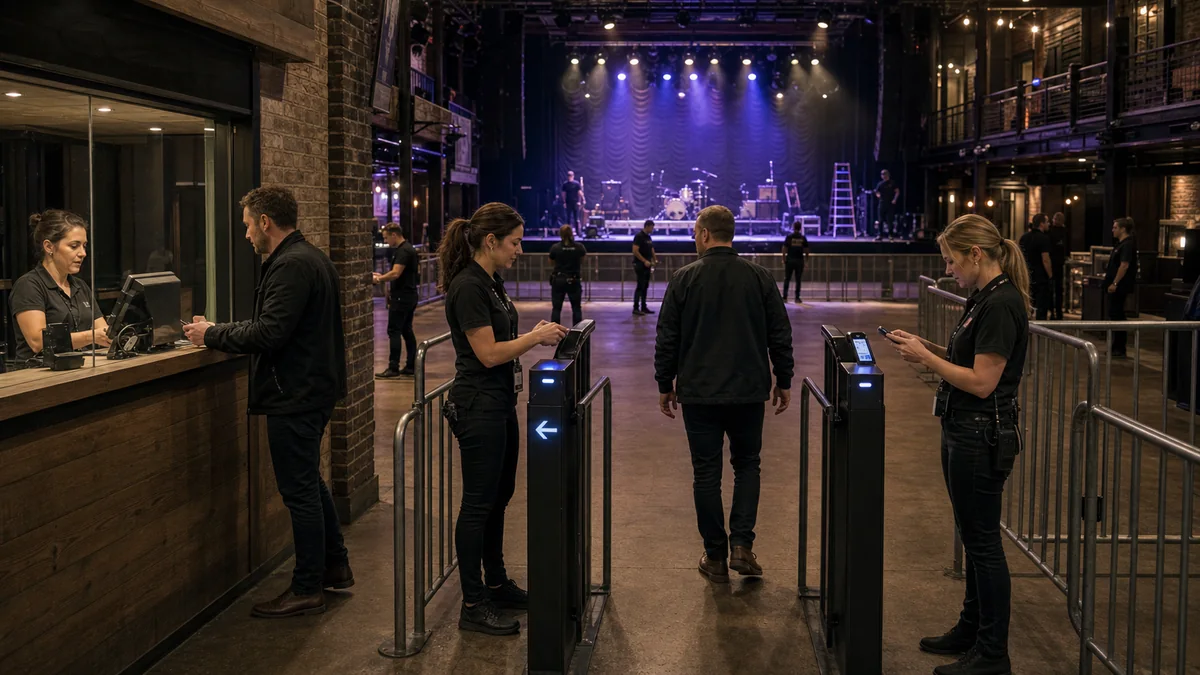
For a venue, ticketing is infrastructure, not a one-off tool
An event organizer who runs one event a year needs a ticketing platform to sell tickets for that event. A venue that hosts 40 events a year needs a ticketing platform that is part of its operational infrastructure: something its team uses consistently, trusts completely, and can rely on to perform correctly across every event without rebuilding the setup from scratch each time.
The requirements that follow from that distinction are different from what a single-event organizer needs. A venue needs a system that handles multiple concurrent events without confusion. It needs entry management that works reliably at different scales across different event types. It needs reporting that gives a meaningful picture of performance across the event program, not just individual shows. And it needs a setup that a venue team can operate without specialist technical knowledge, because the team changes and the events do not stop.
Multiple events, zero confusion between them
A venue that runs multiple events in the same week needs its ticketing system to keep those events completely separate: separate attendee lists, separate ticket types, separate check-in states, separate reports. A buyer who purchased a ticket to Thursday's show should not appear in Wednesday's attendee list. An attendee QR code that was valid last night should not accidentally validate for tonight's event.
ShowRave handles multiple events per organizer account with complete separation between them. Each event is a distinct entity with its own slug, its own ticket types, its own attendee database, and its own check-in session. Scanning devices are synced to a specific event, not to the account generally: the device at tonight's entry point is checking in tonight's attendees, not anyone who has ever bought a ticket at this venue.
For venues with back-to-back events, this separation is operationally critical. The scanner app is re-synced to the new event between shows, and the previous event's attendee data is immediately available in the reporting dashboard for any post-event needs. There is no carry-over between event sessions and no manual reset required.
Seating plans that reflect your actual venue layout
Venues with fixed seating need ticketing infrastructure that can accurately represent their seating layout and enforce it at checkout. A seat that is sold twice, an accessibility position that is unavailable when a buyer needs it, or a premium section that appears available but has a structural issue are all ticketing configuration problems that become attendee experience problems on the night.
ShowRave's seating plan feature supports zone-based and individual seat configurations. For a venue with clearly defined sections, zone-based ticketing, where buyers purchase a place in a labelled section rather than a specific seat number, provides meaningful location information without the complexity of managing every individual seat state. For venues where individual seat selection is expected by buyers, attendee-select mode presents the seat map at checkout and allows position choice before purchase.
Configure the seat map to reflect your actual layout: proximity to the stage, sightline quality, covered or uncovered positions, accessibility locations, and any sections with restrictions or special status. Review the seat map from a buyer's perspective before the first event goes on sale to confirm that what a buyer sees at checkout accurately represents what they will experience on the night.
Capacity compliance across different event formats
Venues have a licensed capacity that applies across all their events, but different events within the same space may use different configurations: a standing concert at full capacity, a seated dinner at 60% of standing capacity, a daytime conference in a section of the floor with the remaining space closed. Each of these configurations has a different operational capacity, and the ticketing system needs to reflect the right number for each specific event rather than a single venue-wide default.
Configure capacity limits per ticket type and per event rather than using a standing venue cap. A standing concert with a 1,200 capacity uses a different ticket configuration from a seated event with 800 places in the same space. The per-event configuration ensures that each show's cap is accurate for that format, and that the automatic close when capacity is reached prevents overselling regardless of which show is on sale at any given moment.
The ShowRave organizer dashboard shows a live count of check-ins during each event, which gives the venue's duty manager a real-time attendance figure from anywhere in the building. For venues operating under a licensed capacity obligation, this is the operational tool for confirming compliance throughout the event rather than relying on a visual estimate of how full the room looks.
Reporting across your event program
A venue team that reviews post-event reports consistently builds a picture of their audience behavior that single-event analysis cannot provide. Attendance trends across the program tell you which event types consistently perform and which underperform. Ticket tier breakdown tells you whether your premium pricing is converting or being consistently avoided. No-show rates by event type tell you whether certain formats, days, or ticket price points produce more unreliable buyers than others.
Export the attendee report from ShowRave after every event. For a venue running a regular program, maintaining these exports in a consistent format allows comparison across multiple events without rebuilding the analysis each time. The patterns that emerge from looking at six months of event data are more actionable than any single event's numbers, and they are only visible to venues that have collected the data consistently rather than ad hoc.
A venue that can show a promoter or client consistent attendance data, reliable check-in performance, and comparative metrics across their program is a venue that has operational credibility beyond what most can demonstrate. That credibility supports venue hire negotiations, sponsorship conversations, and the case for investment in the venue's own event program.
Onboarding new event organizers who use your venue
Venues that run their own events and host third-party promoters have a specific requirement: consistency in how ticketing and entry is handled across all events, regardless of whether the event is venue-produced or promoter-produced. Inconsistent entry systems, where some shows use one scanner and others use a printed list, create operational confusion for door staff and quality inconsistencies for attendees.
A venue that adopts ShowRave as its standard ticketing platform for all events, including those produced by external promoters, creates consistency in the entry experience and in the data that flows from it. Promoters using the venue are briefed on the platform as part of the booking process. The entry team uses the same scanner app for every show. The data format is consistent across all events. This operational standardisation is one of the practical benefits of treating ticketing as infrastructure rather than a per-event choice.
The discovery channel venues consistently overlook
Most venues focus their promotional effort on their own channels: their website, their social media, their email list, and direct relationships with promoters and bookers. ShowRave's browse and discovery page at/exploregives venue events an additional organic discovery channel where attendees actively looking for events in their area can find them. For venues running events that are open to the general public, this passive discovery channel captures an audience that the venue's own promotion may not reach.
Listing every public event on ShowRave with a complete event page, accurate capacity, clear ticket tiers, and a strong header image gives those events the best chance of converting discovery traffic into attendees. Incomplete event pages, thin descriptions, or missing images reduce the conversion rate from discovery visits significantly. The effort to configure each event page completely is modest; the cumulative benefit across a venue's annual program is meaningful.
What to look for in a ticketing platform partner
For a venue evaluating ticketing platforms, the criteria extend beyond the feature list of any individual capability. A ticketing platform that a venue depends on for every event it runs is a business-critical relationship, and the reliability, consistency, and operational support of that relationship matter as much as any specific feature.
The practical criteria for a venue's ticketing platform: does it handle multiple concurrent events cleanly without data confusion? Does the scanner app work offline reliably? Is the attendee export in a format that integrates with the venue's existing reporting tools? Are capacity limits enforced automatically without manual monitoring? Is the event page configurable to reflect the venue's brand and the specific event's identity? Can it handle the full range of event formats the venue runs, from general admission to reserved seating to free registration?
ShowRave meets all of these requirements within a single platform and without per-event fees to the organizer, which makes the per-event cost calculation straightforward for a venue running a high volume of events. The scanner app is free, available on iOS and Android, works offline, and supports multiple devices simultaneously. Event pages are fully configurable. Capacity limits are automated. Attendee exports are available in CSV format at any point.
For venues that host third-party promoters alongside their own events, adopting ShowRave as the standard platform for all events creates operational consistency that benefits the venue team and the attendee experience across the program. A door team that uses the same scanner app for every show, regardless of whether the event is venue-produced or promoter-produced, builds competence and confidence that reduces entry problems across the program as a whole.
\n\nA venue that makes a considered choice about its ticketing infrastructure, rather than defaulting to whichever platform a promoter happened to use for a particular show, is a venue that controls its own operational consistency and its own audience data. That control means consistent attendee data, reusable scan team briefings, cross-event analytics, and no dependency on whichever platform a visiting promoter happens to prefer. Review your current ticketing arrangement against the criteria above, and where gaps exist, address them before the next season of events opens, not mid-program when the operational disruption of changing systems is at its highest.
\n\nThe final criterion worth applying: does the platform work without expert configuration for every event? Venues run events continuously. The platform needs to be usable by the operational team at the level of technical knowledge that team realistically has. Consistency, reliability, and simplicity of operation are the criteria that matter most at the operational layer, and they are worth weighting as highly as any specific feature when making the platform decision.