This guide contains general information about event regulations in the United States. Licensing, permit, and tax requirements vary significantly by state, county, and municipality. Always verify the specific requirements for your event with the relevant local authorities and seek professional advice where needed.
Running ticketed events in the USA: what is different
The United States is ShowRave's second-largest supported market after the United Kingdom, and the regulatory and operational context for US event organizers differs from the UK in ways that matter for anyone setting up their first US event. Licensing, payment expectations, payout timing, and the specific platforms through which US audiences discover and buy event tickets all have their own patterns.
This guide covers the US-specific elements of setting up a ticketed event on ShowRave, from USD payment configuration to the regulatory landscape, and provides practical guidance for US organizers working through the setup for the first time.
Event licensing and permits in the USA
There is no single federal licensing system for live events in the United States. Licensing and permit requirements vary by state, by county, and sometimes by municipality, which means the requirements for an event in New York City are different from an event in Los Angeles, Austin, Chicago, or Miami, even for events of the same type and scale.
The permits most commonly required for US ticketed events include: a special event permit from the local city or county government for events in public spaces or events above a defined attendance threshold; a liquor licence or temporary event liquor permit for events serving alcohol; a noise permit for outdoor events with amplified music; a fire marshal inspection or occupancy approval for events in unusual venues; and sales tax registration if ticket sales are subject to state sales tax, which varies by state.
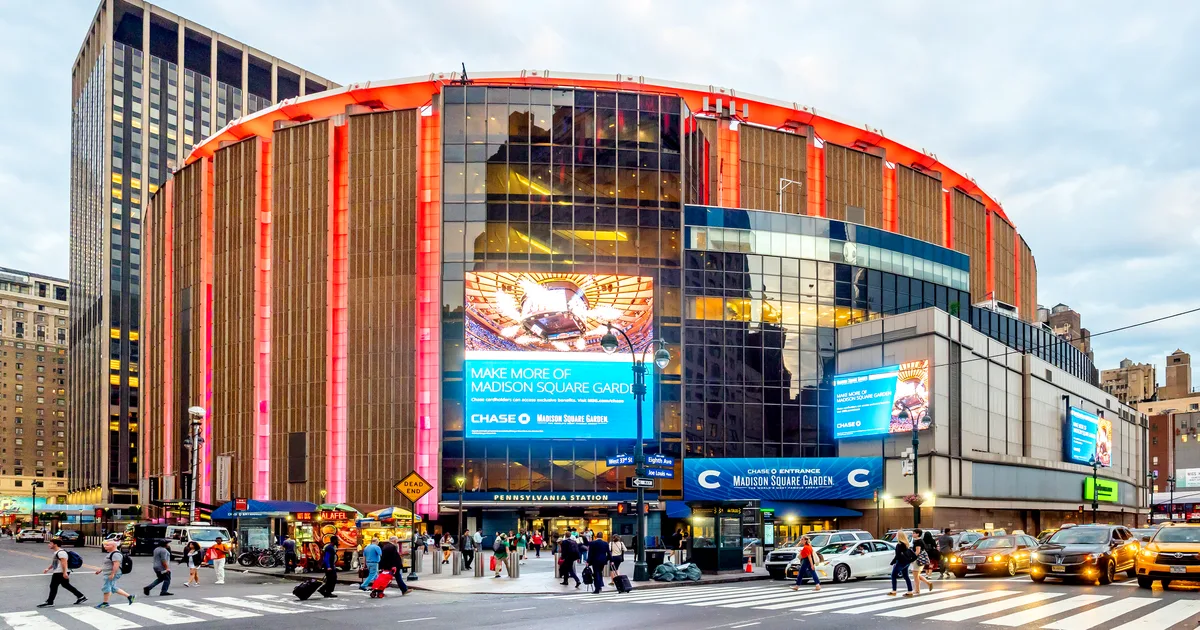
For events at established venues such as nightclubs, theatres, arenas, hotels, and convention centers, the venue typically holds the necessary operating licences and permits that cover events held within their premises. Confirm this with the venue before proceeding. For events at parks, rooftops, private properties, or temporary structures, the organizer typically needs to obtain the relevant permits independently. Contact the local city or county events office early in the planning process, as permit timelines vary from a few days to several months depending on the jurisdiction and the event scale.
Sales tax on event tickets in the US
Whether event tickets are subject to sales tax depends on the state where the event takes place. Some states exempt admission to live events from sales tax; others tax ticket sales at the standard state sales tax rate; and a small number have specific rules for certain event categories. The application of sales tax to event tickets is a matter for each state's tax authority and may also be affected by county or local taxes in addition to state tax.
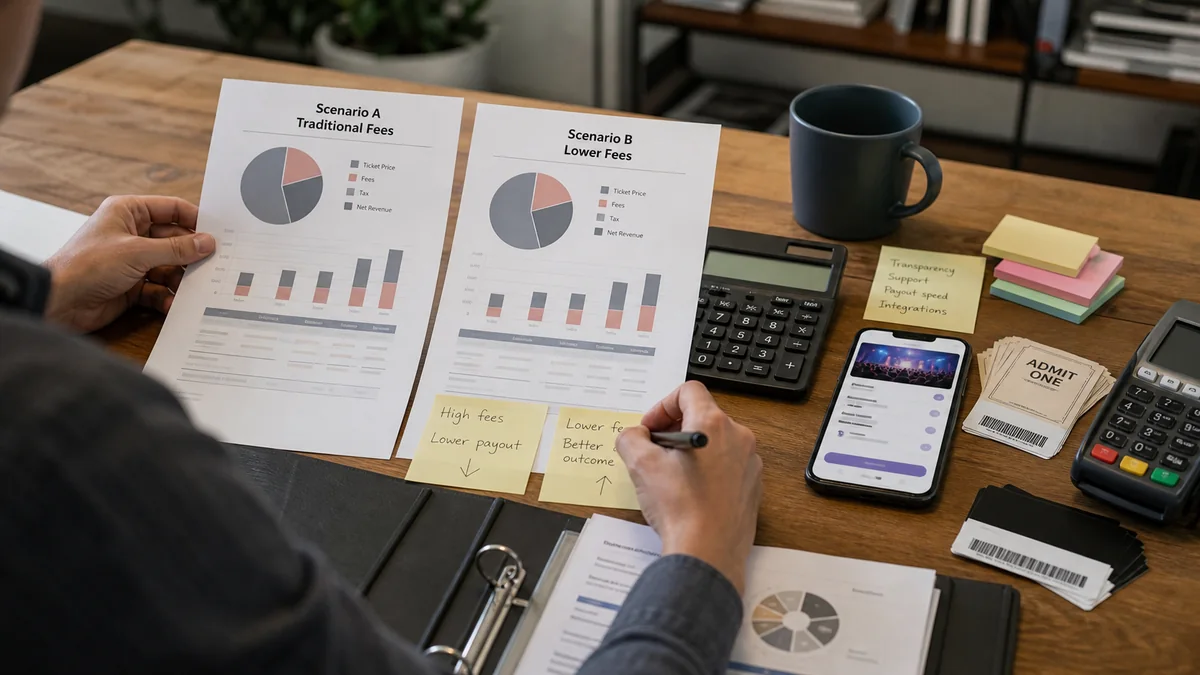
If your event is subject to sales tax in your state, the ticket price you set should either be inclusive of the tax (the price the buyer pays includes the tax amount, which you remit to the state) or exclusive of the tax (the tax is added at checkout on top of the ticket price). US buyers are generally accustomed to seeing prices quoted before tax with tax added at checkout, which is the standard model in most US retail and service transactions.
Verify the sales tax treatment for your specific state and event type with a US tax professional or the state's revenue authority before your event goes on sale. Sales tax obligations are the organizer's responsibility and vary enough across states that a generalised guide cannot cover every scenario accurately.
Payment expectations for US audiences
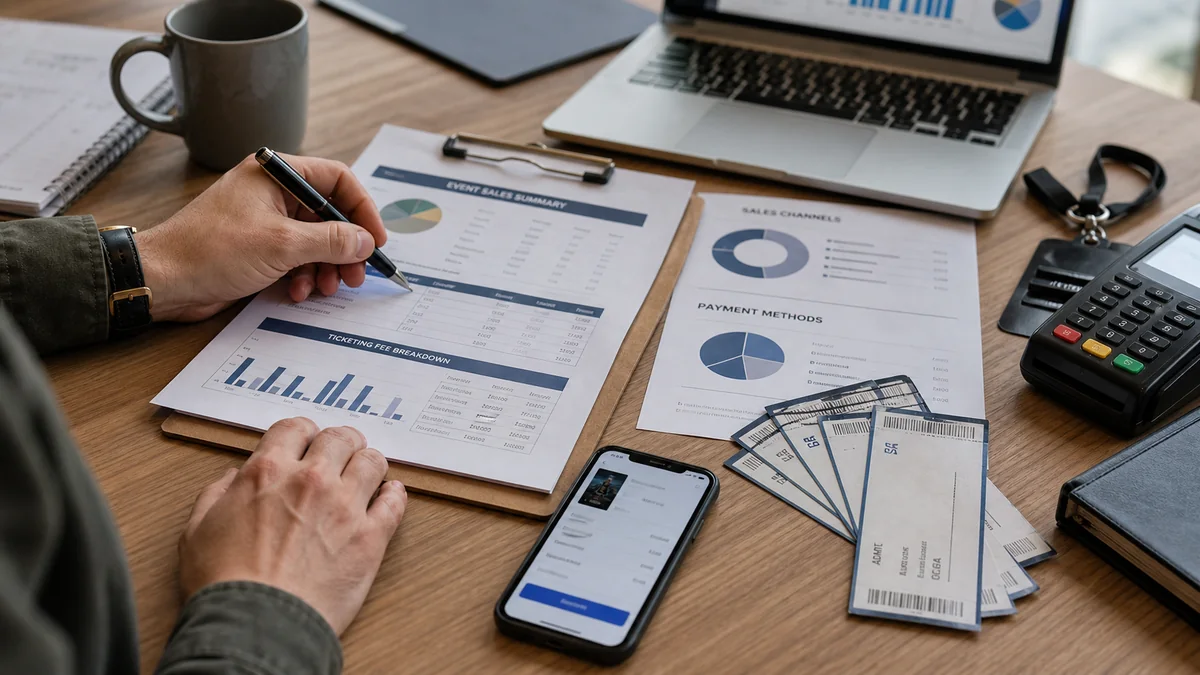
US event audiences pay by card, with Visa, Mastercard, American Express, and Discover as the standard card network options. Apple Pay and Google Pay are widely used and expected as checkout options. ShowRave processes payments through standard card payment infrastructure covering the major US card networks.
US buyers are familiar with online ticket purchases and comfortable with the standard checkout flow. The most common sources of purchase hesitation in the US context are: a checkout that adds unexpected fees above the advertised ticket price; unfamiliar payment brands or insecure-looking checkout infrastructure; and uncertainty about the refund policy if the buyer cannot attend. ShowRave's checkout presents only the ticket price the organizer set, with no additional charges to the buyer, which addresses the first concern. Clear refund policy text on the event page addresses the third.
Payout to US bank accounts
ShowRave supports payout to US bank accounts in US dollars. The specifics of payout timing and arrangement are detailed at/payment-and-payout. US organizers should verify the payout terms before their first event to plan around the actual timing of when funds reach their account.
For US events with significant pre-event costs, understanding the payout timing is a first-order planning step. Venue deposits, performer guarantees, and production costs often fall due weeks before the event, and the payout schedule needs to align with those commitments. If there is a gap between when ticket revenue is available and when costs are due, bridging from other sources or adjusting the event's cost timing is worth planning in advance rather than discovering at the moment a payment falls due.
US audience behavior and promotion
US event audiences use Instagram and Facebook as the primary social discovery channels for entertainment events, with TikTok growing strongly for younger demographics. LinkedIn is the primary professional network for corporate and industry events. Email remains the highest-converting direct channel for audiences that have opted in to an organizer's communications.
Affiliate links work particularly well in the US for events with strong community-based promotion, such as music events where the performing artists are the primary channel, or professional events where industry organizations and community leaders distribute the link to their networks. Configure a unique affiliate link for each key promotion partner and review the attribution data post-event to understand which US-specific channels are most efficient for your event type and geography.
The ShowRave explore page at/exploreprovides passive discovery for US events listed on the platform. Completing the event listing fully, with an accurate category, specific title, full venue address, and complete description, gives the event the best chance of appearing in relevant category and location-based searches from US attendees browsing the platform.
Event categories and audiences across US markets
The US market is geographically and culturally diverse, and what works for event promotion in New York is not necessarily what works in Nashville, Houston, or Seattle. US event organizers building a program across multiple cities should treat each city's audience, promotion channels, and community networks as distinct rather than applying a single campaign template nationally.
For events in cities where specific communities are particularly strong, such as the technology community in San Francisco, the music community in Nashville, or the arts community in New York, targeting community-specific channels, publications, and affiliate partners who have established credibility within that community will consistently outperform broad national promotion. ShowRave's affiliate link system supports this city-by-city community approach: each local partner or organization receives a unique tracked link, and the attribution data shows which local communities are driving registrations in each market.
Configure your US event at/create/create-venue-eventfor in-person events, ensure USD is set as the event currency, and verify the payout and payment details at/payment-and-payoutbefore the sale opens.
Building an audience in the US market
US event audiences are digitally mobile and expect to be reached through the channels they already use rather than through new platforms they have never heard of. The promotion channels that work depend on the event type: entertainment events reach audiences most effectively through Instagram, TikTok, and Facebook; professional events through LinkedIn and industry-specific communities; community events through local Facebook groups, Nextdoor, and community-specific WhatsApp or Discord groups; and sports events through club networks, school communications, and local sports media.
Affiliate links are particularly effective in the US for music and entertainment events where the performing artists are the primary distribution channel. The US fan community for independent music artists is active and socially engaged, and a performer who shares their unique affiliate link with their followers produces attributed, commission-based sales that the organizer can measure and reward. Configure affiliate links for every performing artist or featured guest before the event announcement and brief them on when and how to use them.
For recurring US events, the attendee database built across editions is the most cost-efficient marketing asset available. US audiences who have attended an event once and had a positive experience are the most likely to return and to recommend the event to their network. Email marketing to past attendees consistently outperforms cold social advertising for US event organizers who have built a substantial attendee list from previous events. The ShowRave attendee export, retained after every event and used as the warm audience database for subsequent campaigns, builds this asset with every edition.
The US market is also one of the most active markets for the ShowRave explore page. US buyers who browse the explore page at/exploreand discover events in their area are passive buyers who the organizer did not reach through direct promotion. For events in major US cities, ensuring the event is correctly categorised, accurately located, and fully described in the event page configuration maximises this passive discovery benefit alongside the organizer's own active promotion.
\n\nThe data from every edition of every event is an asset if it is retained and used. It is noise if it is collected and discarded. The habit of treating attendee data as a compounding resource rather than a post-event formality is the single operational decision that distinguishes event programs that grow efficiently from those that work harder for the same results year after year.
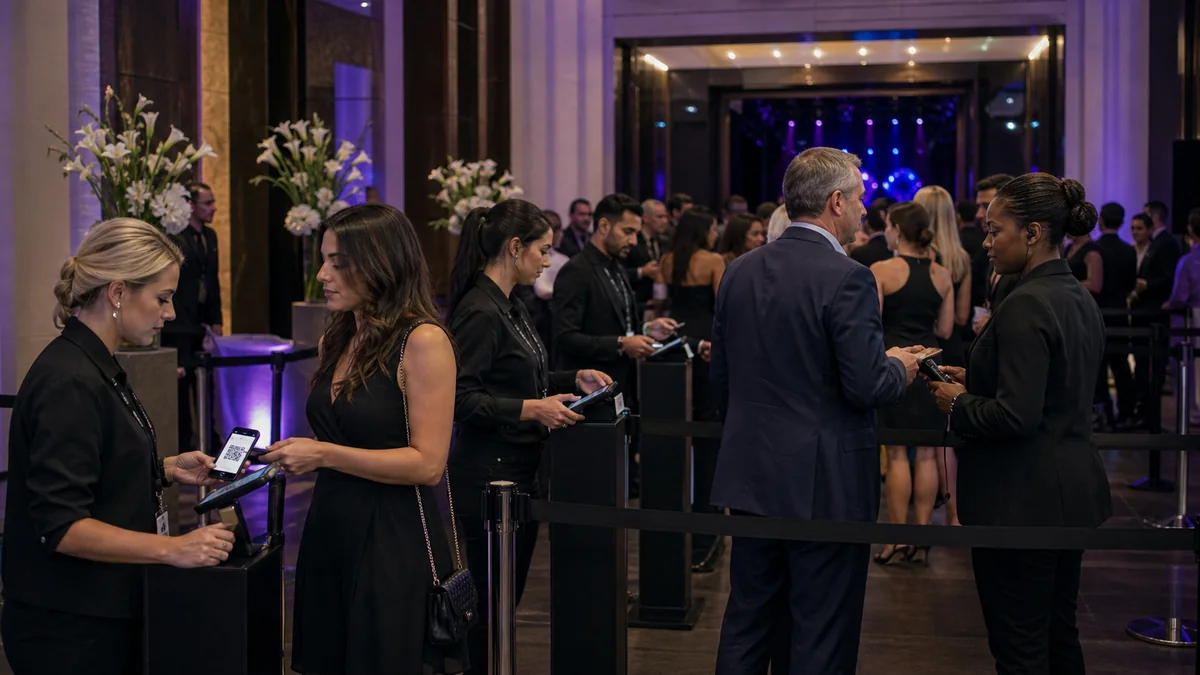
\n\nThe US market is large, diverse, and commercially active for live events across every category. ShowRave's full feature set is available to US organizers from day one: USD pricing, US bank payouts, affiliate links, AddOns, the scanner app, the DP Generator, and the explore page. The operational setup is identical to any other supported market. The regulatory context is the one area that requires US-specific attention, and addressing it before the first event goes on sale is the single most important step before launch.