
The events that go wrong were usually planned late
Not under-budgeted. Not poorly promoted. Just started too late. The organizer who confirms the venue six weeks out, builds the event page four weeks out, and starts promoting three weeks out is not leaving enough room for anything to go right. Problems surface at every stage of event planning, and the only resource that lets you fix them without panic is time.
This guide covers the full journey from concept to post-event review, in the order the decisions actually need to happen. It is not a checklist of tasks to rush through. It is a framework for making the right call at the right stage, so that by the time doors open, the work is already done.
Before you book anything, answer three questions
The clearest sign that an event is going to be difficult to plan is an organizer who cannot answer these in a single sentence: What is the event? Who is it for? What does a good outcome look like?
These sound obvious. But "a charity gala to raise funds for our community center, aimed at local donors and supporters, with a goal of covering our annual shortfall" is a planning brief. "A fundraiser" is not. The specificity of your concept determines almost every downstream decision: venue type, ticket price, marketing channels, catering style, and staffing needs. Start vague and you will revisit every one of these decisions twice.
Once you have a clear concept, choose your date deliberately. Check for conflicts with other major events in your area, public holidays, school term dates if families are in your audience, and any local observances relevant to your community. For recurring events, holding the same weekend each year builds a reliable date in people's minds. For a first event, giving yourself at least twelve weeks from planning start to event day is the minimum for anything above 100 people.
Budget before you spend a single thing
Build your budget from costs up, not from revenue down. List every category you might spend on: venue hire, AV equipment, catering, staffing, performer or speaker fees, marketing, insurance, décor, printing, ticketing, and a contingency buffer of at least 10%. Total those figures, then ask: what ticket price and attendance number does this require to break even?
If the answer is a ticket price your audience will not pay, or an attendance figure the venue cannot hold, you have found the problem before you have committed to anything. That is the right time to find it. Adjust the concept, reduce the cost base, seek sponsorship, or change the scale. All of those options are available at this stage. Almost none of them are available two weeks before the event.
The break-even calculation also tells you your pricing floor, the minimum per ticket that covers costs at a realistic sell-through rate. Work from there when setting your ticket tiers, not from what feels like a round number.
Locking in your venue changes everything downstream
Visit venues in person before you commit. Photos rarely tell the truth about space, acoustics, or the feeling of a room. When you visit, check the licensed capacity for your specific event type, the AV infrastructure already in place, loading and access arrangements, parking and public transport options, whether you can bring external suppliers, accessibility for attendees with mobility needs, and the Wi-Fi reliability if your check-in app or any event technology depends on it.
Get everything agreed in writing before you pay a deposit. A venue contract that specifies dates, included services, cancellation terms on both sides, and any noise or curfew restrictions is not bureaucracy. It is the document you go back to when something changes, and something always changes.
If your event requires licences, such as permission to sell alcohol, to have live music, or to use a public space, check the application timeline before you confirm the date. Licence applications can take weeks to process and are not guaranteed. Discovering this after the venue is booked is a significant problem.
Ticketing is part of the plan, not something you set up later
Most organizers treat ticketing as an admin task they will get to eventually. The organizers who sell out their events treat it as one of the first things they build. The difference matters because the event page and the ticket structure both feed into your marketing, and you cannot run effective marketing without a live event page to send people to.
Set up your event on ShowRave when the venue and date are confirmed, not after marketing starts. Build your ticket tiers at the same time: at minimum an Early Bird allocation at a lower price and a General Admission tier at your baseline price. Configure per-tier capacity limits. If you are offering AddOns, set them up alongside tickets so they appear in the checkout from day one.
Write the event description as if every visitor is a first-time buyer who knows nothing about you. Cover what happens, who it is for, what is included, how to get there, and what to do if something goes wrong after purchase. A description that answers questions converts better than one that describes the event in marketing language.
Then launch your Early Bird the moment the page is live. An event page with tickets already selling is a fundamentally more persuasive thing to share than one that says "coming soon".
Getting people to buy is its own project
Most of the work in event marketing is not creative. It is distribution. The question is not what to post but where your potential attendees actually are, and how to reach them directly enough that the message feels personal rather than promotional.
Start with your warmest audience: people who have attended your previous events. Email them first, before any public announcement, and give them Early Bird access. Their purchase signals to everyone else that the event is worth attending. A handful of early sales is worth more to your campaign than a lot of social impressions.
From there, work outward. Social media posts for awareness, Facebook Events for passive local discovery, WhatsApp and community groups for direct community reach, and partner or sponsor channels for access to audiences you cannot reach through your own following. ShowRave's affiliate link feature lets you give each partner, promoter, or engaged regular a unique tracking link with a commission on sales. It costs nothing unless it works, and it turns your community into an active distribution network.
Plan your marketing content across the full period from launch to the event, not just the week before. A rough framework: the opening push focuses on announcement and Early Bird urgency. The middle period focuses on social proof, additional details, and speaker or performer reveals. The final stretch focuses on scarcity and logistics. Do not leave all of it to the last week.
The day itself runs on what you set up weeks before
By the time the event day arrives, most of your decisions should already be made and most of your problems should already be solved. If something significant still requires a decision on the day, that is a planning gap, not a planning style.
Arrive earlier than you think you need to. For events under 200 people, 90 minutes before doors. For larger events, three to four hours. Something will need adjusting. The question is whether you have time to fix it calmly or time to panic about it.
Delegate ownership of each area before the event starts, not when a problem arises. One person owns check-in, one owns the AV, one owns catering communication, one owns the stage or program. Your job as the lead organizer is to monitor all of it and handle escalations, not to run each station yourself.
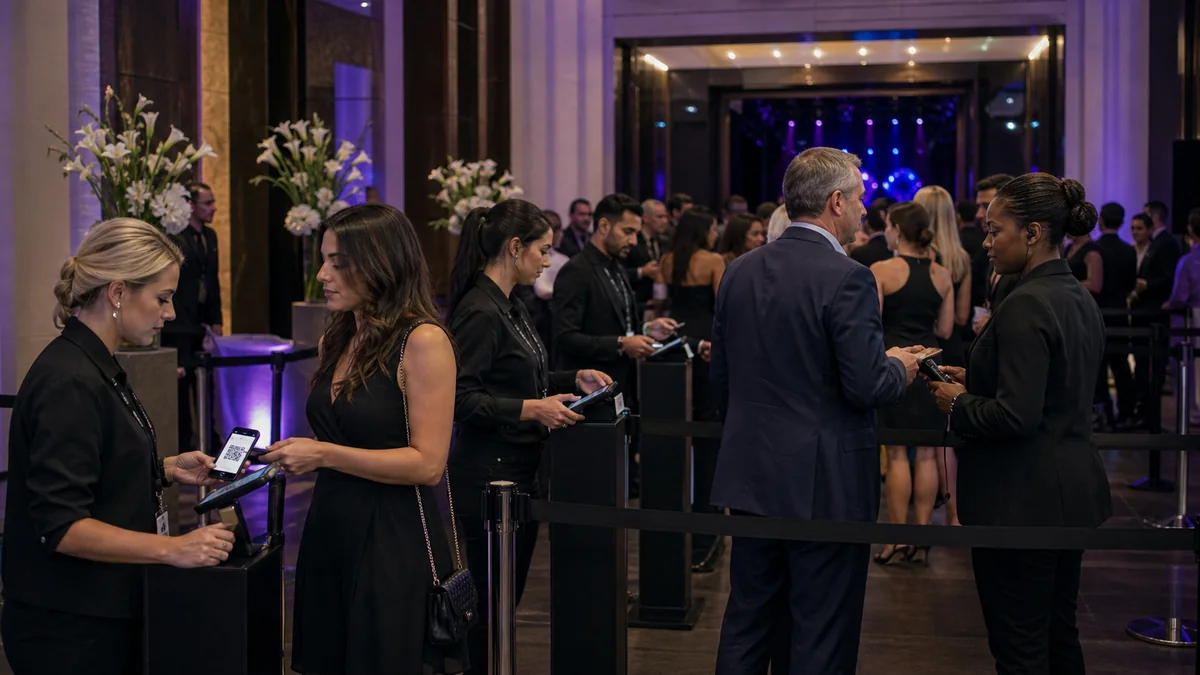
Brief your check-in team before doors open using the ShowRave scanner app on the devices you have tested. A valid scan shows green, an already-used or invalid code shows red. Five minutes of briefing covers every situation they will encounter. The organizer dashboard shows a live attendance count as scans come in, which is useful for capacity monitoring and for timing any catering or service decisions during the event.
The work is not finished when the event is
The 48 hours after an event are the highest-value period of your organizer relationship with your attendees. They have just had an experience. They are warm, they remember it, and they are more open to hearing from you than they will be at any other point. Most organizers miss this window entirely.
Send a thank-you email to every attendee within 48 hours. It does not need to be elaborate. Thank them, share one image or highlight from the night, and mention your next event even if details are not finalised. Your attendee list gives you the contact details to do this directly without relying on a social algorithm to decide who sees it.
Then do the review. Pull your analytics: which ticket tier sold fastest and when, what your no-show rate was, which channel sent the most buyers, and how AddOn sales compared to ticket sales. Hold a brief debrief with your team while the event is still fresh. Send a short survey to attendees if you want specific feedback. The organizers who get better with every event are almost always the ones who review deliberately rather than just moving on to the next one.
Planning checklist
- 12+ weeks out:Define your concept clearly. Set a date. Draft a full budget with a contingency buffer. Identify which licences you will need.
- 10 weeks out:Visit venues. Confirm booking and sign the contract. Begin licence applications if needed.
- 9 weeks out:Set up your event page on ShowRave. Configure ticket tiers, capacity limits, and AddOns. Launch Early Bird sales.
- 8 weeks out:Email your existing audience with Early Bird access. Go public across social channels. Submit to local event listings.
- 7 weeks out:Confirm all key suppliers in writing: catering, AV, photography, security. Activate affiliate links for promoters.
- 5 weeks out:Second marketing push: performer or speaker reveals, program details, early attendee social proof.
- 3 weeks out:Assess ticket sales against target. Increase urgency if needed. Finalise run sheet and share with all suppliers.
- 1 week out:Send pre-event logistics email to all ticket holders. Complete final team briefing. Test scanner app on confirmed devices.
- Event day:Arrive early. Delegate area ownership before doors open. Monitor live attendance count throughout.
- Within 48 hours:Send thank-you email. Pull analytics. Begin post-event review while it is still fresh.