Concerts are the most commercially complex events most independent organizers ever run
A community quiz night or a workshop has relatively contained risk: if fewer people come than expected, the shortfall is manageable. A concert has a cost structure that does not scale down comfortably. Artist fees, venue hire, production equipment, sound and lighting, security, and licensing costs are largely fixed regardless of whether 200 people attend or 80. Getting a concert wrong financially is a significantly larger problem than getting most other event types wrong, which is why planning depth and commercial clarity matter more here than in almost any other format.
This guide covers the full process from initial concept to post-show settlement, specifically for independent promoters and venue managers running events at a scale where every decision has a real financial consequence.
Pre-production: the decisions that determine whether the concert is viable before a single ticket sells
The first and most consequential decision in concert planning is whether the event is commercially viable given the artist's fee and the venue's capacity. This calculation must be done before any booking is confirmed, because committing to an artist fee at a venue that cannot hold enough tickets to cover it is a financial problem that cannot be resolved through marketing.
The basic calculation: multiply your expected sell-through rate (a realistic estimate, not an optimistic one) by your planned average ticket price. Subtract your estimated total costs: artist fee, venue hire, production, marketing, staffing, licensing, and a contingency buffer. The result is your expected net. If it is negative at a realistic sell-through rate, the show is not viable at that artist fee and venue combination without changes to one of those variables.
Practical changes that change the calculation: a higher ticket price (tested against what your audience will bear), a different venue with lower hire cost, an artist fee negotiated to include a percentage of door income rather than a guaranteed flat fee (more common in independent touring), or a co-promotion arrangement where another organizer shares both the cost and the risk.
Artist booking typically involves either a direct relationship with the artist or their manager, or engagement through a booking agent. For emerging and local artists, direct relationships are common. For touring or nationally-known acts, an agent is almost always involved and will negotiate the fee, the rider, technical requirements, and contract terms. The rider, the document specifying what the artist requires at the venue, is a binding commitment that affects both your budget and your venue requirements. Read it before signing the contract.
Licensingis non-negotiable. In the UK, a venue presenting live music needs either a premises licence covering live music or a temporary events notice (for smaller events below a threshold). Selling alcohol requires a separate licence. Events in outdoor or public spaces require permission from the relevant landowner or local authority. Check what licences your venue holds and what you need to add before confirming the date. Licensing delays and rejections cancel shows. Finding out your venue is not licensed for the format you planned is a problem that no amount of promotion can fix.
Age restrictionsaffect your audience size and your venue requirements. An over-18 show at a licenced premises is straightforward but excludes a proportion of your potential audience. An all-ages show in the same venue may require different arrangements for alcohol service. For artists with younger fan bases, the decision between all-ages and over-18 has a material impact on ticket sales.
Building your ticketing strategy
Concert ticketing is more layered than most event types because the different buyer motivations, urgency, loyalty, price sensitivity, and desire for a specific experience, map onto distinct tier structures that can be used strategically.
Presale: releasing a limited number of tickets to a specific audience before general sale is a standard practice in music promotion and serves multiple functions simultaneously. It generates early revenue, rewards your most loyal audience, and creates the social proof of visible early demand before the general sale opens. Presale access is typically given to email subscribers, fan club members, or previous buyers. Configure a separate presale tier in ShowRave with a quantity limit that opens before and closes ahead of the general sale launch.
General Admission: your main sales tier. For standing shows, GA means access to the floor. For seated shows, it means the standard seating band. Price this at the level that covers your costs at 65 to 70% of capacity.
VIP: works particularly well for music events because the genuine differentiators are strong. Early entry, access to a meet-and-greet before doors, a designated viewing area, an exclusive backstage experience, or a physical bundle including merchandise can all justify a significant premium over GA. The key is delivering what is promised. VIP buyers at a music event have a personal relationship with the artist that makes unmet expectations feel like a personal betrayal, not just a commercial disappointment.
Guest list: a separate allocation managed outside the ticketing system for press, industry, collaborators, and artist guests. Keep this allocation tight. Every guest list place is a seat that is not generating revenue, and guest list creep is one of the most common ways that independently promoted shows lose money at the margin.
Door sales: if you plan to sell tickets at the venue on the night, configure a door allocation in your capacity settings. For sold-out or near-sold-out shows, this may be minimal or zero. For shows with remaining capacity, a door price marginally above the online price is standard practice and creates a mild incentive for advance purchase.
Setting up your event page with artist branding
A concert event page should feel like it belongs to the artist as much as to the venue or promoter. Buyers are coming for the artist. The event page should reflect that: high-quality artist photography in the header, the artist name prominent in the title, a description that speaks to fans and communicates why this specific show matters (first headline tour, album launch, first performance in this city), and clear information about supporting acts if applicable.
Your ticket tiers should be labelled in the language that makes sense to the audience: GA Floor, Standing, Balcony, VIP Early Entry, and so on. Avoid generic corporate-sounding tier names for music events. The vocabulary of the show should match the vocabulary of the audience.
Marketing a concert: what moves tickets
Concert promotion has its own promotional ecosystem that most other event types do not. Artist channels (the artist's own social media, email list, and streaming profiles) are typically the most powerful promotional asset available, and getting the artist actively involved in promotion is one of the highest-leverage things a promoter can do. An artist repost of your ticket link to their own engaged audience produces more immediate sales than most paid advertising can replicate at comparable cost.
Local press and music media coverage, radio play, podcast features, and editorial listings in local music discovery platforms all contribute to awareness that operates independently of your own following. Pitch these early, typically six to eight weeks before the show, because media production timelines are longer than most promoters expect.
Grassroots street-team marketing, physical posters in relevant venues, record shops, universities, and community spaces, is still effective for local shows. The audience at a local gig often discovers it through physical channels that digital advertising does not reach. A well-placed poster in a music venue, a record shop, or a student union bar can introduce the show to audiences who are not in your digital networks.
In the final two weeks, urgency messaging takes over. Remaining ticket counts, price rises, and sold-out tier announcements all serve as legitimate urgency signals. An honest "last 50 tickets" posts significantly stronger conversion than an identical post made when there are still 300 tickets available.
Day-of: from sound check to doors closing
Arrive at the venue before the artist. A load-in that runs late because no one was there to coordinate it cascades into a compressed sound check, which cascades into an underprepared performance, which sets a tone for the entire evening. The promoter who arrives first and leaves last is a professional. The promoter who arrives when doors open is creating problems for everyone.
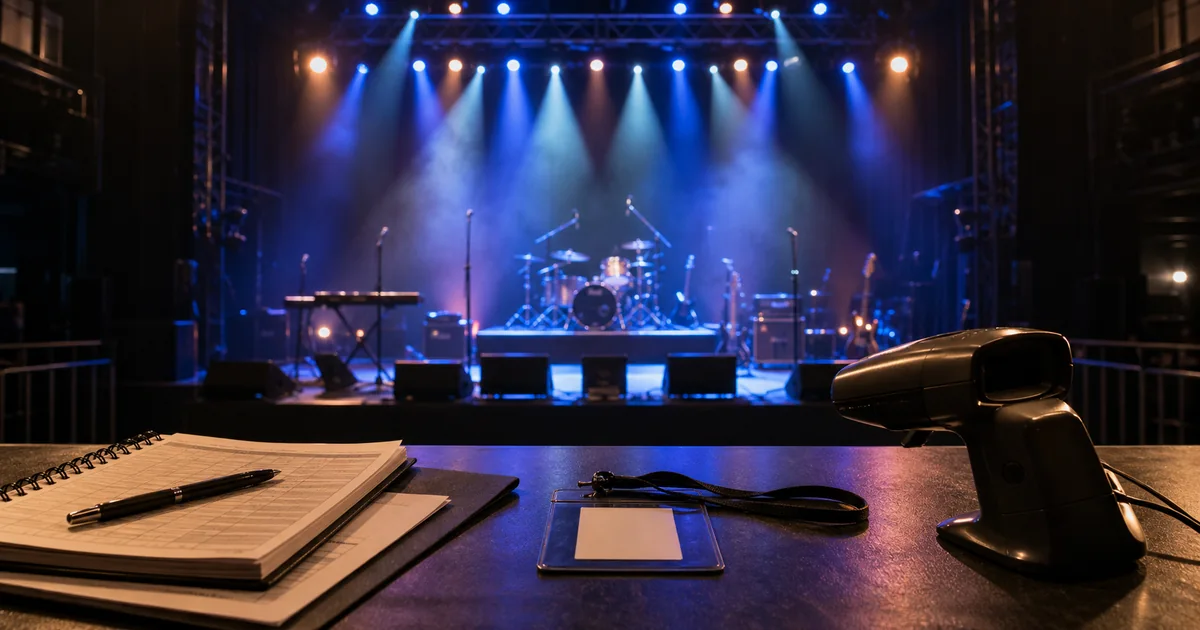
Sound check is the artist's time, and the most helpful thing a promoter can do during it is stay out of the way unless something requires a decision. Brief your staff during sound check: who is on the door, who is managing the guest list, who handles AddOn collection, who handles the bar or merchandise, and who is your escalation contact for problems.
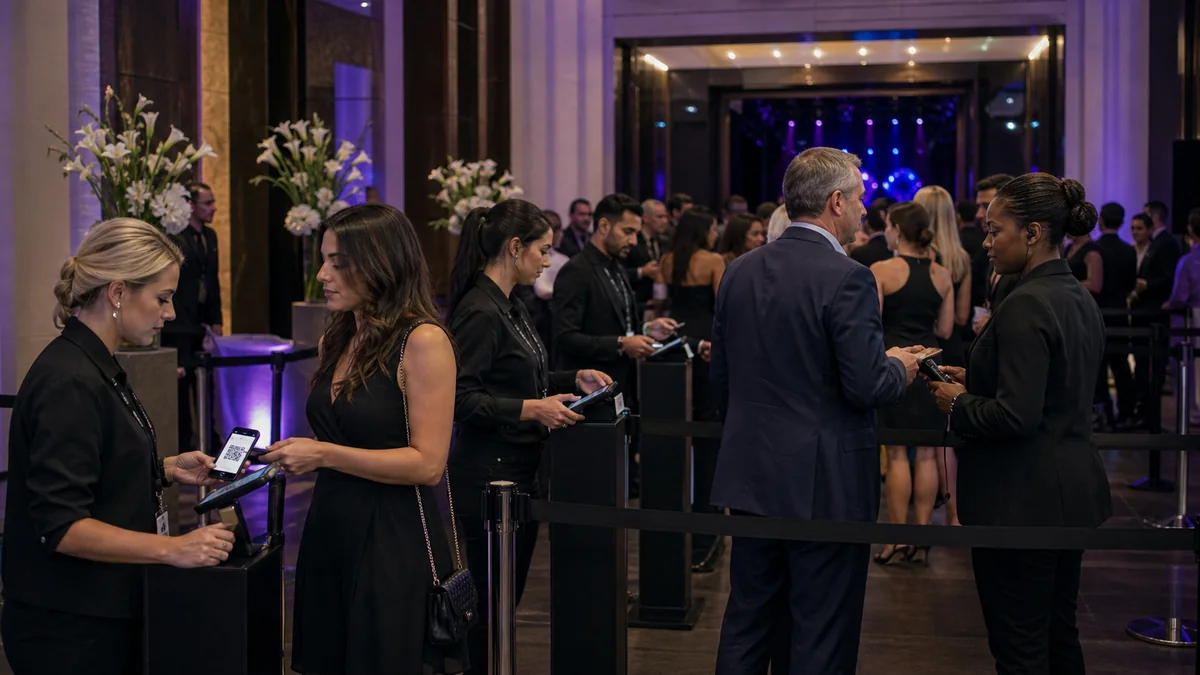
Brief your scanner team using the ShowRave app before doors open. Multiple devices can scan simultaneously so separate GA and VIP entry lanes are manageable without coordination overhead. Brief staff on how to handle the guest list, which operates separately from the QR ticketing, and how to handle at-door buyers if you are taking walk-ins.
Monitor your live check-in count through your organizer dashboard. For licensed premises, staying within capacity is a legal obligation. For shows with a fire marshal or security team, the check-in count is the real-time evidence of compliance.
Settlement: what happens after the last person leaves
Settlement is the financial reconciliation that happens after the show. It covers: total ticket revenue less the platform's fees, artist payment based on the agreed fee or box office split, venue settlement covering hire fees and any bar or catering income that affects the promoter's share, and production cost settlement if any costs were deferred to post-show payment.
Your ShowRave organizer dashboard provides the ticket sales and revenue totals that feed into settlement. Export the full sales report after the show closes to confirm ticket numbers, tier breakdown, AddOn revenue, and any at-door sales. This report is the starting point for your financial reconciliation and the documentation that supports any dispute if one arises.
A clean, well-documented settlement builds trust with artists and venues that enables long-term working relationships. Promoters who are known for paying accurately and promptly get access to artists, venues, and deals that promoters with messier financials do not.
\n\nPreparing for the unexpected
\nConcerts have a higher rate of last-minute complications than most other event formats. Artists cancel. Equipment fails. Venues have issues on the day that no site visit could have predicted. Weather affects outdoor shows. The promoters who manage these situations well prepared a one-page contingency brief before the show was announced: what happens if the artist cancels (refund timeline, whether a replacement is possible), what happens if the PA fails (backup equipment contact, hire rates), and who makes each decision on the night.
\nFor each critical dependency, identify in advance what you would do if it failed. If the headline artist cancels 48 hours before the show, what is your communication plan to ticket holders, what are your refund obligations, and is there a support act who could headline instead? If the venue PA system fails the morning of the show, who is your emergency production contact and how quickly can a replacement be sourced? These scenarios feel unlikely until they happen, and when they happen without a plan they become crises.
\nCommunicate proactively with your audience when something significant changes. A short, honest message about a change sent quickly earns significantly more goodwill than a slow or evasive communication sent under pressure. The audience will forgive most complications if they are told about them honestly and promptly. They will not forgive being left uninformed.