
A fight night is one of the most commercially clear events you can ticket
The commercial logic of a boxing or martial arts night is unusually direct. There is a main event that people specifically want to see. Proximity to the action, the ring or cage, varies significantly in value depending on position. The performing fighters have audiences who are specifically motivated to attend their bouts. And the event has a specific energy peak, the main event, that generates the anticipation that drives advance ticket sales from the moment the card is announced.
This clarity makes combat sports events particularly well-suited to a deliberate tier structure and an affiliate-driven promotion model. Every element of the show has a clear commercial value that translates into a ticket tier, and every fighter on the card has an audience that translates into an affiliate distribution channel. Getting both of these right produces a well-sold fight night with clear margin and a strong door operation on the night.
The tier structure for a fight night
Combat sports events have the most visually defined premium product of any live show format: ringside seats. A buyer who sits in the first two rows of a boxing event is at the edge of the ring, close enough to hear the corner instructions and see the expressions clearly. That experience is genuinely different from sitting in the tenth row, and the pricing should reflect this difference explicitly.
Configure a ringside tier with a strict quantity limit that matches the number of genuine ringside positions in the venue layout. For a standard theatre-layout fight show, this is typically the first two or three rows around all sides of the ring or cage. Keep VIP ringside quantities tight, under 15% of total capacity, so the scarcity is real and the premium holds throughout the sale. A ringside tier that is too large loses the exclusivity that justifies the premium pricing.
Floor or venue general standing, for standing-format fight nights, and seated general for theatre-format events form the main audience tier. Price this at the level where the show covers its costs at 65 to 70% of capacity. For club-level and regional fight shows with lower overheads, this may be a modest price; for professional-grade shows with licensed venue fees and established fighters, it needs to reflect the actual production cost.
An Early Bird allocation for the first 15 to 20% of tickets, priced at a meaningful discount below the standard rate, generates early cash flow and creates the social proof of visible early demand before the main promotional push. Fight fans who are genuinely interested in seeing a specific fighter on the card are exactly the audience who responds to Early Bird pricing with immediate purchases.
Fighter-driven promotion through affiliate links
In combat sports promotion, the fighters are the primary promotional channel. Every fighter on the card has a following of fans who are specifically motivated to see them perform. A fighter who shares their unique affiliate link with their social following and fan communities is reaching buyers with a personal endorsement that has a direct bearing on why those buyers want to attend: they are coming to see this specific fighter.
Configure a unique affiliate link for every fighter on the card in ShowRave before the fight announcement goes public. Give each fighter or their management team the link at the same time as their booking confirmation. Brief them on when and how to use it: share it when the fight is announced, share it when the card is completed, share it when Early Bird is about to close, and share it in the final week before the show. A fighter who actively promotes through their unique link earns a commission on attributed sales; the promoter receives attributed sales data that tells them exactly how much of the card's commercial performance each fighter drove.
Over multiple shows, this attribution data tells the promoter which fighters consistently drive the most advance sales, which is the most commercially reliable evidence for headliner selection and for the premium fee conversations that come with booking fighters who demonstrably sell tickets. The data is specific, honest, and built from actual buyer behavior rather than social media follower counts.
Age restrictions and venue licensing
Licensed combat sports shows typically operate as over-18 events due to the nature of the content. State this clearly in the event title or opening description and in the ticket tier names. A buyer who purchases a ticket and then discovers on arrival that their companion cannot enter because of an age restriction they were not informed about is a buyer who will dispute the charge. Clear up-front communication about age requirements prevents this entirely.
For events at licensed venues, the venue's existing entertainment licence typically covers combat sports shows as part of its public entertainment provision. Verify this with the venue before confirming the event date. For events at unlicensed or unusual venues, such as a warehouse, outdoor space, or sports club, the organizer may need to obtain a Temporary Event Notice (TEN) or equivalent in their jurisdiction. Apply early: TEN applications in the UK require minimum notice periods and can be objected to by licensing authorities.
For shows that involve professional fighters and are sanctioned by a recognised boxing or martial arts governing body, the body's safety officer or medical requirements create additional operational considerations at the venue. The ShowRave attendee data supports the compliance documentation requirements by providing a confirmed headcount and in some cases attendee profile data that sanctioning bodies request for event approval.
The DP Generator for fight night audiences
Combat sports audiences have a strong public identity around the shows they attend. Being ringside at a significant fight, supporting a specific fighter, or being present at a breakthrough card is part of the identity that fans communicate publicly. The DP Generator at/dp-generatorprovides a specific mechanism for this: a branded profile picture frame featuring the fight night's artwork, the main event billing, or the fighter's image.
For shows where the headliner has significant social following, a DP Generator frame that features their image alongside the event details converts at particularly high rates because the fans who update their profiles are making a public statement of support for the fighter that is simultaneously promotion for the show. Distribute the DP Generator link through the fighter's own channels as well as the promoter's, with their endorsement.
Check-in for a sold-out fight night
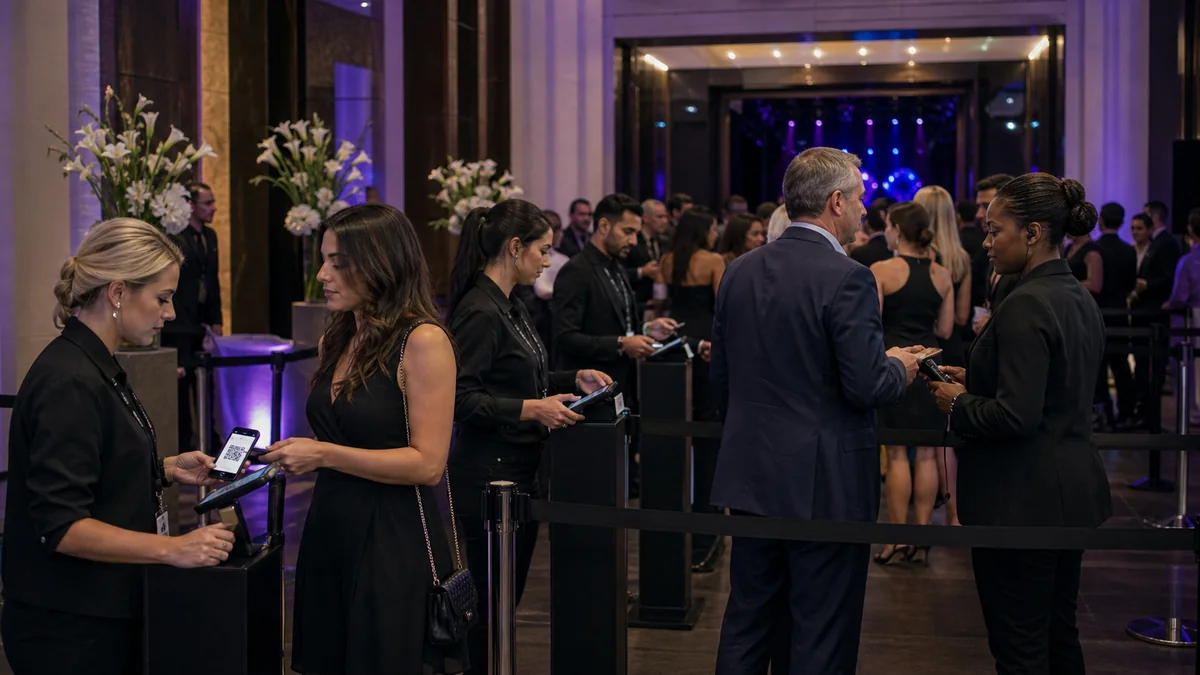
Fight night entry has a specific operational challenge: a large proportion of the audience arrives close to the main event time rather than spread across the evening. Even for events with undercard bouts, the audience build is typically strongest in the hour before the main event, creating a concentrated check-in requirement that can produce a significant queue if the door operation is not resourced for peak throughput.
Download the ShowRave scanner app at/apps/scanneron enough devices to handle the peak arrival rate. For shows above 200 capacity, two devices minimum; for 400 and above, three to four devices across separate entry lanes. Offline mode ensures that connectivity issues at the venue, which are common at late-night events in older venue buildings, do not stop entry operations. The live dashboard on the organizer's phone shows the running count throughout the evening, which is the real-time capacity compliance evidence for licensed premises.
Promoting a fight card: the announcement sequence that builds momentum
Fight nights have a natural momentum-building announcement sequence that is more structured than most other show types. The full card is rarely announced all at once; fights are confirmed sequentially, with the main event last and the supporting bouts building anticipation across a campaign of several weeks. Each confirmation is a promotional moment that extends the campaign's news value beyond the initial announcement.
Use each fight confirmation as a specific promotional beat: announce the bout, brief the fighter on sharing their unique affiliate link, and note how many tickets are remaining at each tier as social proof. A campaign that generates five to six news moments across six weeks maintains audience engagement more effectively than a single announcement followed by silence until the show.
For main event announcements, coordinate the timing with the fighter's own promotional schedule. A main event announcement that the fighter promotes simultaneously to their own audience through their affiliate link produces the first significant sales spike of the campaign. This spike is the social proof the rest of the campaign builds on.
The post-show debrief for recurring promoters
For promoters running regular fight nights, the post-show review is the brief for the next card. Review the ShowRave data for three specific questions: which fighter's affiliate link drove the most sales, what was the ringside tier sell-out timing relative to the general admission tier, and what was the no-show rate by tier?
The fighter attribution data tells the promoter which names on the card moved tickets and at what scale. A fighter who consistently drives strong advance sales through their affiliate link is a commercial asset whose booking fee reflects that commercial value. A fighter with a modest following who was on the card but drove no attributed sales is informative in a different way: their presence was not a commercial driver, which affects how the next card is structured.
The ringside sell-out timing relative to general admission tells the promoter whether the ringside allocation was correctly sized. If ringside sold out in the first few days while general admission still had significant availability, either the ringside quantity was too small or the ringside price was too low relative to demand. Both are adjustable for the next show based on this evidence.
A fight night is one of the most commercially clear events you can ticket
The commercial logic of a boxing or martial arts night is unusually direct. There is a main event that people specifically want to see. Proximity to the action, the ring or cage, varies significantly in value depending on position. The performing fighters have audiences who are specifically motivated to attend their bouts. And the event has a specific energy peak, the main event, that generates the anticipation that drives advance ticket sales from the moment the card is announced.
This clarity makes combat sports events particularly well-suited to a deliberate tier structure and an affiliate-driven promotion model. Every element of the show has a clear commercial value that translates into a ticket tier, and every fighter on the card has an audience that translates into an affiliate distribution channel. Getting both of these right produces a well-sold fight night with clear margin and a strong door operation on the night.
The tier structure for a fight night
Combat sports events have the most visually defined premium product of any live show format: ringside seats. A buyer who sits in the first two rows of a boxing event is at the edge of the ring, close enough to hear the corner instructions and see the expressions clearly. That experience is genuinely different from sitting in the tenth row, and the pricing should reflect this difference explicitly.
Configure a ringside tier with a strict quantity limit that matches the number of genuine ringside positions in the venue layout. For a standard theatre-layout fight show, this is typically the first two or three rows around all sides of the ring or cage. Keep VIP ringside quantities tight, under 15% of total capacity, so the scarcity is real and the premium holds throughout the sale. A ringside tier that is too large loses the exclusivity that justifies the premium pricing.
Floor or venue general standing, for standing-format fight nights, and seated general for theatre-format events form the main audience tier. Price this at the level where the show covers its costs at 65 to 70% of capacity. For club-level and regional fight shows with lower overheads, this may be a modest price; for professional-grade shows with licensed venue fees and established fighters, it needs to reflect the actual production cost.
An Early Bird allocation for the first 15 to 20% of tickets, priced at a meaningful discount below the standard rate, generates early cash flow and creates the social proof of visible early demand before the main promotional push. Fight fans who are genuinely interested in seeing a specific fighter on the card are exactly the audience who responds to Early Bird pricing with immediate purchases.
Fighter-driven promotion through affiliate links
In combat sports promotion, the fighters are the primary promotional channel. Every fighter on the card has a following of fans who are specifically motivated to see them perform. A fighter who shares their unique affiliate link with their social following and fan communities is reaching buyers with a personal endorsement that has a direct bearing on why those buyers want to attend: they are coming to see this specific fighter.
Configure a unique affiliate link for every fighter on the card in ShowRave before the fight announcement goes public. Give each fighter or their management team the link at the same time as their booking confirmation. Brief them on when and how to use it: share it when the fight is announced, share it when the card is completed, share it when Early Bird is about to close, and share it in the final week before the show. A fighter who actively promotes through their unique link earns a commission on attributed sales; the promoter receives attributed sales data that tells them exactly how much of the card's commercial performance each fighter drove.
Over multiple shows, this attribution data tells the promoter which fighters consistently drive the most advance sales, which is the most commercially reliable evidence for headliner selection and for the premium fee conversations that come with booking fighters who demonstrably sell tickets. The data is specific, honest, and built from actual buyer behavior rather than social media follower counts.
Age restrictions and venue licensing
Licensed combat sports shows typically operate as over-18 events due to the nature of the content. State this clearly in the event title or opening description and in the ticket tier names. A buyer who purchases a ticket and then discovers on arrival that their companion cannot enter because of an age restriction they were not informed about is a buyer who will dispute the charge. Clear up-front communication about age requirements prevents this entirely.
For events at licensed venues, the venue's existing entertainment licence typically covers combat sports shows as part of its public entertainment provision. Verify this with the venue before confirming the event date. For events at unlicensed or unusual venues, such as a warehouse, outdoor space, or sports club, the organizer may need to obtain a Temporary Event Notice (TEN) or equivalent in their jurisdiction. Apply early: TEN applications in the UK require minimum notice periods and can be objected to by licensing authorities.
For shows that involve professional fighters and are sanctioned by a recognised boxing or martial arts governing body, the body's safety officer or medical requirements create additional operational considerations at the venue. The ShowRave attendee data supports the compliance documentation requirements by providing a confirmed headcount and in some cases attendee profile data that sanctioning bodies request for event approval.
The DP Generator for fight night audiences
Combat sports audiences have a strong public identity around the shows they attend. Being ringside at a significant fight, supporting a specific fighter, or being present at a breakthrough card is part of the identity that fans communicate publicly. The DP Generator at/dp-generatorprovides a specific mechanism for this: a branded profile picture frame featuring the fight night's artwork, the main event billing, or the fighter's image.
For shows where the headliner has significant social following, a DP Generator frame that features their image alongside the event details converts at particularly high rates because the fans who update their profiles are making a public statement of support for the fighter that is simultaneously promotion for the show. Distribute the DP Generator link through the fighter's own channels as well as the promoter's, with their endorsement.
Check-in for a sold-out fight night
Fight night entry has a specific operational challenge: a large proportion of the audience arrives close to the main event time rather than spread across the evening. Even for events with undercard bouts, the audience build is typically strongest in the hour before the main event, creating a concentrated check-in requirement that can produce a significant queue if the door operation is not resourced for peak throughput.
Download the ShowRave scanner app at/apps/scanneron enough devices to handle the peak arrival rate. For shows above 200 capacity, two devices minimum; for 400 and above, three to four devices across separate entry lanes. Offline mode ensures that connectivity issues at the venue, which are common at late-night events in older venue buildings, do not stop entry operations. The live dashboard on the organizer's phone shows the running count throughout the evening, which is the real-time capacity compliance evidence for licensed premises.
Promoting a fight card: the announcement sequence that builds momentum
Fight nights have a natural momentum-building announcement sequence that is more structured than most other show types. The full card is rarely announced all at once; fights are confirmed sequentially, with the main event last and the supporting bouts building anticipation across a campaign of several weeks. Each confirmation is a promotional moment that extends the campaign's news value beyond the initial announcement.
Use each fight confirmation as a specific promotional beat: announce the bout, brief the fighter on sharing their unique affiliate link, and note how many tickets are remaining at each tier as social proof. A campaign that generates five to six news moments across six weeks maintains audience engagement more effectively than a single announcement followed by silence until the show.
For main event announcements, coordinate the timing with the fighter's own promotional schedule. A main event announcement that the fighter promotes simultaneously to their own audience through their affiliate link produces the first significant sales spike of the campaign. This spike is the social proof the rest of the campaign builds on.
The post-show debrief for recurring promoters
For promoters running regular fight nights, the post-show review is the brief for the next card. Review the ShowRave data for three specific questions: which fighter's affiliate link drove the most sales, what was the ringside tier sell-out timing relative to the general admission tier, and what was the no-show rate by tier?
The fighter attribution data tells the promoter which names on the card moved tickets and at what scale. A fighter who consistently drives strong advance sales through their affiliate link is a commercial asset whose booking fee reflects that commercial value. A fighter with a modest following who was on the card but drove no attributed sales is informative in a different way: their presence was not a commercial driver, which affects how the next card is structured.
The ringside sell-out timing relative to general admission tells the promoter whether the ringside allocation was correctly sized. If ringside sold out in the first few days while general admission still had significant availability, either the ringside quantity was too small or the ringside price was too low relative to demand. Both are adjustable for the next show based on this evidence.
\n\nA fight night is one of the most commercially clear events you can ticket
The commercial logic of a boxing or martial arts night is unusually direct. There is a main event that people specifically want to see. Proximity to the action, the ring or cage, varies significantly in value depending on position. The performing fighters have audiences who are specifically motivated to attend their bouts. And the event has a specific energy peak, the main event, that generates the anticipation that drives advance ticket sales from the moment the card is announced.
This clarity makes combat sports events particularly well-suited to a deliberate tier structure and an affiliate-driven promotion model. Every element of the show has a clear commercial value that translates into a ticket tier, and every fighter on the card has an audience that translates into an affiliate distribution channel. Getting both of these right produces a well-sold fight night with clear margin and a strong door operation on the night.
The tier structure for a fight night
Combat sports events have the most visually defined premium product of any live show format: ringside seats. A buyer who sits in the first two rows of a boxing event is at the edge of the ring, close enough to hear the corner instructions and see the expressions clearly. That experience is genuinely different from sitting in the tenth row, and the pricing should reflect this difference explicitly.
Configure a ringside tier with a strict quantity limit that matches the number of genuine ringside positions in the venue layout. For a standard theatre-layout fight show, this is typically the first two or three rows around all sides of the ring or cage. Keep VIP ringside quantities tight, under 15% of total capacity, so the scarcity is real and the premium holds throughout the sale. A ringside tier that is too large loses the exclusivity that justifies the premium pricing.
Floor or venue general standing, for standing-format fight nights, and seated general for theatre-format events form the main audience tier. Price this at the level where the show covers its costs at 65 to 70% of capacity. For club-level and regional fight shows with lower overheads, this may be a modest price; for professional-grade shows with licensed venue fees and established fighters, it needs to reflect the actual production cost.
An Early Bird allocation for the first 15 to 20% of tickets, priced at a meaningful discount below the standard rate, generates early cash flow and creates the social proof of visible early demand before the main promotional push. Fight fans who are genuinely interested in seeing a specific fighter on the card are exactly the audience who responds to Early Bird pricing with immediate purchases.
Fighter-driven promotion through affiliate links
In combat sports promotion, the fighters are the primary promotional channel. Every fighter on the card has a following of fans who are specifically motivated to see them perform. A fighter who shares their unique affiliate link with their social following and fan communities is reaching buyers with a personal endorsement that has a direct bearing on why those buyers want to attend: they are coming to see this specific fighter.
Configure a unique affiliate link for every fighter on the card in ShowRave before the fight announcement goes public. Give each fighter or their management team the link at the same time as their booking confirmation. Brief them on when and how to use it: share it when the fight is announced, share it when the card is completed, share it when Early Bird is about to close, and share it in the final week before the show. A fighter who actively promotes through their unique link earns a commission on attributed sales; the promoter receives attributed sales data that tells them exactly how much of the card's commercial performance each fighter drove.
Over multiple shows, this attribution data tells the promoter which fighters consistently drive the most advance sales, which is the most commercially reliable evidence for headliner selection and for the premium fee conversations that come with booking fighters who demonstrably sell tickets. The data is specific, honest, and built from actual buyer behavior rather than social media follower counts.
Age restrictions and venue licensing
Licensed combat sports shows typically operate as over-18 events due to the nature of the content. State this clearly in the event title or opening description and in the ticket tier names. A buyer who purchases a ticket and then discovers on arrival that their companion cannot enter because of an age restriction they were not informed about is a buyer who will dispute the charge. Clear up-front communication about age requirements prevents this entirely.
For events at licensed venues, the venue's existing entertainment licence typically covers combat sports shows as part of its public entertainment provision. Verify this with the venue before confirming the event date. For events at unlicensed or unusual venues, such as a warehouse, outdoor space, or sports club, the organizer may need to obtain a Temporary Event Notice (TEN) or equivalent in their jurisdiction. Apply early: TEN applications in the UK require minimum notice periods and can be objected to by licensing authorities.
For shows that involve professional fighters and are sanctioned by a recognised boxing or martial arts governing body, the body's safety officer or medical requirements create additional operational considerations at the venue. The ShowRave attendee data supports the compliance documentation requirements by providing a confirmed headcount and in some cases attendee profile data that sanctioning bodies request for event approval.
The DP Generator for fight night audiences
Combat sports audiences have a strong public identity around the shows they attend. Being ringside at a significant fight, supporting a specific fighter, or being present at a breakthrough card is part of the identity that fans communicate publicly. The DP Generator at/dp-generatorprovides a specific mechanism for this: a branded profile picture frame featuring the fight night's artwork, the main event billing, or the fighter's image.
For shows where the headliner has significant social following, a DP Generator frame that features their image alongside the event details converts at particularly high rates because the fans who update their profiles are making a public statement of support for the fighter that is simultaneously promotion for the show. Distribute the DP Generator link through the fighter's own channels as well as the promoter's, with their endorsement.
Check-in for a sold-out fight night
Fight night entry has a specific operational challenge: a large proportion of the audience arrives close to the main event time rather than spread across the evening. Even for events with undercard bouts, the audience build is typically strongest in the hour before the main event, creating a concentrated check-in requirement that can produce a significant queue if the door operation is not resourced for peak throughput.
Download the ShowRave scanner app at/apps/scanneron enough devices to handle the peak arrival rate. For shows above 200 capacity, two devices minimum; for 400 and above, three to four devices across separate entry lanes. Offline mode ensures that connectivity issues at the venue, which are common at late-night events in older venue buildings, do not stop entry operations. The live dashboard on the organizer's phone shows the running count throughout the evening, which is the real-time capacity compliance evidence for licensed premises.
Promoting a fight card: the announcement sequence that builds momentum
Fight nights have a natural momentum-building announcement sequence that is more structured than most other show types. The full card is rarely announced all at once; fights are confirmed sequentially, with the main event last and the supporting bouts building anticipation across a campaign of several weeks. Each confirmation is a promotional moment that extends the campaign's news value beyond the initial announcement.
Use each fight confirmation as a specific promotional beat: announce the bout, brief the fighter on sharing their unique affiliate link, and note how many tickets are remaining at each tier as social proof. A campaign that generates five to six news moments across six weeks maintains audience engagement more effectively than a single announcement followed by silence until the show.
For main event announcements, coordinate the timing with the fighter's own promotional schedule. A main event announcement that the fighter promotes simultaneously to their own audience through their affiliate link produces the first significant sales spike of the campaign. This spike is the social proof the rest of the campaign builds on.
The post-show debrief for recurring promoters
For promoters running regular fight nights, the post-show review is the brief for the next card. Review the ShowRave data for three specific questions: which fighter's affiliate link drove the most sales, what was the ringside tier sell-out timing relative to the general admission tier, and what was the no-show rate by tier?
The fighter attribution data tells the promoter which names on the card moved tickets and at what scale. A fighter who consistently drives strong advance sales through their affiliate link is a commercial asset whose booking fee reflects that commercial value. A fighter with a modest following who was on the card but drove no attributed sales is informative in a different way: their presence was not a commercial driver, which affects how the next card is structured.
The ringside sell-out timing relative to general admission tells the promoter whether the ringside allocation was correctly sized. If ringside sold out in the first few days while general admission still had significant availability, either the ringside quantity was too small or the ringside price was too low relative to demand. Both are adjustable for the next show based on this evidence.
A fight night is one of the most commercially clear events you can ticket
The commercial logic of a boxing or martial arts night is unusually direct. There is a main event that people specifically want to see. Proximity to the action, the ring or cage, varies significantly in value depending on position. The performing fighters have audiences who are specifically motivated to attend their bouts. And the event has a specific energy peak, the main event, that generates the anticipation that drives advance ticket sales from the moment the card is announced.
This clarity makes combat sports events particularly well-suited to a deliberate tier structure and an affiliate-driven promotion model. Every element of the show has a clear commercial value that translates into a ticket tier, and every fighter on the card has an audience that translates into an affiliate distribution channel. Getting both of these right produces a well-sold fight night with clear margin and a strong door operation on the night.
The tier structure for a fight night
Combat sports events have the most visually defined premium product of any live show format: ringside seats. A buyer who sits in the first two rows of a boxing event is at the edge of the ring, close enough to hear the corner instructions and see the expressions clearly. That experience is genuinely different from sitting in the tenth row, and the pricing should reflect this difference explicitly.
Configure a ringside tier with a strict quantity limit that matches the number of genuine ringside positions in the venue layout. For a standard theatre-layout fight show, this is typically the first two or three rows around all sides of the ring or cage. Keep VIP ringside quantities tight, under 15% of total capacity, so the scarcity is real and the premium holds throughout the sale. A ringside tier that is too large loses the exclusivity that justifies the premium pricing.
Floor or venue general standing, for standing-format fight nights, and seated general for theatre-format events form the main audience tier. Price this at the level where the show covers its costs at 65 to 70% of capacity. For club-level and regional fight shows with lower overheads, this may be a modest price; for professional-grade shows with licensed venue fees and established fighters, it needs to reflect the actual production cost.
An Early Bird allocation for the first 15 to 20% of tickets, priced at a meaningful discount below the standard rate, generates early cash flow and creates the social proof of visible early demand before the main promotional push. Fight fans who are genuinely interested in seeing a specific fighter on the card are exactly the audience who responds to Early Bird pricing with immediate purchases.
Fighter-driven promotion through affiliate links
In combat sports promotion, the fighters are the primary promotional channel. Every fighter on the card has a following of fans who are specifically motivated to see them perform. A fighter who shares their unique affiliate link with their social following and fan communities is reaching buyers with a personal endorsement that has a direct bearing on why those buyers want to attend: they are coming to see this specific fighter.
Configure a unique affiliate link for every fighter on the card in ShowRave before the fight announcement goes public. Give each fighter or their management team the link at the same time as their booking confirmation. Brief them on when and how to use it: share it when the fight is announced, share it when the card is completed, share it when Early Bird is about to close, and share it in the final week before the show. A fighter who actively promotes through their unique link earns a commission on attributed sales; the promoter receives attributed sales data that tells them exactly how much of the card's commercial performance each fighter drove.
Over multiple shows, this attribution data tells the promoter which fighters consistently drive the most advance sales, which is the most commercially reliable evidence for headliner selection and for the premium fee conversations that come with booking fighters who demonstrably sell tickets. The data is specific, honest, and built from actual buyer behavior rather than social media follower counts.
Age restrictions and venue licensing
Licensed combat sports shows typically operate as over-18 events due to the nature of the content. State this clearly in the event title or opening description and in the ticket tier names. A buyer who purchases a ticket and then discovers on arrival that their companion cannot enter because of an age restriction they were not informed about is a buyer who will dispute the charge. Clear up-front communication about age requirements prevents this entirely.
For events at licensed venues, the venue's existing entertainment licence typically covers combat sports shows as part of its public entertainment provision. Verify this with the venue before confirming the event date. For events at unlicensed or unusual venues, such as a warehouse, outdoor space, or sports club, the organizer may need to obtain a Temporary Event Notice (TEN) or equivalent in their jurisdiction. Apply early: TEN applications in the UK require minimum notice periods and can be objected to by licensing authorities.
For shows that involve professional fighters and are sanctioned by a recognised boxing or martial arts governing body, the body's safety officer or medical requirements create additional operational considerations at the venue. The ShowRave attendee data supports the compliance documentation requirements by providing a confirmed headcount and in some cases attendee profile data that sanctioning bodies request for event approval.
The DP Generator for fight night audiences
Combat sports audiences have a strong public identity around the shows they attend. Being ringside at a significant fight, supporting a specific fighter, or being present at a breakthrough card is part of the identity that fans communicate publicly. The DP Generator at/dp-generatorprovides a specific mechanism for this: a branded profile picture frame featuring the fight night's artwork, the main event billing, or the fighter's image.
For shows where the headliner has significant social following, a DP Generator frame that features their image alongside the event details converts at particularly high rates because the fans who update their profiles are making a public statement of support for the fighter that is simultaneously promotion for the show. Distribute the DP Generator link through the fighter's own channels as well as the promoter's, with their endorsement.
Check-in for a sold-out fight night
Fight night entry has a specific operational challenge: a large proportion of the audience arrives close to the main event time rather than spread across the evening. Even for events with undercard bouts, the audience build is typically strongest in the hour before the main event, creating a concentrated check-in requirement that can produce a significant queue if the door operation is not resourced for peak throughput.
Download the ShowRave scanner app at/apps/scanneron enough devices to handle the peak arrival rate. For shows above 200 capacity, two devices minimum; for 400 and above, three to four devices across separate entry lanes. Offline mode ensures that connectivity issues at the venue, which are common at late-night events in older venue buildings, do not stop entry operations. The live dashboard on the organizer's phone shows the running count throughout the evening, which is the real-time capacity compliance evidence for licensed premises.
Promoting a fight card: the announcement sequence that builds momentum
Fight nights have a natural momentum-building announcement sequence that is more structured than most other show types. The full card is rarely announced all at once; fights are confirmed sequentially, with the main event last and the supporting bouts building anticipation across a campaign of several weeks. Each confirmation is a promotional moment that extends the campaign's news value beyond the initial announcement.
Use each fight confirmation as a specific promotional beat: announce the bout, brief the fighter on sharing their unique affiliate link, and note how many tickets are remaining at each tier as social proof. A campaign that generates five to six news moments across six weeks maintains audience engagement more effectively than a single announcement followed by silence until the show.
For main event announcements, coordinate the timing with the fighter's own promotional schedule. A main event announcement that the fighter promotes simultaneously to their own audience through their affiliate link produces the first significant sales spike of the campaign. This spike is the social proof the rest of the campaign builds on.
The post-show debrief for recurring promoters
For promoters running regular fight nights, the post-show review is the brief for the next card. Review the ShowRave data for three specific questions: which fighter's affiliate link drove the most sales, what was the ringside tier sell-out timing relative to the general admission tier, and what was the no-show rate by tier?
The fighter attribution data tells the promoter which names on the card moved tickets and at what scale. A fighter who consistently drives strong advance sales through their affiliate link is a commercial asset whose booking fee reflects that commercial value. A fighter with a modest following who was on the card but drove no attributed sales is informative in a different way: their presence was not a commercial driver, which affects how the next card is structured.
The ringside sell-out timing relative to general admission tells the promoter whether the ringside allocation was correctly sized. If ringside sold out in the first few days while general admission still had significant availability, either the ringside quantity was too small or the ringside price was too low relative to demand. Both are adjustable for the next show based on this evidence.
\n\nA fight night is one of the most commercially clear events you can ticket
The commercial logic of a boxing or martial arts night is unusually direct. There is a main event that people specifically want to see. Proximity to the action, the ring or cage, varies significantly in value depending on position. The performing fighters have audiences who are specifically motivated to attend their bouts. And the event has a specific energy peak, the main event, that generates the anticipation that drives advance ticket sales from the moment the card is announced.
This clarity makes combat sports events particularly well-suited to a deliberate tier structure and an affiliate-driven promotion model. Every element of the show has a clear commercial value that translates into a ticket tier, and every fighter on the card has an audience that translates into an affiliate distribution channel. Getting both of these right produces a well-sold fight night with clear margin and a strong door operation on the night.
The tier structure for a fight night
Combat sports events have the most visually defined premium product of any live show format: ringside seats. A buyer who sits in the first two rows of a boxing event is at the edge of the ring, close enough to hear the corner instructions and see the expressions clearly. That experience is genuinely different from sitting in the tenth row, and the pricing should reflect this difference explicitly.
Configure a ringside tier with a strict quantity limit that matches the number of genuine ringside positions in the venue layout. For a standard theatre-layout fight show, this is typically the first two or three rows around all sides of the ring or cage. Keep VIP ringside quantities tight, under 15% of total capacity, so the scarcity is real and the premium holds throughout the sale. A ringside tier that is too large loses the exclusivity that justifies the premium pricing.
Floor or venue general standing, for standing-format fight nights, and seated general for theatre-format events form the main audience tier. Price this at the level where the show covers its costs at 65 to 70% of capacity. For club-level and regional fight shows with lower overheads, this may be a modest price; for professional-grade shows with licensed venue fees and established fighters, it needs to reflect the actual production cost.
An Early Bird allocation for the first 15 to 20% of tickets, priced at a meaningful discount below the standard rate, generates early cash flow and creates the social proof of visible early demand before the main promotional push. Fight fans who are genuinely interested in seeing a specific fighter on the card are exactly the audience who responds to Early Bird pricing with immediate purchases.
Fighter-driven promotion through affiliate links
In combat sports promotion, the fighters are the primary promotional channel. Every fighter on the card has a following of fans who are specifically motivated to see them perform. A fighter who shares their unique affiliate link with their social following and fan communities is reaching buyers with a personal endorsement that has a direct bearing on why those buyers want to attend: they are coming to see this specific fighter.
Configure a unique affiliate link for every fighter on the card in ShowRave before the fight announcement goes public. Give each fighter or their management team the link at the same time as their booking confirmation. Brief them on when and how to use it: share it when the fight is announced, share it when the card is completed, share it when Early Bird is about to close, and share it in the final week before the show. A fighter who actively promotes through their unique link earns a commission on attributed sales; the promoter receives attributed sales data that tells them exactly how much of the card's commercial performance each fighter drove.
Over multiple shows, this attribution data tells the promoter which fighters consistently drive the most advance sales, which is the most commercially reliable evidence for headliner selection and for the premium fee conversations that come with booking fighters who demonstrably sell tickets. The data is specific, honest, and built from actual buyer behavior rather than social media follower counts.
Age restrictions and venue licensing
Licensed combat sports shows typically operate as over-18 events due to the nature of the content. State this clearly in the event title or opening description and in the ticket tier names. A buyer who purchases a ticket and then discovers on arrival that their companion cannot enter because of an age restriction they were not informed about is a buyer who will dispute the charge. Clear up-front communication about age requirements prevents this entirely.
For events at licensed venues, the venue's existing entertainment licence typically covers combat sports shows as part of its public entertainment provision. Verify this with the venue before confirming the event date. For events at unlicensed or unusual venues, such as a warehouse, outdoor space, or sports club, the organizer may need to obtain a Temporary Event Notice (TEN) or equivalent in their jurisdiction. Apply early: TEN applications in the UK require minimum notice periods and can be objected to by licensing authorities.
For shows that involve professional fighters and are sanctioned by a recognised boxing or martial arts governing body, the body's safety officer or medical requirements create additional operational considerations at the venue. The ShowRave attendee data supports the compliance documentation requirements by providing a confirmed headcount and in some cases attendee profile data that sanctioning bodies request for event approval.
The DP Generator for fight night audiences
Combat sports audiences have a strong public identity around the shows they attend. Being ringside at a significant fight, supporting a specific fighter, or being present at a breakthrough card is part of the identity that fans communicate publicly. The DP Generator at/dp-generatorprovides a specific mechanism for this: a branded profile picture frame featuring the fight night's artwork, the main event billing, or the fighter's image.
For shows where the headliner has significant social following, a DP Generator frame that features their image alongside the event details converts at particularly high rates because the fans who update their profiles are making a public statement of support for the fighter that is simultaneously promotion for the show. Distribute the DP Generator link through the fighter's own channels as well as the promoter's, with their endorsement.
Check-in for a sold-out fight night
Fight night entry has a specific operational challenge: a large proportion of the audience arrives close to the main event time rather than spread across the evening. Even for events with undercard bouts, the audience build is typically strongest in the hour before the main event, creating a concentrated check-in requirement that can produce a significant queue if the door operation is not resourced for peak throughput.
Download the ShowRave scanner app at/apps/scanneron enough devices to handle the peak arrival rate. For shows above 200 capacity, two devices minimum; for 400 and above, three to four devices across separate entry lanes. Offline mode ensures that connectivity issues at the venue, which are common at late-night events in older venue buildings, do not stop entry operations. The live dashboard on the organizer's phone shows the running count throughout the evening, which is the real-time capacity compliance evidence for licensed premises.
Promoting a fight card: the announcement sequence that builds momentum
Fight nights have a natural momentum-building announcement sequence that is more structured than most other show types. The full card is rarely announced all at once; fights are confirmed sequentially, with the main event last and the supporting bouts building anticipation across a campaign of several weeks. Each confirmation is a promotional moment that extends the campaign's news value beyond the initial announcement.
Use each fight confirmation as a specific promotional beat: announce the bout, brief the fighter on sharing their unique affiliate link, and note how many tickets are remaining at each tier as social proof. A campaign that generates five to six news moments across six weeks maintains audience engagement more effectively than a single announcement followed by silence until the show.
For main event announcements, coordinate the timing with the fighter's own promotional schedule. A main event announcement that the fighter promotes simultaneously to their own audience through their affiliate link produces the first significant sales spike of the campaign. This spike is the social proof the rest of the campaign builds on.
The post-show debrief for recurring promoters
For promoters running regular fight nights, the post-show review is the brief for the next card. Review the ShowRave data for three specific questions: which fighter's affiliate link drove the most sales, what was the ringside tier sell-out timing relative to the general admission tier, and what was the no-show rate by tier?
The fighter attribution data tells the promoter which names on the card moved tickets and at what scale. A fighter who consistently drives strong advance sales through their affiliate link is a commercial asset whose booking fee reflects that commercial value. A fighter with a modest following who was on the card but drove no attributed sales is informative in a different way: their presence was not a commercial driver, which affects how the next card is structured.
The ringside sell-out timing relative to general admission tells the promoter whether the ringside allocation was correctly sized. If ringside sold out in the first few days while general admission still had significant availability, either the ringside quantity was too small or the ringside price was too low relative to demand. Both are adjustable for the next show based on this evidence.
A fight night is one of the most commercially clear events you can ticket
The commercial logic of a boxing or martial arts night is unusually direct. There is a main event that people specifically want to see. Proximity to the action, the ring or cage, varies significantly in value depending on position. The performing fighters have audiences who are specifically motivated to attend their bouts. And the event has a specific energy peak, the main event, that generates the anticipation that drives advance ticket sales from the moment the card is announced.
This clarity makes combat sports events particularly well-suited to a deliberate tier structure and an affiliate-driven promotion model. Every element of the show has a clear commercial value that translates into a ticket tier, and every fighter on the card has an audience that translates into an affiliate distribution channel. Getting both of these right produces a well-sold fight night with clear margin and a strong door operation on the night.
The tier structure for a fight night
Combat sports events have the most visually defined premium product of any live show format: ringside seats. A buyer who sits in the first two rows of a boxing event is at the edge of the ring, close enough to hear the corner instructions and see the expressions clearly. That experience is genuinely different from sitting in the tenth row, and the pricing should reflect this difference explicitly.
Configure a ringside tier with a strict quantity limit that matches the number of genuine ringside positions in the venue layout. For a standard theatre-layout fight show, this is typically the first two or three rows around all sides of the ring or cage. Keep VIP ringside quantities tight, under 15% of total capacity, so the scarcity is real and the premium holds throughout the sale. A ringside tier that is too large loses the exclusivity that justifies the premium pricing.
Floor or venue general standing, for standing-format fight nights, and seated general for theatre-format events form the main audience tier. Price this at the level where the show covers its costs at 65 to 70% of capacity. For club-level and regional fight shows with lower overheads, this may be a modest price; for professional-grade shows with licensed venue fees and established fighters, it needs to reflect the actual production cost.
An Early Bird allocation for the first 15 to 20% of tickets, priced at a meaningful discount below the standard rate, generates early cash flow and creates the social proof of visible early demand before the main promotional push. Fight fans who are genuinely interested in seeing a specific fighter on the card are exactly the audience who responds to Early Bird pricing with immediate purchases.
Fighter-driven promotion through affiliate links
In combat sports promotion, the fighters are the primary promotional channel. Every fighter on the card has a following of fans who are specifically motivated to see them perform. A fighter who shares their unique affiliate link with their social following and fan communities is reaching buyers with a personal endorsement that has a direct bearing on why those buyers want to attend: they are coming to see this specific fighter.
Configure a unique affiliate link for every fighter on the card in ShowRave before the fight announcement goes public. Give each fighter or their management team the link at the same time as their booking confirmation. Brief them on when and how to use it: share it when the fight is announced, share it when the card is completed, share it when Early Bird is about to close, and share it in the final week before the show. A fighter who actively promotes through their unique link earns a commission on attributed sales; the promoter receives attributed sales data that tells them exactly how much of the card's commercial performance each fighter drove.
Over multiple shows, this attribution data tells the promoter which fighters consistently drive the most advance sales, which is the most commercially reliable evidence for headliner selection and for the premium fee conversations that come with booking fighters who demonstrably sell tickets. The data is specific, honest, and built from actual buyer behavior rather than social media follower counts.
Age restrictions and venue licensing
Licensed combat sports shows typically operate as over-18 events due to the nature of the content. State this clearly in the event title or opening description and in the ticket tier names. A buyer who purchases a ticket and then discovers on arrival that their companion cannot enter because of an age restriction they were not informed about is a buyer who will dispute the charge. Clear up-front communication about age requirements prevents this entirely.
For events at licensed venues, the venue's existing entertainment licence typically covers combat sports shows as part of its public entertainment provision. Verify this with the venue before confirming the event date. For events at unlicensed or unusual venues, such as a warehouse, outdoor space, or sports club, the organizer may need to obtain a Temporary Event Notice (TEN) or equivalent in their jurisdiction. Apply early: TEN applications in the UK require minimum notice periods and can be objected to by licensing authorities.
For shows that involve professional fighters and are sanctioned by a recognised boxing or martial arts governing body, the body's safety officer or medical requirements create additional operational considerations at the venue. The ShowRave attendee data supports the compliance documentation requirements by providing a confirmed headcount and in some cases attendee profile data that sanctioning bodies request for event approval.
The DP Generator for fight night audiences
Combat sports audiences have a strong public identity around the shows they attend. Being ringside at a significant fight, supporting a specific fighter, or being present at a breakthrough card is part of the identity that fans communicate publicly. The DP Generator at/dp-generatorprovides a specific mechanism for this: a branded profile picture frame featuring the fight night's artwork, the main event billing, or the fighter's image.
For shows where the headliner has significant social following, a DP Generator frame that features their image alongside the event details converts at particularly high rates because the fans who update their profiles are making a public statement of support for the fighter that is simultaneously promotion for the show. Distribute the DP Generator link through the fighter's own channels as well as the promoter's, with their endorsement.
Check-in for a sold-out fight night
Fight night entry has a specific operational challenge: a large proportion of the audience arrives close to the main event time rather than spread across the evening. Even for events with undercard bouts, the audience build is typically strongest in the hour before the main event, creating a concentrated check-in requirement that can produce a significant queue if the door operation is not resourced for peak throughput.
Download the ShowRave scanner app at/apps/scanneron enough devices to handle the peak arrival rate. For shows above 200 capacity, two devices minimum; for 400 and above, three to four devices across separate entry lanes. Offline mode ensures that connectivity issues at the venue, which are common at late-night events in older venue buildings, do not stop entry operations. The live dashboard on the organizer's phone shows the running count throughout the evening, which is the real-time capacity compliance evidence for licensed premises.
Promoting a fight card: the announcement sequence that builds momentum
Fight nights have a natural momentum-building announcement sequence that is more structured than most other show types. The full card is rarely announced all at once; fights are confirmed sequentially, with the main event last and the supporting bouts building anticipation across a campaign of several weeks. Each confirmation is a promotional moment that extends the campaign's news value beyond the initial announcement.
Use each fight confirmation as a specific promotional beat: announce the bout, brief the fighter on sharing their unique affiliate link, and note how many tickets are remaining at each tier as social proof. A campaign that generates five to six news moments across six weeks maintains audience engagement more effectively than a single announcement followed by silence until the show.
For main event announcements, coordinate the timing with the fighter's own promotional schedule. A main event announcement that the fighter promotes simultaneously to their own audience through their affiliate link produces the first significant sales spike of the campaign. This spike is the social proof the rest of the campaign builds on.
The post-show debrief for recurring promoters
For promoters running regular fight nights, the post-show review is the brief for the next card. Review the ShowRave data for three specific questions: which fighter's affiliate link drove the most sales, what was the ringside tier sell-out timing relative to the general admission tier, and what was the no-show rate by tier?
The fighter attribution data tells the promoter which names on the card moved tickets and at what scale. A fighter who consistently drives strong advance sales through their affiliate link is a commercial asset whose booking fee reflects that commercial value. A fighter with a modest following who was on the card but drove no attributed sales is informative in a different way: their presence was not a commercial driver, which affects how the next card is structured.
The ringside sell-out timing relative to general admission tells the promoter whether the ringside allocation was correctly sized. If ringside sold out in the first few days while general admission still had significant availability, either the ringside quantity was too small or the ringside price was too low relative to demand. Both are adjustable for the next show based on this evidence.
\n\nA fight night is one of the most commercially clear events you can ticket
The commercial logic of a boxing or martial arts night is unusually direct. There is a main event that people specifically want to see. Proximity to the action, the ring or cage, varies significantly in value depending on position. The performing fighters have audiences who are specifically motivated to attend their bouts. And the event has a specific energy peak, the main event, that generates the anticipation that drives advance ticket sales from the moment the card is announced.
This clarity makes combat sports events particularly well-suited to a deliberate tier structure and an affiliate-driven promotion model. Every element of the show has a clear commercial value that translates into a ticket tier, and every fighter on the card has an audience that translates into an affiliate distribution channel. Getting both of these right produces a well-sold fight night with clear margin and a strong door operation on the night.
The tier structure for a fight night
Combat sports events have the most visually defined premium product of any live show format: ringside seats. A buyer who sits in the first two rows of a boxing event is at the edge of the ring, close enough to hear the corner instructions and see the expressions clearly. That experience is genuinely different from sitting in the tenth row, and the pricing should reflect this difference explicitly.
Configure a ringside tier with a strict quantity limit that matches the number of genuine ringside positions in the venue layout. For a standard theatre-layout fight show, this is typically the first two or three rows around all sides of the ring or cage. Keep VIP ringside quantities tight, under 15% of total capacity, so the scarcity is real and the premium holds throughout the sale. A ringside tier that is too large loses the exclusivity that justifies the premium pricing.
Floor or venue general standing, for standing-format fight nights, and seated general for theatre-format events form the main audience tier. Price this at the level where the show covers its costs at 65 to 70% of capacity. For club-level and regional fight shows with lower overheads, this may be a modest price; for professional-grade shows with licensed venue fees and established fighters, it needs to reflect the actual production cost.
An Early Bird allocation for the first 15 to 20% of tickets, priced at a meaningful discount below the standard rate, generates early cash flow and creates the social proof of visible early demand before the main promotional push. Fight fans who are genuinely interested in seeing a specific fighter on the card are exactly the audience who responds to Early Bird pricing with immediate purchases.
Fighter-driven promotion through affiliate links
In combat sports promotion, the fighters are the primary promotional channel. Every fighter on the card has a following of fans who are specifically motivated to see them perform. A fighter who shares their unique affiliate link with their social following and fan communities is reaching buyers with a personal endorsement that has a direct bearing on why those buyers want to attend: they are coming to see this specific fighter.
Configure a unique affiliate link for every fighter on the card in ShowRave before the fight announcement goes public. Give each fighter or their management team the link at the same time as their booking confirmation. Brief them on when and how to use it: share it when the fight is announced, share it when the card is completed, share it when Early Bird is about to close, and share it in the final week before the show. A fighter who actively promotes through their unique link earns a commission on attributed sales; the promoter receives attributed sales data that tells them exactly how much of the card's commercial performance each fighter drove.
Over multiple shows, this attribution data tells the promoter which fighters consistently drive the most advance sales, which is the most commercially reliable evidence for headliner selection and for the premium fee conversations that come with booking fighters who demonstrably sell tickets. The data is specific, honest, and built from actual buyer behavior rather than social media follower counts.
Age restrictions and venue licensing
Licensed combat sports shows typically operate as over-18 events due to the nature of the content. State this clearly in the event title or opening description and in the ticket tier names. A buyer who purchases a ticket and then discovers on arrival that their companion cannot enter because of an age restriction they were not informed about is a buyer who will dispute the charge. Clear up-front communication about age requirements prevents this entirely.
For events at licensed venues, the venue's existing entertainment licence typically covers combat sports shows as part of its public entertainment provision. Verify this with the venue before confirming the event date. For events at unlicensed or unusual venues, such as a warehouse, outdoor space, or sports club, the organizer may need to obtain a Temporary Event Notice (TEN) or equivalent in their jurisdiction. Apply early: TEN applications in the UK require minimum notice periods and can be objected to by licensing authorities.
For shows that involve professional fighters and are sanctioned by a recognised boxing or martial arts governing body, the body's safety officer or medical requirements create additional operational considerations at the venue. The ShowRave attendee data supports the compliance documentation requirements by providing a confirmed headcount and in some cases attendee profile data that sanctioning bodies request for event approval.
The DP Generator for fight night audiences
Combat sports audiences have a strong public identity around the shows they attend. Being ringside at a significant fight, supporting a specific fighter, or being present at a breakthrough card is part of the identity that fans communicate publicly. The DP Generator at/dp-generatorprovides a specific mechanism for this: a branded profile picture frame featuring the fight night's artwork, the main event billing, or the fighter's image.
For shows where the headliner has significant social following, a DP Generator frame that features their image alongside the event details converts at particularly high rates because the fans who update their profiles are making a public statement of support for the fighter that is simultaneously promotion for the show. Distribute the DP Generator link through the fighter's own channels as well as the promoter's, with their endorsement.
Check-in for a sold-out fight night
Fight night entry has a specific operational challenge: a large proportion of the audience arrives close to the main event time rather than spread across the evening. Even for events with undercard bouts, the audience build is typically strongest in the hour before the main event, creating a concentrated check-in requirement that can produce a significant queue if the door operation is not resourced for peak throughput.
Download the ShowRave scanner app at/apps/scanneron enough devices to handle the peak arrival rate. For shows above 200 capacity, two devices minimum; for 400 and above, three to four devices across separate entry lanes. Offline mode ensures that connectivity issues at the venue, which are common at late-night events in older venue buildings, do not stop entry operations. The live dashboard on the organizer's phone shows the running count throughout the evening, which is the real-time capacity compliance evidence for licensed premises.
Promoting a fight card: the announcement sequence that builds momentum
Fight nights have a natural momentum-building announcement sequence that is more structured than most other show types. The full card is rarely announced all at once; fights are confirmed sequentially, with the main event last and the supporting bouts building anticipation across a campaign of several weeks. Each confirmation is a promotional moment that extends the campaign's news value beyond the initial announcement.
Use each fight confirmation as a specific promotional beat: announce the bout, brief the fighter on sharing their unique affiliate link, and note how many tickets are remaining at each tier as social proof. A campaign that generates five to six news moments across six weeks maintains audience engagement more effectively than a single announcement followed by silence until the show.
For main event announcements, coordinate the timing with the fighter's own promotional schedule. A main event announcement that the fighter promotes simultaneously to their own audience through their affiliate link produces the first significant sales spike of the campaign. This spike is the social proof the rest of the campaign builds on.
The post-show debrief for recurring promoters
For promoters running regular fight nights, the post-show review is the brief for the next card. Review the ShowRave data for three specific questions: which fighter's affiliate link drove the most sales, what was the ringside tier sell-out timing relative to the general admission tier, and what was the no-show rate by tier?
The fighter attribution data tells the promoter which names on the card moved tickets and at what scale. A fighter who consistently drives strong advance sales through their affiliate link is a commercial asset whose booking fee reflects that commercial value. A fighter with a modest following who was on the card but drove no attributed sales is informative in a different way: their presence was not a commercial driver, which affects how the next card is structured.
The ringside sell-out timing relative to general admission tells the promoter whether the ringside allocation was correctly sized. If ringside sold out in the first few days while general admission still had significant availability, either the ringside quantity was too small or the ringside price was too low relative to demand. Both are adjustable for the next show based on this evidence.
A fight night is one of the most commercially clear events you can ticket
The commercial logic of a boxing or martial arts night is unusually direct. There is a main event that people specifically want to see. Proximity to the action, the ring or cage, varies significantly in value depending on position. The performing fighters have audiences who are specifically motivated to attend their bouts. And the event has a specific energy peak, the main event, that generates the anticipation that drives advance ticket sales from the moment the card is announced.
This clarity makes combat sports events particularly well-suited to a deliberate tier structure and an affiliate-driven promotion model. Every element of the show has a clear commercial value that translates into a ticket tier, and every fighter on the card has an audience that translates into an affiliate distribution channel. Getting both of these right produces a well-sold fight night with clear margin and a strong door operation on the night.
The tier structure for a fight night
Combat sports events have the most visually defined premium product of any live show format: ringside seats. A buyer who sits in the first two rows of a boxing event is at the edge of the ring, close enough to hear the corner instructions and see the expressions clearly. That experience is genuinely different from sitting in the tenth row, and the pricing should reflect this difference explicitly.
Configure a ringside tier with a strict quantity limit that matches the number of genuine ringside positions in the venue layout. For a standard theatre-layout fight show, this is typically the first two or three rows around all sides of the ring or cage. Keep VIP ringside quantities tight, under 15% of total capacity, so the scarcity is real and the premium holds throughout the sale. A ringside tier that is too large loses the exclusivity that justifies the premium pricing.
Floor or venue general standing, for standing-format fight nights, and seated general for theatre-format events form the main audience tier. Price this at the level where the show covers its costs at 65 to 70% of capacity. For club-level and regional fight shows with lower overheads, this may be a modest price; for professional-grade shows with licensed venue fees and established fighters, it needs to reflect the actual production cost.
An Early Bird allocation for the first 15 to 20% of tickets, priced at a meaningful discount below the standard rate, generates early cash flow and creates the social proof of visible early demand before the main promotional push. Fight fans who are genuinely interested in seeing a specific fighter on the card are exactly the audience who responds to Early Bird pricing with immediate purchases.
Fighter-driven promotion through affiliate links
In combat sports promotion, the fighters are the primary promotional channel. Every fighter on the card has a following of fans who are specifically motivated to see them perform. A fighter who shares their unique affiliate link with their social following and fan communities is reaching buyers with a personal endorsement that has a direct bearing on why those buyers want to attend: they are coming to see this specific fighter.
Configure a unique affiliate link for every fighter on the card in ShowRave before the fight announcement goes public. Give each fighter or their management team the link at the same time as their booking confirmation. Brief them on when and how to use it: share it when the fight is announced, share it when the card is completed, share it when Early Bird is about to close, and share it in the final week before the show. A fighter who actively promotes through their unique link earns a commission on attributed sales; the promoter receives attributed sales data that tells them exactly how much of the card's commercial performance each fighter drove.
Over multiple shows, this attribution data tells the promoter which fighters consistently drive the most advance sales, which is the most commercially reliable evidence for headliner selection and for the premium fee conversations that come with booking fighters who demonstrably sell tickets. The data is specific, honest, and built from actual buyer behavior rather than social media follower counts.
Age restrictions and venue licensing
Licensed combat sports shows typically operate as over-18 events due to the nature of the content. State this clearly in the event title or opening description and in the ticket tier names. A buyer who purchases a ticket and then discovers on arrival that their companion cannot enter because of an age restriction they were not informed about is a buyer who will dispute the charge. Clear up-front communication about age requirements prevents this entirely.
For events at licensed venues, the venue's existing entertainment licence typically covers combat sports shows as part of its public entertainment provision. Verify this with the venue before confirming the event date. For events at unlicensed or unusual venues, such as a warehouse, outdoor space, or sports club, the organizer may need to obtain a Temporary Event Notice (TEN) or equivalent in their jurisdiction. Apply early: TEN applications in the UK require minimum notice periods and can be objected to by licensing authorities.
For shows that involve professional fighters and are sanctioned by a recognised boxing or martial arts governing body, the body's safety officer or medical requirements create additional operational considerations at the venue. The ShowRave attendee data supports the compliance documentation requirements by providing a confirmed headcount and in some cases attendee profile data that sanctioning bodies request for event approval.
The DP Generator for fight night audiences
Combat sports audiences have a strong public identity around the shows they attend. Being ringside at a significant fight, supporting a specific fighter, or being present at a breakthrough card is part of the identity that fans communicate publicly. The DP Generator at/dp-generatorprovides a specific mechanism for this: a branded profile picture frame featuring the fight night's artwork, the main event billing, or the fighter's image.
For shows where the headliner has significant social following, a DP Generator frame that features their image alongside the event details converts at particularly high rates because the fans who update their profiles are making a public statement of support for the fighter that is simultaneously promotion for the show. Distribute the DP Generator link through the fighter's own channels as well as the promoter's, with their endorsement.
Check-in for a sold-out fight night
Fight night entry has a specific operational challenge: a large proportion of the audience arrives close to the main event time rather than spread across the evening. Even for events with undercard bouts, the audience build is typically strongest in the hour before the main event, creating a concentrated check-in requirement that can produce a significant queue if the door operation is not resourced for peak throughput.
Download the ShowRave scanner app at/apps/scanneron enough devices to handle the peak arrival rate. For shows above 200 capacity, two devices minimum; for 400 and above, three to four devices across separate entry lanes. Offline mode ensures that connectivity issues at the venue, which are common at late-night events in older venue buildings, do not stop entry operations. The live dashboard on the organizer's phone shows the running count throughout the evening, which is the real-time capacity compliance evidence for licensed premises.
Promoting a fight card: the announcement sequence that builds momentum
Fight nights have a natural momentum-building announcement sequence that is more structured than most other show types. The full card is rarely announced all at once; fights are confirmed sequentially, with the main event last and the supporting bouts building anticipation across a campaign of several weeks. Each confirmation is a promotional moment that extends the campaign's news value beyond the initial announcement.
Use each fight confirmation as a specific promotional beat: announce the bout, brief the fighter on sharing their unique affiliate link, and note how many tickets are remaining at each tier as social proof. A campaign that generates five to six news moments across six weeks maintains audience engagement more effectively than a single announcement followed by silence until the show.
For main event announcements, coordinate the timing with the fighter's own promotional schedule. A main event announcement that the fighter promotes simultaneously to their own audience through their affiliate link produces the first significant sales spike of the campaign. This spike is the social proof the rest of the campaign builds on.
The post-show debrief for recurring promoters
For promoters running regular fight nights, the post-show review is the brief for the next card. Review the ShowRave data for three specific questions: which fighter's affiliate link drove the most sales, what was the ringside tier sell-out timing relative to the general admission tier, and what was the no-show rate by tier?
The fighter attribution data tells the promoter which names on the card moved tickets and at what scale. A fighter who consistently drives strong advance sales through their affiliate link is a commercial asset whose booking fee reflects that commercial value. A fighter with a modest following who was on the card but drove no attributed sales is informative in a different way: their presence was not a commercial driver, which affects how the next card is structured.
The ringside sell-out timing relative to general admission tells the promoter whether the ringside allocation was correctly sized. If ringside sold out in the first few days while general admission still had significant availability, either the ringside quantity was too small or the ringside price was too low relative to demand. Both are adjustable for the next show based on this evidence.
\n\nThe commercial discipline that separates growing programs from stagnant ones
The show organizer who reviews data consistently, makes evidence-based changes, and treats every edition as a source of intelligence for the next one builds a fundamentally different kind of operation from one who relies on accumulated instinct and hopes that the next show is better than the last. The operational discipline is not difficult. It is a choice to treat every show as a learning opportunity rather than just a commercial exercise, and to invest the 30 to 60 minutes of data review that translates each show into a specific improvement for the next one. Over a full show program, that choice produces compounding returns in audience quality, promotional efficiency, and commercial confidence that no single tactical improvement can replicate.