Club night ticketing is a different problem from concert ticketing
A concert has a fixed start time, a specific program, and buyers who are coming to see something specific. A club night has a doors-open time and a crowd that builds over several hours, buyers who are deciding between multiple options on the night, a strong word-of-mouth dynamic where one group telling another they are going can fill a venue in the final two hours, and a tiered pricing structure where the price at the door is always higher than the advance price but people still buy at the door in volume.
These dynamics require a different ticketing setup from a standard single-tier event. Getting the structure right increases advance revenue, rewards the buyers who commit early, and gives the door team the tools to manage arrivals efficiently at peak time. Getting it wrong means either underpricing advance tickets relative to the experience, or creating an entry operation that slows down when the crowd surges.
The tier structure that works for club nights
Three ticket types cover the full buyer spectrum of a club night: an Early Bird tier that rewards early commitment, a standard advance tier that runs through the campaign, and a door tier for walk-ins on the night. Each has a different price and a different commercial function.
Early Bird
The Early Bird tier is a genuine commitment mechanism. Buyers who purchase at the lowest available price are making a decision days or weeks before the event. Set the Early Bird allocation as a specific quantity, typically the first 20 to 30% of capacity, and price it at a meaningful discount below the standard advance price. When the Early Bird tier closes, announce it: a sold-out Early Bird is the most credible social proof a club night can generate before the event. It tells everyone who has not yet bought that other people have already committed.
For club nights with multiple DJs or acts headlining, the Early Bird launch should coincide with the headliner announcement. The combination of a named act and a time-limited low price produces the fastest possible conversion of the core fan audience.
Standard advance
The standard advance tier is the backbone of the campaign: available from after the Early Bird closes until doors open or until capacity is hit. Price this at the level where the event covers its costs at 65 to 70% capacity. This gives the financial security of a viable event without requiring a sell-out, while preserving meaningful upside from strong demand.
For nights where the promoter is well-known and builds a regular audience, the standard advance tier often sees a pattern of moderate early sales, a plateau in the middle of the campaign, and a surge in the final few days as the social proof of advance sales builds and people who were considering attending commit. Understanding this pattern helps in planning when to increase urgency messaging and when to activate additional promotion channels.
Door price
Configure the door price as a ticket type in ShowRave with a quantity equal to the remaining walk-in allocation. This gives the door team a system-managed cap on walk-ins rather than requiring manual tracking of remaining capacity. When the door allocation is full, the door ticket type closes automatically. This prevents overselling in the final hour when the organizer is managing multiple things simultaneously and cannot manually monitor a headcount.
The door price should be meaningfully higher than the advance price. The gap between advance and door serves two purposes: it rewards advance buyers for committing early, and it incentivises the on-the-fence audience to buy in advance rather than risking paying more at the door. A small gap, such as a 10% difference, does not produce this incentive. A gap of 30 to 50% does.
Guestlist management
Every club night has a guestlist: DJs, performers, promoters, press, friends of the organizer, and others who enter without paying. Managing this accurately matters for capacity compliance and for revenue tracking. Every guestlist place is a place that is not generating revenue, and guestlist creep, where the informal list grows well beyond its intended size, is one of the most common ways that a well-sold club night underperforms financially.
Configure guestlist entries in ShowRave as a separate free ticket type with a strict quantity limit. This gives a clean record of how many guestlist places have been issued, prevents informal additions from exceeding the allocation, and ensures that guestlist arrivals go through the same QR scan process as paying attendees. A guestlist entry that is scanned at the door is a confirmed attendance record; a name on an informal list that is manually ticked off is not.
Set the guestlist allocation before the event and enforce it. The total of paying capacity plus guestlist allocation must not exceed the venue's licensed capacity, and the guestlist should be factored into the capacity planning from the start rather than treated as a separate overhead.
Age restriction management
Most licensed club events in the UK operate as over-18 events, and many other jurisdictions have equivalent age requirements for licensed entertainment premises. The age restriction should be stated clearly in the event title, description, and ticket type names on ShowRave. A buyer who is turned away at the door for not meeting the age requirement after purchasing a ticket will dispute the charge. Stating the restriction prominently before purchase prevents this situation and reduces refund requests.
For the door team, age verification is a legal obligation at licensed premises, not a discretionary policy. Brief the scanning team that a valid QR code scan confirms ticket validity but does not substitute for age verification. Both checks apply independently. A buyer with a valid ticket who cannot prove their age is not admitted; a buyer who can prove their age but has an invalid ticket is also not admitted. The two checks serve different purposes and neither can substitute for the other.
Promoting a club night: channels that actually work
Club night promotion is predominantly social and word-of-mouth. The channels that generate the most conversions are the ones closest to the buyer's personal network: WhatsApp group shares, Instagram Story mentions from people who are going, and posts in the specific community or scene the night belongs to.
The affiliate link system in ShowRave is particularly well-suited to club night promotion because the performer network is the most effective distribution channel available. A DJ or artist performing at the night can share their unique affiliate link with their own social following and earn a commission on every advance ticket sold through it. This converts a promotional obligation, asking performers to tell their audience they are playing, into an incentivised transaction with measurable attribution. The promoter knows exactly how many tickets each performer drove. The performer has a financial reason to actively promote rather than passively mention the event.
For regular promoters with established nights, the DP Generator at/dp-generatorturns attending buyers into ambient promotion: profile picture updates from people who are going to the night reach their personal networks in a way that feels like a genuine endorsement rather than advertising. For scenes where attending specific nights is part of a social identity, this mechanism generates significant organic reach before the event with no additional cost to the promoter.
Entry management on the night
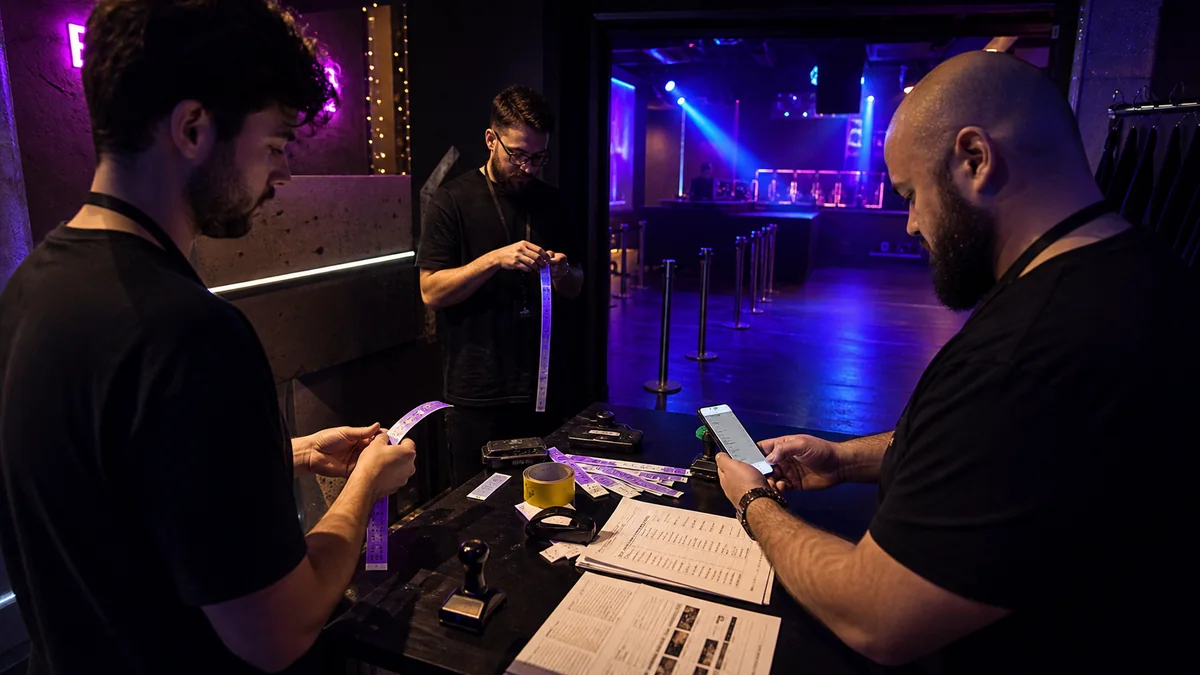
Club night entry has a specific pattern: low volume at doors-open, building through the evening, peaking typically two to three hours after opening. The entry operation needs to handle the peak period, not just the average arrival rate. One scanning device that processes arrivals easily at 10pm may be overwhelmed at midnight if the crowd surges.
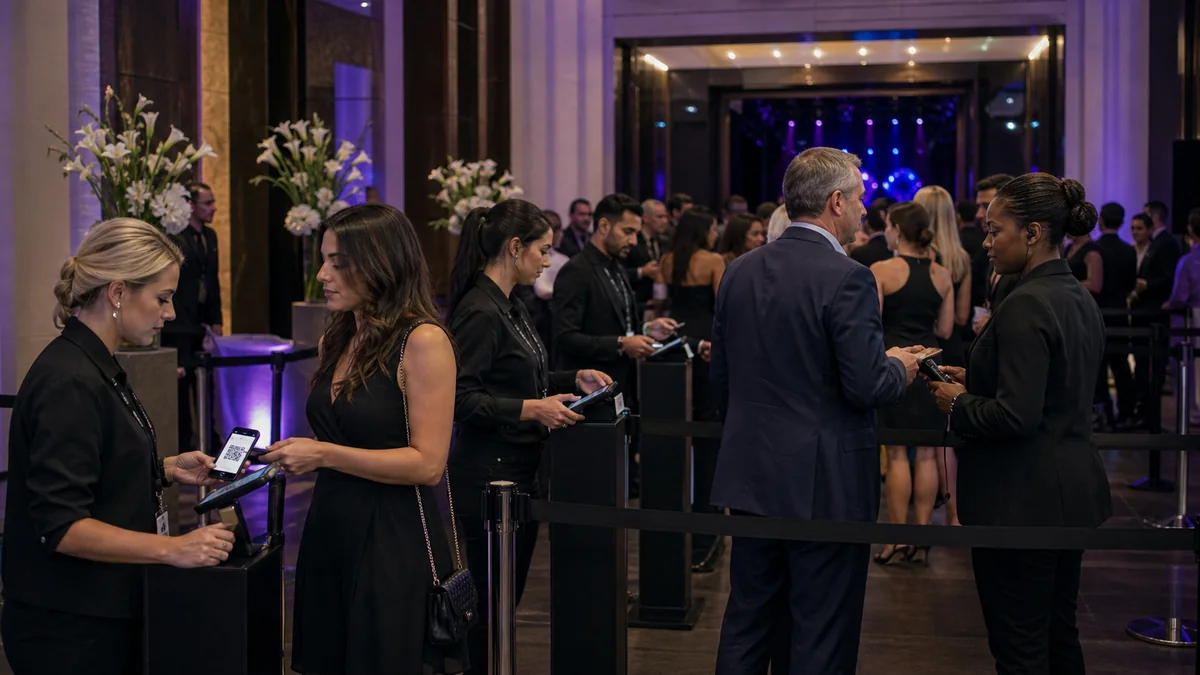
Download the ShowRave scanner app at/apps/scanneron dedicated devices before the event. Test the app, confirm offline mode is active, and brief the door team on the three results they will encounter: green for valid entry, red for already scanned, and red for invalid. The already-scanned result is more common at club nights than at most other event types because ticket sharing between friends, where one person buys for the group and forwards the QR code, is common. The duplicate scan detection is the mechanism that prevents this.
For nights where walk-ins are a significant revenue source, the door staff handling at-door sales should be positioned separately from the main scan queue to prevent a purchase being processed in front of people who already have tickets and just need to be scanned. The two flows move at different speeds and mixing them creates bottlenecks at the point of highest crowd pressure.
Your organizer dashboard shows a live count of check-ins throughout the night. For a licensed venue, this is the real-time evidence of compliance with the venue's capacity conditions. Designate one person with the authority to pause walk-in sales when the count approaches the venue's licensed maximum, and brief them on the specific count at which that pause applies before doors open.
\n\nThe post-event data that improves every subsequent night
Club nights that run regularly benefit from reviewing their data consistently after each edition. Which ticket tier sold fastest and in which week of the campaign? What was the no-show rate for advance buyers versus door buyers? Which performer affiliate link drove the most sales? What time did the entry peak hit and how long did it take the queue to clear?
These questions are answerable from the ShowRave post-event report, and the answers compound across editions. A promoter who knows that their Early Bird consistently sells out in the first four days has different pricing leverage than one who does not know when demand peaks. A promoter who knows that their headline DJ drove 40% of advance sales through their affiliate link has different negotiating leverage, and different promotional allocation, than one who cannot attribute sales to specific channels.
Export the attendee report after every night. Review the key metrics before the next edition goes on sale. The decision to open more Early Bird allocation, increase the advance price, adjust the door cap, or change the performer promotional arrangement should be based on what previous editions actually showed, not on what felt right at the time. The data that makes these decisions possible is only available to promoters who collected it consistently and reviewed it honestly.