
Gallery events exist across a spectrum that most ticketing guides ignore
An art gallery or exhibition event is not a single format. A private view of a new exhibition is an invitation-based free entry event where the guest list matters more than the ticket price. A ticketed artist talk in the same gallery is a paid, capacity-limited program event. A curated group exhibition with a vernissage is a social event with a commercial purpose. An art fair with multiple vendors is a market with access management requirements. A workshop series in a gallery space is a professional development event with pre-booking and dietary data requirements.
Each of these is a different ticketing problem. Treating them all as the same event type produces configurations that are wrong for most of them. This guide covers how to match the configuration to the specific format and what ShowRave handles in each case.
Private views and invitation-only openings
The private view is the most common gallery event format: a first evening of a new exhibition, limited to invited guests, before the exhibition opens to the public. The purpose is to give collectors, press, curators, and close supporters a first look and to generate word-of-mouth before the wider audience arrives.
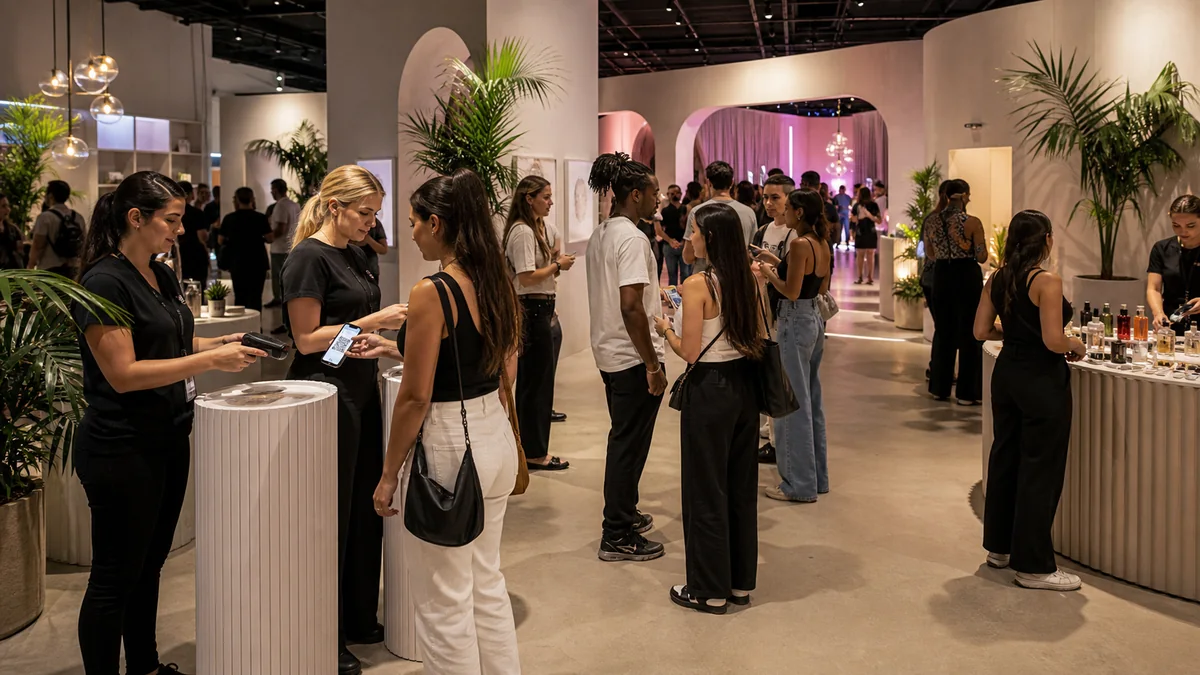
Private views benefit from registration even when free because the guest list is the operational tool for the evening: it tells the gallery how many people to expect, it captures the contact details of everyone who attended the opening, and it provides a check-in mechanism that prevents the event from becoming crowded beyond the gallery's comfortable capacity.
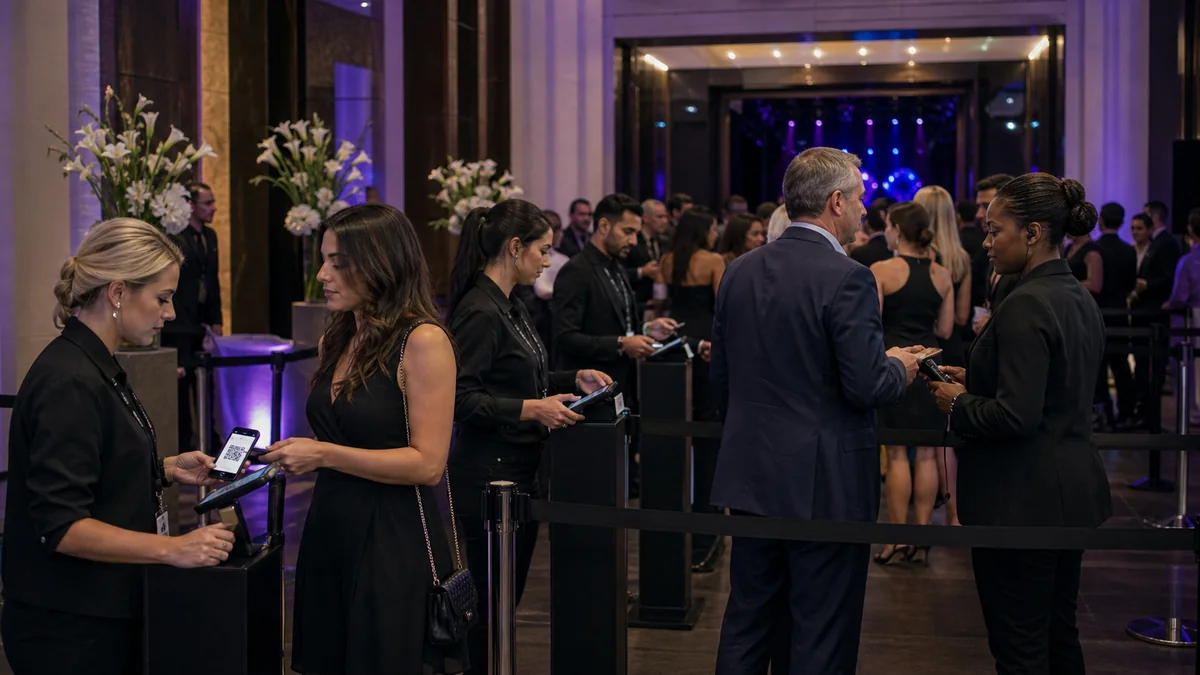
Configure the private view as a free event with private mode enabled in ShowRave, so the page is invisible to the public and accessible only to people who receive the direct invitation link. Distribute the link through the gallery's direct email invitation to the relevant guest list. Registrations provide an advance count for catering, a QR check-in process at the door, and an attendee list that feeds the gallery's CRM with contact details from everyone who attended.
For galleries that maintain a collectors database or press list, the private view attendee export is a consistent source of engagement data: who attended this opening, compared to who attended the previous one, and which contacts are showing regular engagement with the gallery's program. Over multiple openings, this data tells the gallery which relationships are active and which have gone quiet.
Ticketed artist talks and program events
Artist talks, curator walkthroughs, panel discussions, and educational events in gallery spaces are ticketed capacity-limited program events that work differently from free entry exhibitions. A ticketed artist talk at a gallery of 60 seats needs reserved capacity management, pre-event communication to registered attendees, and a door operation that validates entry against a confirmed guest list.
Configure these as paid ticket types with a specific capacity limit in ShowRave. Reserved seating with zone configuration works for program events where the room has defined seating areas. For standing or flexible-format events in gallery spaces, a general capacity limit per ticket type is sufficient.
Artist talks have a specific AddOn opportunity: an AddOn for a signed catalog, a print, or an exclusive work associated with the exhibition. An audience attending a paid artist talk has demonstrated specific interest in the artist's work and is the most likely audience in the world to purchase a collectible item. Configuring the AddOn at the same checkout moment as the ticket captures this revenue without a separate transaction or a secondary sales moment at the event itself.
Group exhibitions and vernissage events
Group exhibitions with multiple participating artists have a specific promotional dynamic: each artist has their own audience, and the exhibition's opening is the event that gathers those audiences in the same physical space for the first time. ShowRave's affiliate link system is particularly well-suited to this format: each contributing artist receives a unique tracking link that attributes registrations or ticket purchases to their promotion. The organizer can see which artist's promotion drove the most attendance, which is commercially useful for planning future group shows and for reporting to the participating artists.
The DP Generator at/dp-generatorworks well for exhibition openings because the visual arts community is image-driven and publicly shares attendance at exhibitions as a form of cultural identity. A branded frame featuring the exhibition artwork and opening date, updated by attendees across their social profiles in the week before the vernissage, reaches arts-community audiences through personal social signals that gallery advertising cannot replicate.
Merchandise and catalog AddOns
Gallery events consistently present the strongest case for AddOns of any event type because the buyers are people who have demonstrated interest in the work being exhibited. A catalog, a signed print, a small edition work, or a publication associated with the exhibition are all products that the attending audience is predisposed to want. Configuring these as checkout AddOns on the ticket for any paid gallery event converts that predisposition into revenue at the point of maximum engagement.
For limited edition prints or works, the checkout AddOn with a quantity limit that closes when the edition is sold out creates genuine collector scarcity: only buyers who registered for the event had access to purchase, and within that audience only those who selected the AddOn at checkout secured a copy. This exclusivity is consistent with the gallery's commercial model and with the expectations of collectors who value access and scarcity.
Pre-order AddOns for catalogs allow the gallery to print to demand rather than to estimated demand, reducing waste and production risk. Buyers who select the catalog AddOn at checkout are committing to a specific copy before the print run is confirmed. The ShowRave AddOn sales count gives the gallery's printer a confirmed order quantity well before the exhibition opens.
Public exhibition events and art fairs
Public exhibitions and art fairs that charge admission use ShowRave's standard paid ticket configuration. For fairs with multiple participation sessions or timed entry, session-based ticket types with independent capacity limits manage footfall density across the day. An art fair that runs morning and afternoon sessions with a fixed number of places per session maintains quality of experience for each session's visitors by preventing the total attendance from compressing into a single peak period.
For art fairs where some exhibitors are paying a stall fee and others are contributing works on consignment, the ticketing revenue is the organizer's primary income. Configure ticket pricing to cover venue hire, production, marketing, and administration at a realistic fill rate, and use the AddOn feature to offer guided tours, catalog packs, or introductions to exhibitors as premium extras for buyers who want more than standard admission.
Promoting art events through the right channels
Arts audiences discover events through channels that are specific to the arts community: gallery mailing lists and newsletters are the primary direct channel; arts press and cultural media carry significant reach for larger exhibitions; Instagram and Pinterest are the strongest social channels for visual arts content; and arts community platforms, local arts council listings, and university arts networks serve more specific audience segments.
For gallery events with a defined collector or collector-adjacent audience, personal invitation and direct email consistently outperforms broadcast promotion. The private view invitation to a collector list is more effective than an Instagram announcement to a general following, because the collector relationship is personal and the exclusive nature of the private view invitation signals that the gallery values the relationship.
Configure your gallery event at/create/create-venue-eventwith the format-appropriate ticket structure, enable private mode for invitation-only events, and set up the AddOns and affiliate links before the first invitation goes out.
Building the gallery's recurring audience through event data
Galleries that run a regular program of events, openings, talks, and workshops build a distinct audience asset through consistent event data management. The attendee export from each event, retained across multiple seasons, tells the gallery which contacts attend regularly, which attend occasionally, and which last attended more than a year ago. This engagement history is the foundation for targeted communication that matches the contact's demonstrated relationship with the gallery rather than sending the same message to every name on the list.
A collector who attended the private view at the last four openings is a different contact from an art student who attended one workshop eight months ago. The first group receives early access to the next private view and first sight of any significant new work before the general announcement. The second group receives information about the gallery's education and workshop program rather than collector-oriented communications. The data that enables this segmentation is in the ShowRave attendee exports, available after every event, if those exports are retained and organized consistently.
For galleries that want to build a membership or friends program as a recurring revenue stream alongside their events program, the committed event audience, as identified through attendance history, is the natural founding membership cohort. People who have attended three or more events are demonstrably engaged with the gallery's program and are the most likely to convert to a membership or regular supporter relationship. The event data does not build the membership program automatically, but it identifies exactly who to approach when the program is launched.
Create your gallery or exhibition events at/create/create-venue-event. Enable private mode for invitation-based openings. Configure AddOns for catalogs and editions. Set up affiliate links for participating artists. Each configuration takes a few minutes and produces compounding returns across the full exhibition program.
\n\nThe data from every edition of every event is an asset if it is retained and used. It is noise if it is collected and discarded. The habit of treating attendee data as a compounding resource rather than a post-event formality is the single operational decision that distinguishes event programs that grow efficiently from those that work harder for the same results year after year.
\n\nGallery and exhibition events have one of the strongest natural alignments between the event experience and the promotional tools available. The audience values visual work, shares it publicly, and forms identity around cultural engagement. Every ShowRave feature, from the DP Generator to affiliate links to the explore page, works with that alignment rather than against it. Use them deliberately and the gallery's event program becomes one of its most powerful audience-building assets.