
A gala dinner is three commercial transactions packaged as one event
Every gala dinner or awards ceremony is simultaneously a ticketed event, a sponsorship opportunity, and a professional networking occasion. Getting the ticketing right means building a structure that handles all three: individual delegate seats, full table packages for corporate buyers, and sponsor table arrangements that come with a different set of inclusions and obligations. Treating it as a single-tier event misses the commercial opportunity and creates the administrative chaos of managing three different buyer types through an inappropriate workflow.
The events that generate the most revenue per head from galas and award ceremonies are the ones where the ticket structure was designed deliberately before the first seat went on sale, where the buyer journey matches the sophistication of the event, and where the post-event data serves both the organizer's follow-up goals and the sponsor's reporting needs.
Building the tier structure for a gala
A gala or awards ceremony typically needs five distinct ticket types, each serving a different buyer category with different commercial arrangements.
Individual delegate seat:The standard admission. Includes entry to the ceremony, dinner service, and access to the main program. This is the baseline product. Price it so the event covers its catering and venue costs at 70% of individual seat capacity, before accounting for the higher-value table and sponsor packages.
Table of eight or ten:A full table at a fixed per-table price, typically representing a modest saving over purchasing individual seats separately, enough to make the calculation obvious. The table package buyer is almost always a corporate buyer making a single purchasing decision for a group. Make the table description specific: "Reserved table of ten including pre-dinner reception access, dinner service for ten, table program, and post-ceremony drinks." The buyer needs to see exactly what the table price covers before they can justify it internally.
VIP or patron table:A premium table with additional inclusions: premium positioning in the room, a dedicated host or server, exclusive pre-reception access, an acknowledgement in the program, or a sponsor branding opportunity at the table. Set VIP table quantities at two to four depending on the room layout, so scarcity is genuine and the experience quality can be maintained with dedicated staffing.
Sponsor package seats:Complimentary seats included as part of a sponsorship commitment, configured as a separate free ticket type with a strict quantity limit matching the sponsorship agreement. This gives a clean record of how many sponsor places have been issued, prevents informal additions, and ensures sponsor arrivals go through the same QR check-in process as paying attendees.
Complimentary guest (nominees, speakers, award recipients):A free ticket type for people who are attending in a professional capacity and should not be paying. Configure this as a separate type with its own label so the post-event export distinguishes this group from paying attendees for financial reporting purposes.
Dietary requirements and seating, capturing data that actually works
The catering brief for a gala dinner is entirely dependent on the quality of dietary data captured at registration. A caterer who receives an accurate pre-event dietary breakdown can prepare precisely and waste nothing. A caterer who receives an approximate headcount and a rough estimate of vegetarian guests is guessing, and the errors tend to manifest during service.
Configure dietary requirement capture as an AddOn or registration field in ShowRave so that every buyer, whether individual or table coordinator, completes the field as part of checkout. For table packages where one buyer is purchasing for multiple people, include a clear instruction in the ticket description: "You will receive a confirmation email with a link to complete individual dietary requirements for all ten guests at your table." This sets the expectation that a second data collection step is required and reduces the chasing that happens when table coordinators forget to gather requirements from their guests.
The seating plan for a gala dinner is best built from the ShowRave attendee export once registrations close. Export the list sorted by ticket type, then build the seating plan from the confirmed data rather than from a working spreadsheet assembled across multiple sources. The accuracy of the seating plan is only as good as the accuracy of the registration data, which is why capturing it in the platform rather than in a separate form or via email is the operational foundation that everything else depends on.
Corporate buyers: invoicing and approval workflows
Corporate gala ticket buyers frequently cannot pay by personal card on behalf of their organization. They need an invoice to a company name, a purchase order number for internal approval, or both. This is not an edge case; it is a standard requirement for the majority of corporate table buyers at industry galas and award ceremonies.
Address it in the event description rather than discovering it at checkout. Include a line: "Corporate table buyers requiring an invoice or purchase order process should contact [email] before completing their booking." This creates a clean pathway for the buyers who need it and does not create friction for buyers who can pay directly.
For recurring galas where corporate buying is a significant proportion of revenue, building a clear invoice request process into the standard event setup reduces the volume of one-off queries in the weeks before the event and allows accurate revenue forecasting against confirmed corporate commitments.
Sponsor reporting after the event
Sponsors at a gala are making a business investment. The organizers who retain sponsors year after year are the ones who provide a specific, data-backed post-event report that gives the sponsor something tangible to show internally. The organizer who sends a thank-you note and a printed program is competing against other sponsorship opportunities that do the same thing. The organizer who sends an attendance breakdown by ticket type, social coverage data, photo evidence of their sponsor branding in the room, and a specific note about the audience profile is doing something the sponsor can act on.
The ShowRave post-event export provides the attendance data: confirmed attendee count by ticket type, no-show rate by category, and any registration field data that captures attendee profile information. Combine this with your own photography and social coverage records to produce a report that answers the questions a sponsor's marketing or BD team will ask when reviewing the ROI of the sponsorship.
Send the post-event sponsor report within two weeks of the event. Use it as the opening of a renewal conversation rather than a closing formality. A sponsor who has just received a professional, data-backed report about what their investment produced is in the right frame of mind to discuss the next edition, and their positive memory of the event is at its freshest.
The check-in experience for a professional audience
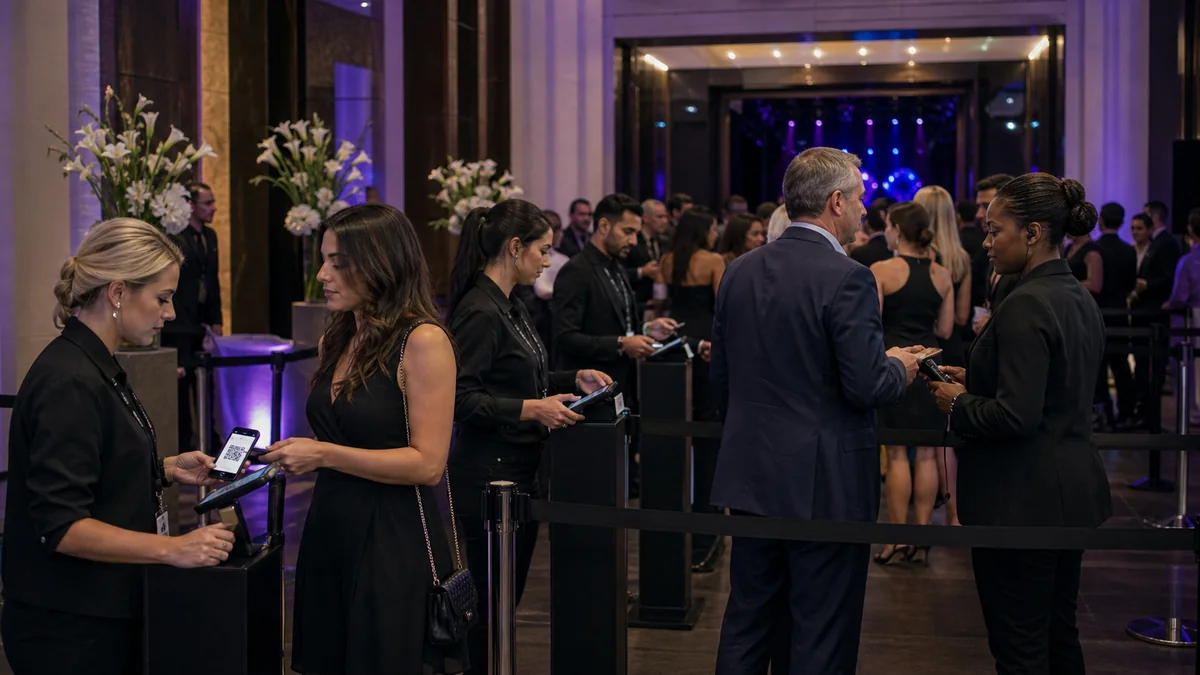
Gala and awards ceremony guests arrive expecting a professional experience from the first moment. A slow or confused check-in creates a poor first impression before anyone has seen the room. For a 300-person black-tie event, the check-in experience is part of the event's quality signal.
Download the ShowRave scanner app at/apps/scanneron dedicated devices before the event. Assign a scanner to the main entry and, if the event has a pre-reception or VIP arrival, a separate device for that entry point. Brief the door team on the ticket type that is valid at each point.
For table-allocated events, have the seating plan printed and available at a separate desk staffed by a coordinator. Buyers who have been scanned and confirmed can be directed to the seating desk for their table assignment. Separating the QR validation queue from the table assignment query reduces the bottleneck at both points and keeps the arrival experience moving smoothly.
Pre-event communication for a professional audience
Awards ceremony and gala dinner guests arrive with a different level of expectation from entertainment event audiences. They expect a professional, smooth experience from the moment they arrive. Pre-event communication that ensures every guest knows exactly what to expect, where to arrive, and what to prepare removes the on-arrival friction that can undermine the first impression of an otherwise well-produced event.
Send a comprehensive logistics email one week before the event. Include: the exact venue address with a map reference and specific entrance point if the venue has multiple access routes; parking and public transport options, particularly important for evening events in city centers; the arrival time, the pre-dinner reception time if applicable, and the start time of the formal program; dress code stated explicitly; and a contact number for genuine day-of queries that goes to a staffed line rather than a general inbox.
For table bookings, send the table assignment details in a separate communication once seating is finalised. The table coordinator for each corporate booking should receive their table number and a confirmation of how many places are reserved, so they can brief their group before arrival rather than coordinating on the night.
Building the gala into a recurring revenue stream
Annual galas and awards ceremonies are one of the most commercially reliable recurring event formats because the renewal dynamic is built in. Sponsors who appeared at last year's event have a baseline to compare against. Corporate buyers who found the networking valuable have a reason to return. Winners and nominees have a relationship with the event's recognition framework that carries forward.
The post-event report sent to sponsors within two weeks of the event is the document that turns a one-off sponsor into a multi-year partner. It should be specific, data-backed, and structured around what the sponsor actually cares about: how many of their target audience attended, what their branding reached, and what measurable outcome the relationship produced. ShowRave's attendee export provides the attendance data that underpins this report. Build the report template once, populate it after each edition, and treat it as a standard deliverable rather than an optional extra.
Past attendees are the most efficient source of future bookings. Export the full attendee list after each gala, retain those who opted in to future communications, and give them early access to the next edition before the public announcement. The table buyer who had a positive experience last year and hears about next year's gala before their competitors is the easiest sale the event will make.
Configure your gala or awards ceremony on ShowRave at/create/create-venue-eventand review the payment and payout arrangements at/payment-and-payoutbefore the first table package goes on sale.