Festivals are the most commercially complex events most independent organizers ever build
A single-night show has one ticket type, one doors time, and one stage. A festival has day tickets, weekend passes, camping options, VIP tiers, early entry, merchandise bundles, staged arrivals across multiple entry points, and a marketing campaign that involves multiple artists each promoting to their own separate audiences. The ticketing infrastructure that handles a 200-person show is not the infrastructure that handles a 2,000-person festival across multiple days.
Getting festival ticketing wrong does not just create organizational friction. It loses revenue that the event could have captured through smarter tier structure, leaves attendee data scattered across manual processes, and produces an entry operation that backs up the moment doors open. Getting it right from the setup stage means every subsequent decision, from how to promote the event to how to brief the door team, builds on a solid foundation.
This guide covers the full ticketing setup for an independent festival, from the first ticket tier to the final attendance report.
Building the tier structure that captures every buyer segment
A festival audience includes at least five distinct buyer types, and a single ticket price serves none of them particularly well. Early enthusiasts who will buy the moment tickets drop are worth rewarding with an Early Bird tier. Core fans who need the full weekend to justify attendance want a multi-day pass. Day visitors who can only make one day want flexible single-day options. Groups of friends want a reason to commit together. VIP buyers want something genuinely different from the standard experience. Each of these is a separate tier with its own price, its own quantity, and its own commercial logic.
Early Bird
The Early Bird allocation should be the first tier to open and the first to close. Set it at 15 to 20% of total capacity at a genuine discount below your main ticket price. The purpose is dual: it generates upfront cash flow before your marketing has built to full speed, and when it sells out it becomes the social proof that makes every subsequent tier easier to sell. A sold-out Early Bird is the best possible marketing asset for a festival announcement. Set it as a quantity limit rather than a date limit so buyers see the count running down.
Day tickets
Single-day tickets are the fastest route to casual attendance from people who cannot commit to a full festival experience. Price them noticeably below the full weekend pass to preserve the pass's value, and configure them as separate ticket types per day so that each day's capacity is managed independently. A Saturday that sells out should not block Sunday sales, and vice versa. Configure per-day capacity limits on each day ticket type in ShowRave so that each closes automatically when its specific allocation is full.
Weekend passes
The weekend or multi-day pass should be priced to represent clear savings over buying individual day tickets. The saving should be visible and specific, buyers do the maths and the pass should win obviously. This is the commercial model that drives revenue from the most committed audience segment and reduces the operational complexity of having the same person arrive on multiple days with separate tickets.
VIP
Festival VIP works when the differential is genuine and visible. A dedicated viewing platform, a covered backstage bar area, an express entry lane that bypasses the main queue, a physical item included in the price such as a program or merchandise pack, or access to a hosted meet-and-greet session. Do not create a VIP tier where the only difference is a different wristband color. Attendees in the general area watching the same stage as the VIP section will notice if the distinction is cosmetic.
Keep VIP quantities tight, typically 8 to 12% of total capacity, so the scarcity is real and the experience quality can be maintained with dedicated staffing. A VIP section that is under-resourced or overcrowded stops feeling like VIP quickly and damages trust with the buyers who paid the most.
Group tickets
Groups of four or more represent one of the highest-converting segments for festival ticket sales because the decision to attend is social and the coordination friction of collecting money from multiple people is real. A group discount tier of 10 to 15% for groups of four or more removes that friction: one person in the group buys the block, settles up with their friends independently, and the organizer receives a multi-seat transaction rather than a single-seat one.
AddOns that increase revenue from the same buyers
Festival AddOns are where significant revenue sits that most organizers do not capture because they try to sell merchandise separately after purchase rather than at the point of maximum buyer engagement. A buyer who has just committed to a weekend festival pass and is still in the checkout flow is at the highest point of interest in the event they will ever reach. That is exactly the moment to offer a branded T-shirt, a pre-order of the limited festival program, a camping pack if the event has an on-site camping area, or a meal deal that covers catering for the full weekend.
ShowRave supports AddOns configured alongside ticket types in the same checkout flow. Each AddOn has its own name, price, quantity limit, and description. A buyer sees the AddOn options as part of completing their ticket purchase, not as a separate upsell after the fact. The conversion rate from in-checkout AddOns is measurably higher than post-purchase email campaigns asking buyers to come back and add an extra.
Set AddOns up when you configure your ticket tiers, not as an afterthought once the event is already on sale. Buyers who purchased in the first week without seeing AddOns are buyers whose opportunity to add them is largely gone.
Artist promotion through affiliate links
Every confirmed artist, performer, or headliner at a festival has their own audience. That audience is the warmest possible pool of potential ticket buyers because the connection already exists: these people follow or support the performer and will attend an event where they are playing. Getting those artists actively promoting to their own audiences is one of the highest-ROI promotional activities available to a festival organizer, and it can be structured as a trackable, commission-based channel through ShowRave's affiliate link system.
Give each performing artist or their management a unique affiliate link before tickets go on sale. When their fans purchase through that link, the sale is attributed to the artist's channel and a commission is logged. The artist has a financial incentive to actively promote rather than passively mention. You have a measurable record of how many tickets each artist drove, which is useful both for paying commissions and for understanding which artists generate the strongest audience response.
Beyond artists, affiliate links work for community promoters, local media outlets, and any organization with a relevant audience you want to activate. Each gets their own unique link, their own commission structure, and a dashboard entry showing their attributed sales. The program costs nothing until sales happen.
The DP Generator for festival social reach
Festivals create a strong social identity around attending. People wear the event as part of their identity before they arrive, during, and after. The DP Generator at/dp-generatorgives buyers a way to express that identity on their social profiles: a branded profile picture frame featuring the festival artwork, the dates, and the event name. When attendees update their profile pictures across Instagram, WhatsApp, Facebook, and LinkedIn, their entire network sees the festival through a personal social signal rather than through advertising.
Share the DP Generator link in the ticket confirmation email and in your social posts in the weeks before the festival. Earlier is better: a buyer who updates their profile picture six weeks before the event is generating organic reach across a longer window than one who does it the night before. The compounding effect across hundreds of attendees each with their own networks produces a promotion reach that no advertising budget replicates in the same trusted, personal context.
Entry management at festival scale
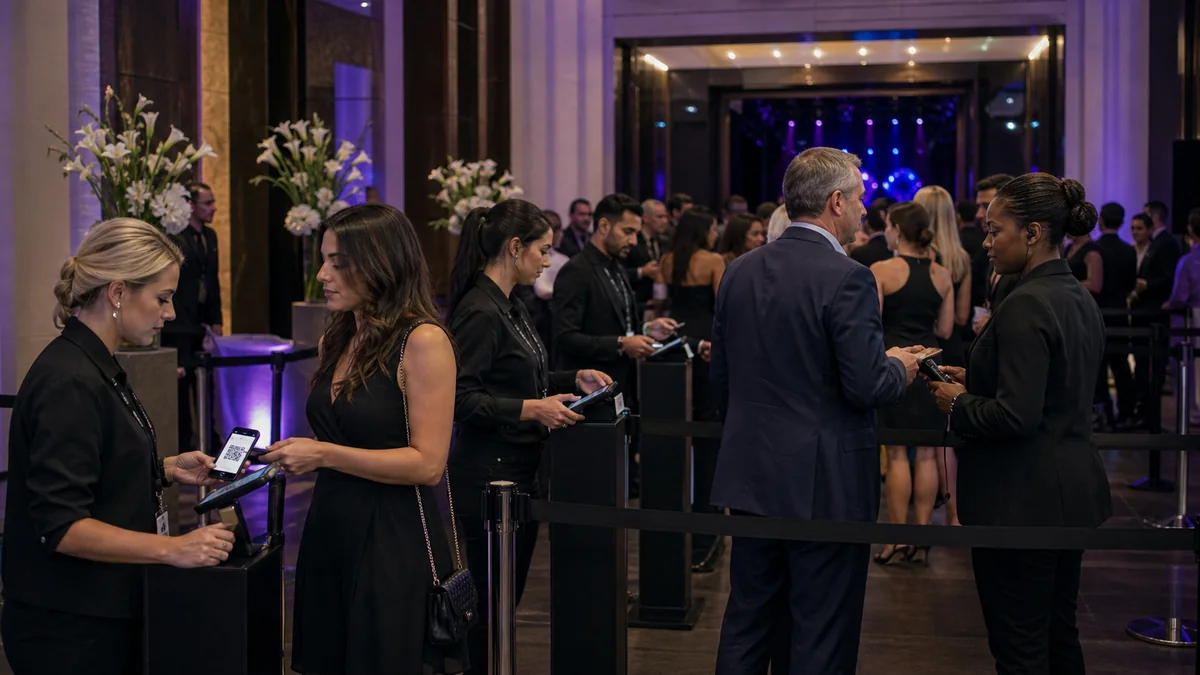
Festival entry is structurally different from single-show entry because of the arrival distribution: large numbers of attendees arriving across a longer window, potentially on multiple days, through multiple gates, with different wristband or ticket types for different areas. The entry system needs to handle this without creating bottlenecks at the gates that damage the first impression of the event.
Download the ShowRave scanner app at/apps/scanneron every device at least 48 hours before the first event day. Log in, sync each day's event, and confirm offline mode is active so that signal problems at an outdoor festival venue do not stop entry operations. Multiple devices scan simultaneously against the same event data, so separate entry lanes for different ticket types (day ticket holders, weekend pass holders, VIP) operate independently without coordination overhead.
Brief door staff before each day's gates open on the three results they will see: green for valid entry, red with "already scanned" for a duplicate attempt, and red with "invalid" for a code that does not belong to the event. For a multi-day festival, day ticket holders for Day 2 who attempt entry on Day 1 should see a specific message rather than a generic red. Configure your ticket types clearly so that each day ticket type is identifiable in the scan result.
Your organizer dashboard shows a live check-in count as scans accumulate. For a licensed outdoor festival, this is your real-time capacity evidence. For a commercial festival where knowing when each gate opened and how quickly they cleared matters for future planning, the timing data in the post-event report tells the full story of how entry actually flowed.
Post-festival: the data that makes the next edition better
The post-festival analytics tell a story that no amount of in-event observation can match. Which ticket tier sold fastest and in what week of the campaign? What was the no-show rate for day tickets versus weekend passes? Which artist's affiliate link drove the most sales? What was the AddOn attachment rate and which items sold out earliest? Which day had the highest check-in volume and at what time did the entry surge peak?
These are not vanity numbers. They are the brief for the next festival's pricing, promotion, staffing, and entry configuration. An organizer who reviews this data within 48 hours of the festival closing, while the context is still fresh, and documents the answers makes every subsequent edition more efficient than a promoter who moves on and starts from scratch each year.
Export the full attendee report from ShowRave after each festival day closes. Retain it alongside your cost data and your channel attribution breakdown. The compounding intelligence built from three editions of reviewed data is one of the most durable advantages an independent festival can develop.