The platform built for the buyer is not the same as the platform built for the organizer
Traditional event ticketing platforms grew out of a simple premise: create a central place where people search for events, buy tickets, and the platform connects buyer to seller. That model works well for buyers. It creates a convenient marketplace. But it was designed around discovery and transaction processing, not around the organizer's need to own their audience, control their revenue, and run their event operations without dependency on a third-party ecosystem.
Modern organizer-first ticketing inverts that premise. It starts with what the organizer needs: a configurable event page they fully control, a ticket structure that matches their commercial model, an audience list that belongs to them, scanner-ready entry without additional tools, and revenue that reaches them cleanly. Discovery is a feature, not the product's reason for existing.
The practical differences between these two approaches affect every stage of an event, from the first ticket sold to the post-event debrief. This post covers what those differences look like in practice.
Who owns the buyer relationship
In a traditional marketplace ticketing model, the buyer relationship technically flows through the platform. When a buyer purchases through a discovery marketplace, they may be receiving post-purchase communications from the platform, seeing promotions for other events on the platform, and returning to the platform's ecosystem for future purchases. The organizer receives a transaction confirmation and an attendee list, but the ongoing relationship with that buyer is partially mediated by the platform.
In an organizer-first model, the buyer relationship is direct. Every buyer who purchases through ShowRave provides their details to the organizer, not to a marketplace. The confirmation email comes from the event. The pre-event reminder comes from the organizer. The post-event follow-up comes from the organizer. The attendee list is exportable in full and belongs to the organizer, not the platform. There is no competing platform presence in the buyer's inbox.
This distinction compounds over time. An organizer who has run ten events through a traditional marketplace has generated a lot of ticket sales but may have built very little of a directly owned audience. An organizer who has run the same ten events through an organizer-first platform has built a database of verified buyers they can communicate with directly for every subsequent event they ever run.
What happens at checkout
Traditional marketplace platforms often present a checkout that includes booking fees or service charges on top of the ticket price the organizer advertised. The buyer who clicked on a ticket listed at one price arrives at checkout and sees a higher total. For buyers accustomed to this model, it is an expected friction. For buyers encountering it on a modest community event ticket, it can be the difference between completing the purchase and abandoning it.
ShowRave's checkout presents the price the organizer set. Attendees pay exactly that price. There are no booking fees or service charges added to the buyer's total at checkout. The price the organizer advertises in their marketing is the price the buyer pays. This closes the gap between the price a buyer sees and the price they commit to, which reduces the hesitation that causes abandoned checkouts at the final step.
For organizers communicating a ticket price through social media, email, or word of mouth, the consistency between the advertised price and the checkout price builds credibility. What the organizer says the ticket costs is what the buyer pays.
Revenue control and payout timing
Traditional ticketing platforms vary significantly in when they release funds to organizers. Many hold ticket revenue until after the event date, releasing payouts within a defined window after the event closes. For organizers who need to fund pre-event costs, such as venue deposits, performer fees, production equipment, and marketing spend, this creates a cash flow gap. The money is sitting in the platform's hold while the organizer's costs are coming due.
ShowRave releases payouts to organizers on a rolling basis rather than holding funds until after the event. The specifics are detailed at/payment-and-payout. For independently produced events where pre-event costs are real and need to be covered from ticket revenue, this timing difference is not a minor detail. It changes whether the financial planning of the whole event is straightforward or requires bridging.
The scanner and entry operation
Traditional marketplace platforms typically include a scanner app as part of their feature set. ShowRave does too, and it is free, available for both iOS and Android at/apps/scanner, works offline, and supports multiple devices scanning the same event simultaneously. The operational capability is comparable.
What differs is the entry experience from the buyer's perspective. In a marketplace model, buyers may be directed to retrieve their ticket from the platform's app, requiring an account login and an app download. A buyer who has not prepared this in advance, or whose phone battery is low, faces friction at the door that the scanner operator cannot easily resolve.
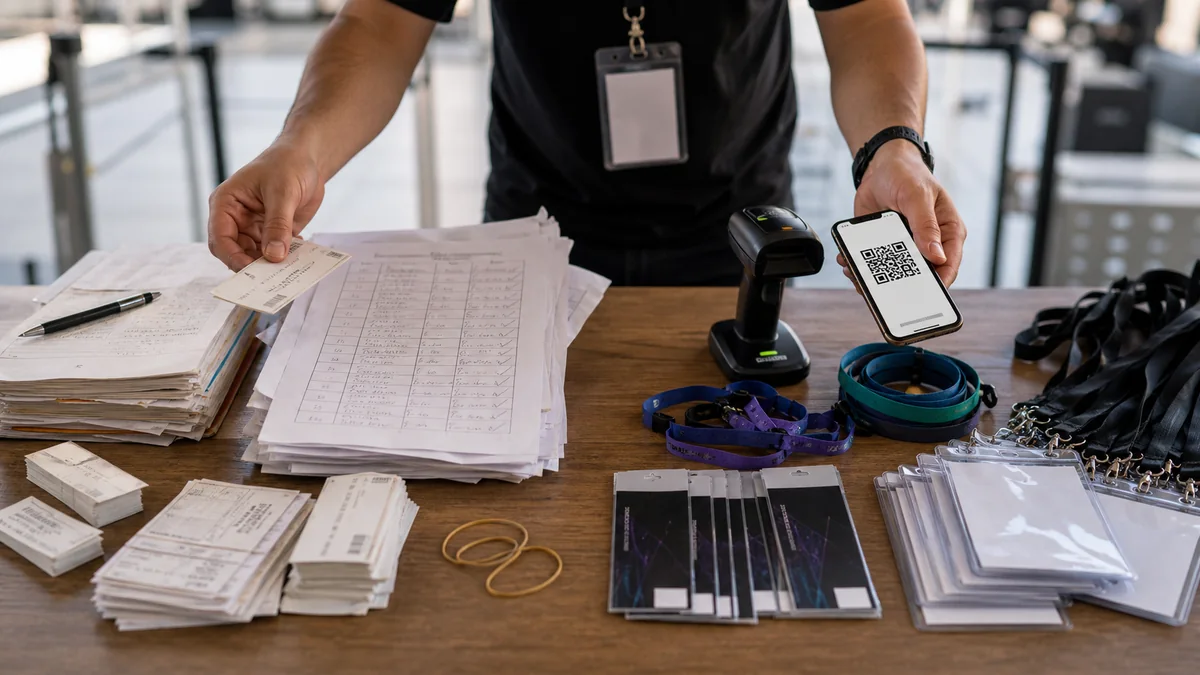
ShowRave delivers a QR-coded PDF ticket to the buyer's email immediately after purchase. The buyer presents the email, a screenshot of the QR code, or a printed copy. No app login required. No account needed. No connectivity required on the buyer's side. The QR code is unique to their specific ticket and is validated in real time against the attendee list, with duplicate scan detection that prevents a shared code from being used more than once.
AddOns, affiliate links, and the DP Generator
Traditional marketplace ticketing is built primarily around the ticket transaction. Extras, promoter networks, and social sharing tools are either absent or require separate tools to implement.
ShowRave includes AddOns at checkout as a native feature: organizers can configure merchandise, meals, workshop materials, or any extra that buyers can select alongside their ticket. The revenue from AddOns is captured in the same transaction and tracked separately in the sales report, without requiring a second checkout flow or a separate system.
The affiliate link system gives each promoter a unique tracking link with commission on attributed sales. Organizer-led promotion through a network of affiliates, whether past attendees, local community figures, or performers, is built into the platform rather than requiring third-party referral tools.
The DP Generator at/dp-generatorallows attendees to create branded profile pictures featuring the event's artwork. When buyers update their profile pictures on Instagram, WhatsApp, or Facebook with the event frame, their entire network sees the event through a personal social signal. This organic promotion mechanism exists because the platform was designed around helping organizers promote their events, not just process transactions for them.
Discovery still matters, and ShowRave provides it
One genuine advantage of traditional marketplace ticketing is the passive discovery that comes from a large consumer-facing event database. Buyers searching for events in their city may encounter listings without any direct promotion from the organizer. For organizers without an established audience, that organic exposure is valuable.
ShowRave's explore page at/exploregives events listed on the platform a secondary indexed surface where attendees can browse by category, date, and location. Events are also indexed by search engines through standard web indexing. The discovery capability is real and continues to grow. For organizers who already have their own audience, the difference in discovery volume between platforms is rarely the deciding factor in how full their events are.
What the shift actually produces
Organizers who move from traditional marketplace ticketing to an organizer-first model consistently describe the same practical gains: a cleaner understanding of which channels produce their buyers, a directly owned attendee database that compounds across events, a checkout experience that converts better because the price is transparent, and an entry operation that runs on tools they control without dependency on platform accounts or consumer apps.
The shift does not require sacrificing professionalism or capability. Modern organizer-first ticketing delivers the same scanner, the same PDF tickets, the same reporting, and the same event page infrastructure. What changes is the underlying model: the platform works for the organizer, not the other way round.
Review ShowRave's current offering at/pricingand/sell-tickets-online.
The data you build across every event
Traditional marketplace ticketing generates transactional data: tickets sold, revenue collected, refunds processed. Modern organizer-first ticketing generates audience data: who bought, which channel sent them, what tier they chose, whether they attended or did not show, which AddOns they selected, and whether they came back for a subsequent event.
The difference matters because audience data compounds. An organizer who has run ten events on a modern platform knows which of their promotion channels consistently produce buyers who actually attend. They know the no-show rate by tier and by acquisition source. They know which previous attendees are likely to buy early versus late, and which need a specific prompt to commit. That knowledge improves every subsequent event in ways that purely transactional data cannot.
The ShowRave attendee export, available for every event from the organizer dashboard, captures the complete picture. Channel attribution through affiliate links tells you which promoter or which channel sent each buyer. Check-in data tells you who attended versus who registered and did not show. AddOn attachment rate tells you which extras your audience finds worth buying. These are planning inputs, not just historical records.
Growing from small to large on the same platform
Traditional marketplace platforms are typically built for a specific scale: consumer discovery for mid-to-large events, or lightweight tools for small community events. Scaling across that range often means switching platforms or accepting feature limitations at one end of the scale.
Modern organizer-first ticketing scales with the event. ShowRave handles the 30-person workshop and the 5,000-person stadium event through the same ticket configuration, the same scanner app, the same attendee management dashboard, and the same affiliate link and AddOn infrastructure. The operational complexity increases as the event scales, but the platform and tools remain consistent.
For organizers who are growing, this consistency means the habits and workflows built on a 200-person event transfer directly to a 2,000-person event. There is no platform migration required, no new team training, and no loss of historical attendee data when the scale changes. The audience built across smaller events is the audience from which the first larger event is promoted. That continuity is one of the clearest practical advantages of building on a single consistent platform from the beginning rather than switching tools as scale demands it.