
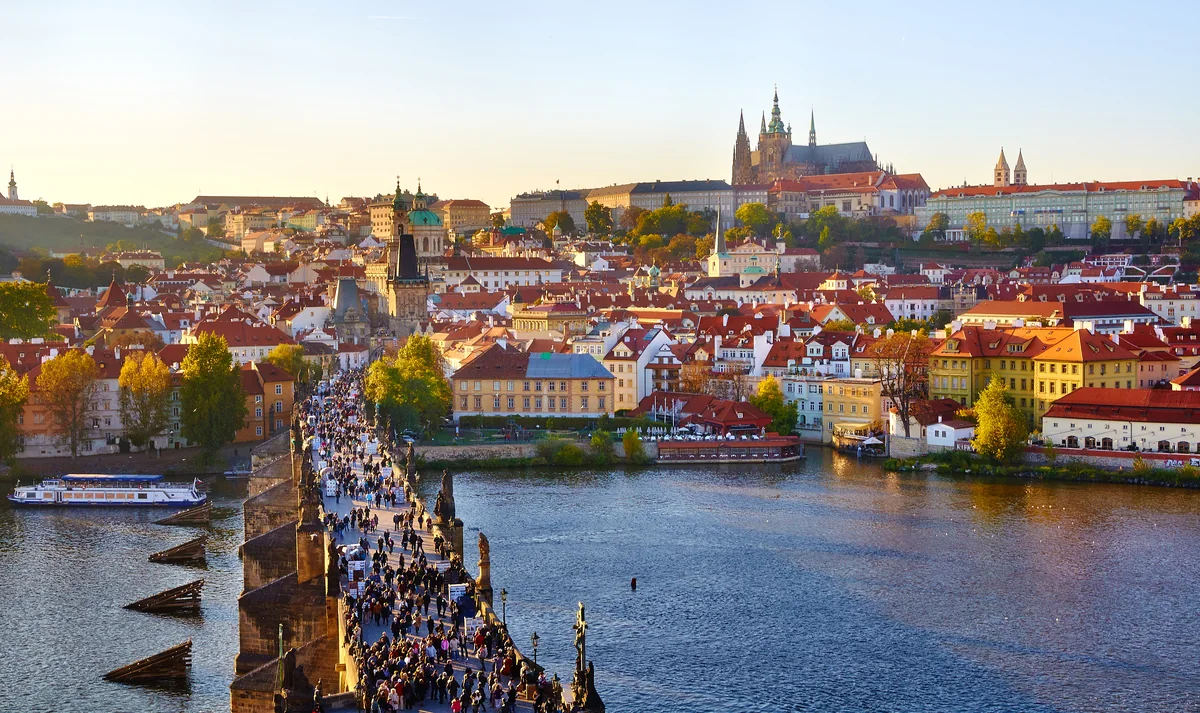
The Czech Republic carries one of the most concentrated collections of architectural heritage in Central Europe, and Prague in particular is a city whose historical layers are visible in its streets to a degree unusual even by European standards. The city's Old Town, Mala Strana, and Hradcany districts survived the Second World War largely intact, giving them a completeness that bombed-out central European cities cannot match. Prague's reputation as a destination for nightlife tourism adds a different dimension to a city that rewards attention at every level. Brno, Ostrava, and the spa town of Karlovy Vary each add distinctive elements to a country worth exploring beyond the capital.
Live Music
The Czech Republic has a deep classical music tradition that reflects its position at the heart of Central European musical culture. Antonin Dvorak and Bedrich Smetana are the two most internationally significant Czech composers, and their music is performed regularly in concert halls across the country. The Prague Spring International Music Festival, held every May, opens on the anniversary of Smetana's death with a performance of his symphonic poem Ma vlast and draws major international soloists and ensembles for three weeks of concerts. Beyond classical music, Prague has a varied and active popular music scene: rock and alternative music have deep roots in Czech culture, connected to the underground music scene that operated as a form of cultural resistance during the communist period. The electronic and underground music scenes in Prague's Holesovice and Zizkov districts are genuinely interesting. Brno has a strong alternative music scene.
Nightlife
Prague has developed a significant reputation as a nightlife destination that reflects both the quality of its venues and the relative affordability of a night out compared to Western European capitals. The historic center is heavily tourist-oriented, particularly around Wenceslas Square and the Old Town. The more interesting nightlife for people who want to engage with local culture is in Zizkov, a historically working-class district with a high density of small bars and an atmosphere that is determinedly unpretentious, and in Vinohrady, a more bourgeois neighbourhood with better cocktail bars and wine bars. Holesovice, a former industrial district north of the city center, houses some of Prague's best clubs in converted warehouses and factory buildings. Czech beer culture is the foundation of the entire social scene: Czech pilsner, which invented the style, is drawn from the tap with a care and skill that makes even a simple pub an experience.
History, Culture, and the Arts
Prague is one of the great museum cities in Europe. The National Museum at the top of Wenceslas Square houses natural history and cultural history collections across two buildings. The National Gallery is distributed across several historic buildings including the Sternberg Palace and the Veletrzni Palac, which holds the finest collection of 20th-century Czech and Czechoslovak art. The Mucha Museum is dedicated to Alfons Mucha, the Art Nouveau illustrator whose work is among the most recognisable of the fin-de-siecle period. Franz Kafka spent most of his life in Prague, and the city maintains a complicated but genuine relationship with his legacy. The Czech New Wave cinema of the 1960s, including films by Milos Forman and Jiri Menzel, remains one of the most significant bodies of work in world cinema.
Beer, Food, and Culture
The Czech Republic has the highest per-capita beer consumption of any country in the world, and that distinction is not accidental: Czech brewing tradition, centered on the city of Plzen (which gave the world the word Pilsner), has been producing the defining style of lager for nearly two centuries. The care with which Czech beer is drawn, served, and consumed in traditional pubs is a genuine craft: a perfectly poured Czech lager with the correct ratio of foam to liquid, drawn through a clean system at the right temperature, is one of the simple pleasures of European food and drink culture. Czech cuisine is hearty and satisfying: svickova na smetane (beef sirloin with cream sauce and bread dumplings), goulash, roast pork with sauerkraut, and the various forms of knedliky (bread or potato dumplings) reflect a central European cooking tradition that rewards engagement on its own terms.
Sport
Ice hockey is the sport that generates the most intense national emotion in the Czech Republic, connected to a competitive success at the world championship level that goes beyond what the country's size would predict. The Czech national ice hockey team has won multiple World Championships and an Olympic gold medal, and the sport is followed with a passion that goes deep into Czech culture. Sparta Prague and Slavia Prague are both significant ice hockey clubs with national followings. Football is widely followed, and Sparta Prague and Slavia Prague have both competed at the top level of European club competition in recent years. Tennis has a strong tradition in the Czech Republic, with multiple players including Martina Navratilova (who was Czech before becoming American) and later Ivan Lendl and Petra Kvitova having reached the top of the world game.
Festivals and Events
The Czech festival calendar combines established cultural events with a growing contemporary festival scene. The Prague Spring Music Festival is the most internationally significant event, but the Signal Festival of light art in October, which uses video mapping and light installations to transform Prague's historic buildings and streets into artistic canvases for four nights, has become one of the most visited cultural events in Central Europe. The Beats for Love festival in Ostrava is one of the largest electronic music festivals in the Czech Republic. The Karlovy Vary International Film Festival, held every July in the western Bohemian spa town, is the most prestigious film festival in Central and Eastern Europe and has a particular reputation for premiering work from the region. Czech Christmas markets, held across the country from late November, are among the most atmospheric in Central Europe.