Things To Do in Prague Czech Republic

Discover events, experiences, and everything the city has on offer in Prague. Browse the full event calendar or read the guide below.

Things To Do in Prague

Discover events, experiences, and everything the city has on offer in Prague. Browse the full event calendar or read the guide below.

Architecture and the Preserved City

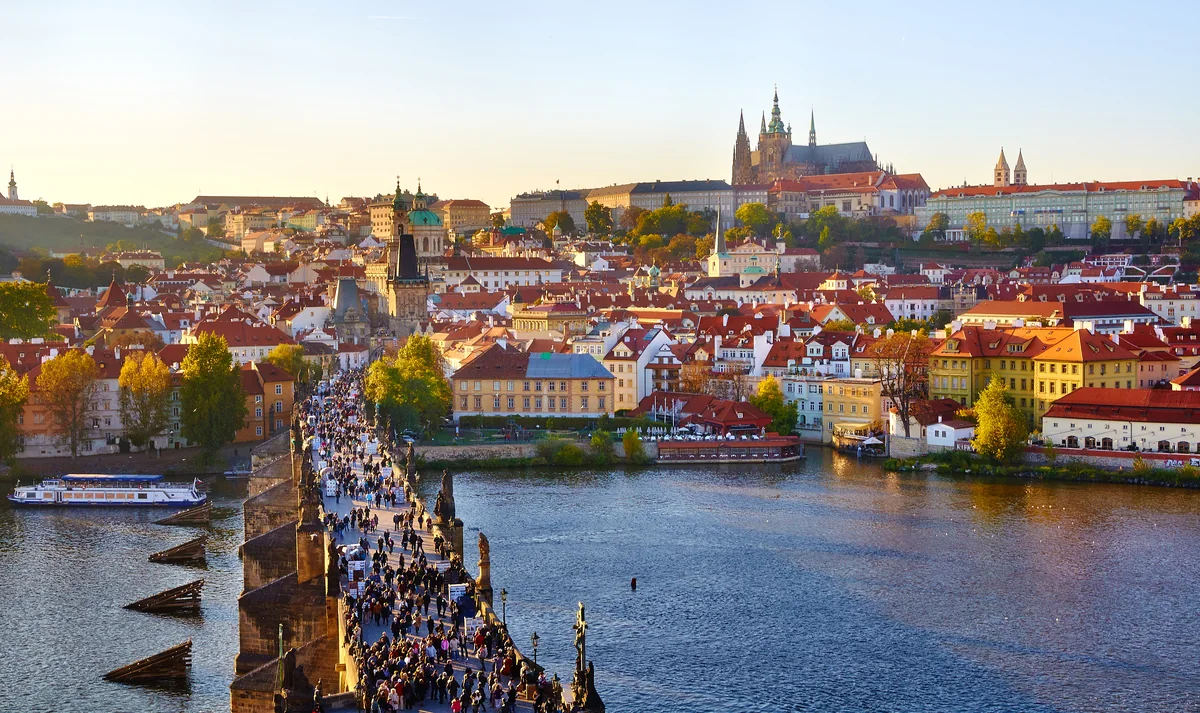
Prague is one of the most architecturally complete medieval and baroque cities in the world, its survival of the Second World War intact meaning that seven centuries of continuous construction now form a single walkable landscape. The castle complex above the city is the largest ancient castle area by total extent in the world, containing palaces, a Gothic cathedral, gardens, and galleries within one fortified enclosure on the hill above the river. The Charles Bridge, completed in the early fifteenth century, crosses the Vltava on sixteen Gothic arches and is lined with baroque statuary added over the following three centuries. The Josefov quarter contains six synagogues, one of the oldest continuously used Jewish cemeteries in Europe, and a Jewish Museum, all within an area whose wartime preservation reflects a particular and disturbing history.

Czech Beer, Food and Pub Culture

Czech beer, produced in Bohemia and Moravia by breweries whose methods and quality standards set the template for lager production worldwide, is consumed in volumes that give the Czech Republic consistently the highest per-capita beer consumption of any country. The pub culture surrounding it is social and democratic: a Czech hospoda functions as a shared living room for a community, and the tradition of tank-served pilsner at the correct temperature is taken seriously enough to require specific training for publicans. Czech cooking is built on svickova (marinated beef in cream sauce with dumplings), roast pork with sauerkraut, and fried cheese, dishes whose directness and flavour are underestimated internationally. The farmers' markets at Namesti Miru and Dejvice offer the highest-quality fresh produce in the city.

Classical Music, Culture and the Arts

The Czech Philharmonic at the Rudolfinum is one of the great orchestras of the world, performing in a neo-Renaissance concert hall completed in 1885 that also houses an important collection of nineteenth-century art. The National Theatre on the riverbank is the home of Czech opera and ballet, a building of such symbolic weight that when it burned down in 1881, before its first public performance, the entire nation contributed to its reconstruction within two years. The Municipal House, an Art Nouveau masterpiece, contains the Smetana Hall, the principal venue for the Prague Spring Festival and one of the most beautiful concert rooms in Europe. The Signal Festival of light art each October uses video projection on historic buildings to transform the city's architecture into a canvas.

Festivals and Seasonal Events

The Prague Spring International Music Festival, held annually since 1946, opens each year on the anniversary of the death of the composer whose symphonic cycle depicting Czech landscapes has become its ritual opening work, then runs three weeks of concerts by international orchestras and soloists. The festival's continuity through the communist era, during which it functioned partly as a cultural diplomacy tool, gives it a historical depth that few events of any kind can claim. The Christmas markets on Old Town Square and Wenceslas Square are among the most visited in Central Europe and are particularly striking when snow falls across the Gothic architecture. The One World documentary festival in spring is one of Europe's most significant human rights film events.

Neighbourhoods, Nightlife and the Living City

Prague's appeal extends well beyond the historic center, and the residential neighbourhoods that surround it carry a daily urban life that the tourist-facing districts cannot replicate. Vinohrady, developed at the end of the 19th century as a middle-class suburb and now home to the highest concentration of good independent restaurants and wine bars in the city, has a calm, tree-lined character that makes it the most liveable of the inner districts. Žižkov, adjacent to Vinohrady but historically a working-class and politically radical neighbourhood, has the highest density of pubs per capita of any district in Prague and a slightly anarchic character maintained through successive waves of gentrification. The Nusle Valley below the motorway bridge contains some of the least visited but most atmospheric older streets in the inner city. The nightlife of Prague, concentrated around Žižkov, Holešovice, and the clubs of the Nusle and Smíchov districts, operates across a wide range of formats from the tiny rock bars of Korunní Street to the larger electronic music venues in converted industrial buildings north of the center. The National Theatre complex, spanning the original 19th-century building and the adjacent New Stage, programs opera, drama, and ballet of serious quality at prices that remain accessible by western European standards. Prague's international reputation as a low-cost destination has obscured the fact that it is also a city with a genuine cultural life at a high level that rewards engagement beyond the architectural walking tour. The Signal Festival of light art each October, which projects video installations onto historic buildings across the city, has become one of the most attended outdoor arts events in Central Europe and demonstrates Prague's capacity to use its architectural heritage as the medium for entirely contemporary cultural expression. The city remains one of the most affordable major cultural capitals in Europe, and that accessibility sustains an audience for its arts institutions that wider pricing would erode.

More Cities in Czech Republic
Ready to find events in Prague?

Browse concerts, club nights, festivals, cultural events, and more. Book directly with the organizer.

Running an event in Prague? Create a free listing
Browse Events in Prague