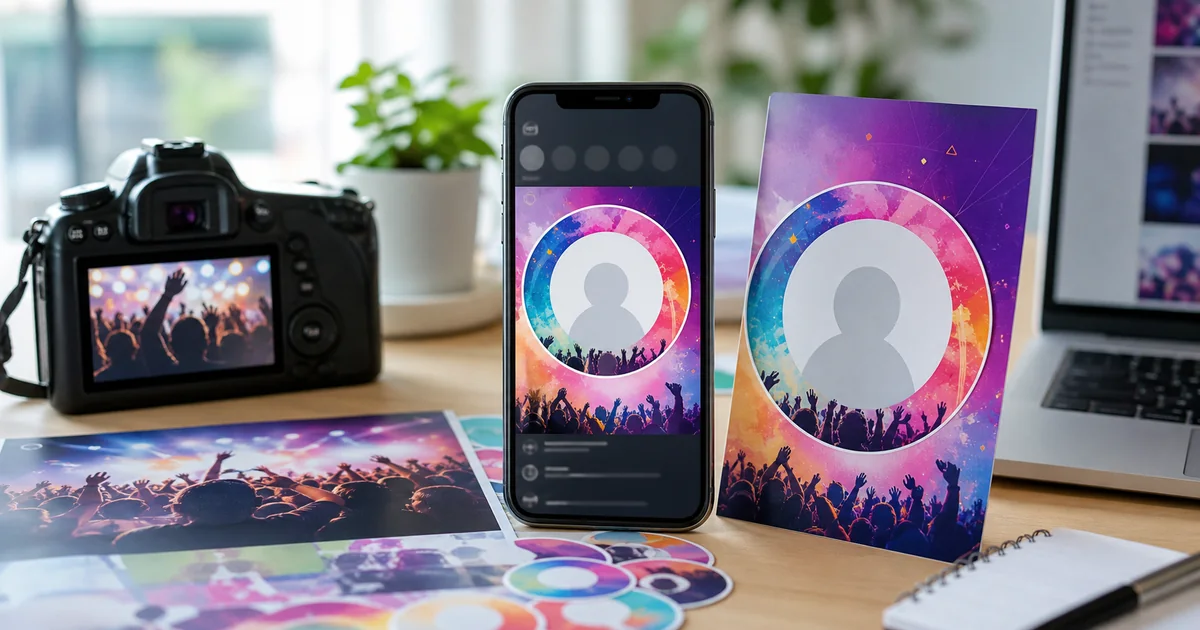
Your attendees have audiences you cannot reach. The DP Generator gives them a reason to use them.
Every person who buys a ticket to your event has a social network: followers on Instagram, contacts on WhatsApp, friends on Facebook, connections on LinkedIn. A meaningful proportion of those people are potential buyers for the same event. The challenge is that you do not have access to them. But your attendee does.
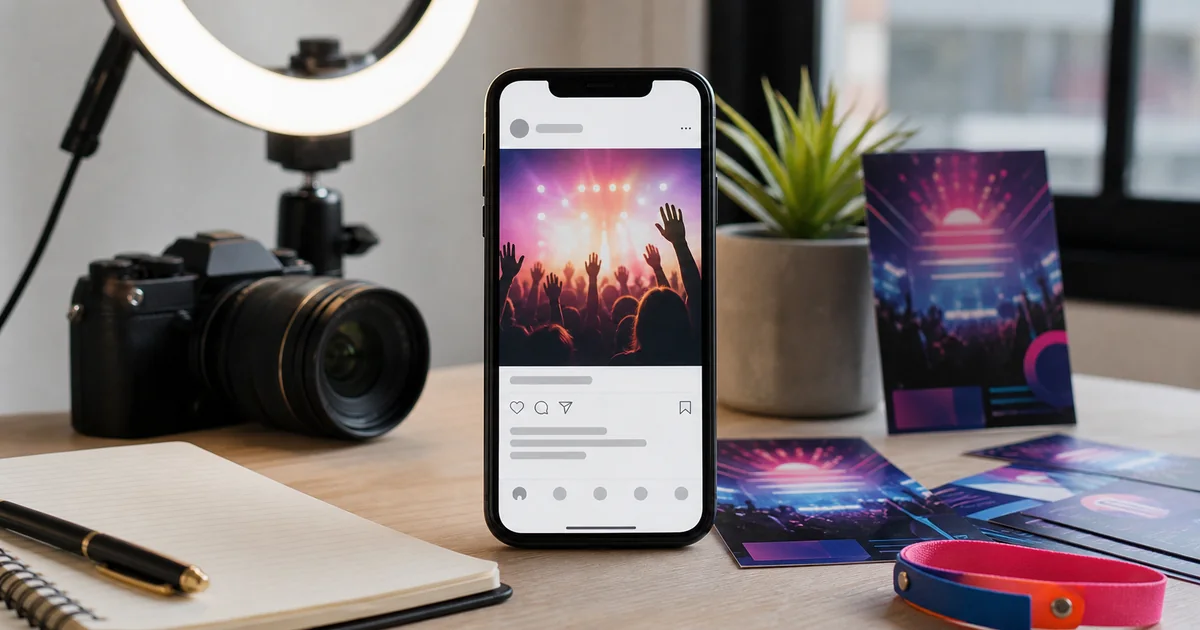
When a buyer updates their profile picture on any social platform with artwork featuring your event, everyone in their network sees it passively. They do not need to like a post or follow an account. They simply see that someone they know is attending this event. That exposure, at scale across hundreds or thousands of buyers, produces a promotional reach that is qualitatively different from anything an organizer can generate through their own channels alone.
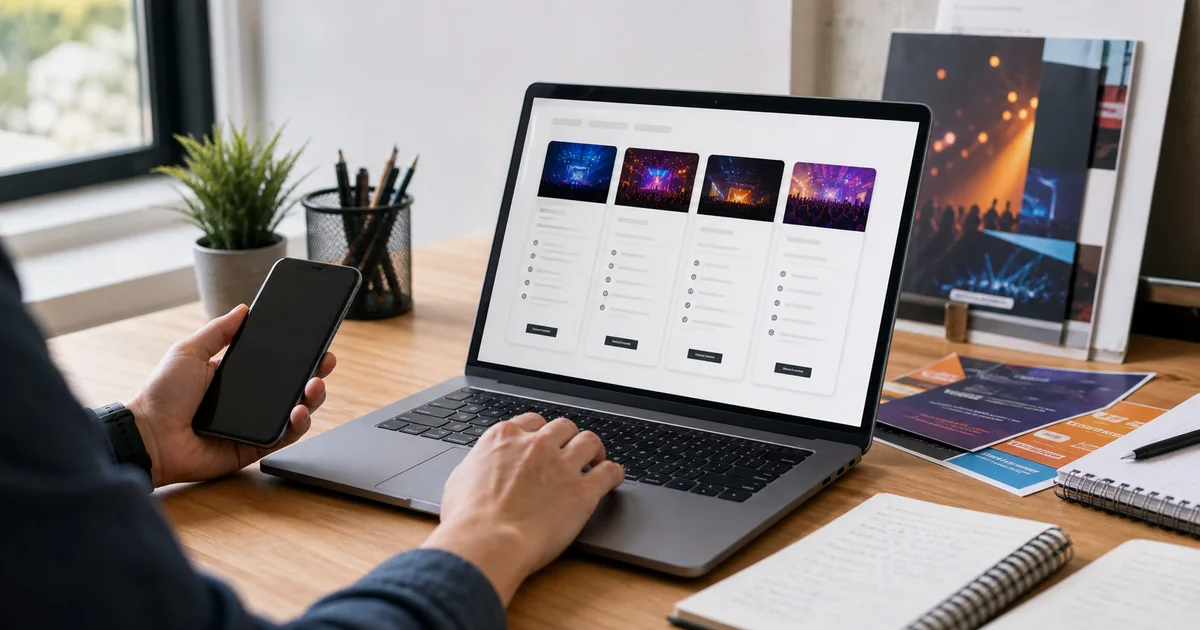
ShowRave's DP Generator is the tool that makes this possible at scale. Attendees create a branded profile picture featuring your event frame with a few taps. The result is a wave of organic, trust-backed promotion that costs the organizer nothing beyond the initial frame design.
The psychology of why this works
Social proof is more persuasive than advertising because it comes from an independent source. When a buyer's connection updates their profile with event artwork, there is no commercial relationship for the viewer to discount. Social proof is a signal from a third party, specifically someone the viewer trusts, that this product is worth their attention.
A profile picture update featuring an event creates two distinct social proof effects simultaneously. The first is visible endorsement: this person chose to publicly associate themselves with this event. The second is anticipated participation: they are going. Both effects communicate information about the event's credibility and desirability to everyone who sees the profile change.
The effect is amplified by its organic nature. A promoted post about an event is recognised as advertising and processed accordingly. A profile picture update is not recognised as advertising. Viewers encounter it as a personal statement from someone they know, which means it is evaluated differently from sponsored content and triggers genuine curiosity rather than ad-skip behavior.
How to create an effective DP frame
The DP Generator allows organizers to upload artwork that appears as an overlay frame on the attendee's own photo. The design of that frame determines whether attendees actually use it, and whether it is recognisable as promotion for your specific event when their contacts see it.
An effective frame includes the event name, the date, and a visual element that identifies the event clearly. It should be designed to work primarily on social profile picture dimensions, which are square or circular crops. Content that appears in the corners of a square frame will be cropped to circles on many platforms. The most important information, the event name and date, should be positioned in the inner portion of the frame to ensure it is visible at all crop ratios.
Contrast and readability matter more than complexity in a DP frame. The frame needs to be legible when displayed at the small size of a social profile thumbnail. Elaborate designs that look impressive at full size can become illegible at 40x40 pixels. Test your frame design at thumbnail size before making it live, because the version your attendees' contacts will see is almost always the small one.
The aesthetic should match the event's brand. A festival frame that feels corporate or a formal gala frame that feels too casual both reduce adoption, because attendees who are choosing to publicly associate themselves with your event want the association to be one they are comfortable showing their network. Match the visual language of your event.
When and how to share the DP Generator with your buyers
The DP Generator is most effective when shared at a high-engagement moment, specifically when buyer enthusiasm and commitment to attending are at their peak. The two best windows are immediately after ticket purchase (in the confirmation email or the confirmation page) and in the pre-event communication sent in the week before the event when excitement about attendance is building.
In the confirmation email, a direct link to the DP Generator with a short, friendly prompt performs well. Something like "Show everyone you're going, create your event profile picture" alongside the link is enough. Do not over-explain the process. Buyers who engage with the prompt are motivated by wanting to share; buyers who are not motivated will not engage regardless of how detailed the instructions are.
In the pre-event email, the prompt benefits from some context about what the frame looks like (include an image of the frame itself in the email) and from social proof about how many people have already created their profile picture if you have that data. Both elements increase adoption in the final week before the event.
You can also share the DP Generator link on your social media channels, encouraging buyers who follow you to create their profile picture and tag the event. A social post showing an example of the completed profile picture gives followers a concrete preview of what they will be creating, which reduces the friction of the first click.
What to expect from a DP Generator campaign
The scale of organic reach generated by a DP Generator campaign correlates with the size of your buyer list and the shareability of the frame design. An event with 500 buyers where 30% create a profile picture produces 150 profile picture updates. Each update is seen by everyone in that buyer's network passively over the period while the profile picture is active, typically several days to several weeks. At an average social network size, 150 profile picture updates can generate a significant number of passive exposures to your event among an audience you could not reach through your own channels.
The event types that generate the highest DP Generator adoption are those with strong personal identity associations: music events, cultural celebrations, sports fixtures, and social events where attendees actively want to signal participation. Professional events and private gatherings typically see lower adoption, because the motivation to publicly associate with the event is lower in those contexts.
Track DP Generator usage through the ShowRave dashboard and use the data to refine your approach for subsequent events. A high adoption rate with strong frame design and timely sharing can become a repeatable promotional mechanism that grows in effectiveness as your buyer community becomes familiar with the pattern.
The link between DP Generator use and ticket sales
Quantifying the ticket sales impact of a DP Generator campaign is difficult with precision because the mechanism operates through passive network exposure rather than direct clicks, which makes attribution harder than for a tracked link. What you can observe is the pattern: events with active DP Generator campaigns typically show a second wave of ticket sales during the period when profile picture updates are most active, driven by buyers who discover the event through a friend's profile change rather than through your direct promotion.
The DP Generator is therefore most valuable as a complement to your direct marketing, not a replacement for it. Run it alongside your email campaigns, social posts, and affiliate links rather than instead of them. The combination of your direct channels and the organic amplification from attendee sharing produces a promotional reach that neither can generate alone.
Set up your event's DP Generator frame atthe ShowRave DP Generatorand share the link with buyers as part of your ticket confirmation and pre-event communication.
Integrating the DP Generator into your full marketing plan
The DP Generator works best when it is treated as one component of a coordinated marketing campaign rather than an isolated feature. Its specific contribution is organic reach through personal networks, which is qualitatively different from the other components of your marketing: direct reach through your own channels and paid reach through advertising.
In a typical campaign structure, your own channels (email list, social media) reach your existing audience: people who already know you and are predisposed to buy. Your paid advertising reaches cold audiences: people targeted by interest or geography but with no prior relationship. Your DP Generator campaign reaches warm third-party audiences: the people in your attendees' personal networks who see a friend's profile picture update and discover the event through that signal. Each mechanism converts at a different rate, and a campaign that uses all three is more effective than one relying exclusively on any single approach.
Time your DP Generator push to coincide with periods when your campaign is at its most active. The week after Early Bird launches, when buyer enthusiasm is high, and the final week before the event, when urgency is peaking, are the two windows when a concentrated DP Generator push produces the most measurable results.
For events that run annually or repeatedly, carry the frame design that generated the most profile updates forward. Measure adoption by tracking how many attendees use the DP Generator link relative to total ticket sales. Above 25% adoption typically indicates strong brand-audience alignment. An event brand that buyers recognise on sight in their friends' profile pictures, because they have seen it multiple times across multiple editions, builds a cultural familiarity that new events with no track record cannot replicate. The DP Generator, used consistently over multiple editions, becomes one of the most visible ongoing marketing assets an event has, because it lives in the personal identity space of your most loyal buyers.
Tracking DP Generator adoption across your buyer list
Review DP Generator usage after each event and compare adoption rates across different buyer segments. Buyers who came through affiliate links, buyers who purchased early, and buyers in specific ticket tiers may show different adoption patterns that inform how you target the feature in future campaigns. An early buyer who updates their profile picture the week after purchasing is a more effective organic promoter than a late buyer who updates it the day before the event, because the earlier update has more time to be seen by people who might still be able to buy a ticket.
Share examples of completed profile pictures on your own social channels in the weeks before the event. Seeing the frame in use, applied to a real person's photo, is the most effective nudge available for buyers who have not yet created theirs. A post showing five or ten examples of attendees who have already updated their profiles normalises the behavior and reduces the barrier for others who are considering it but have not yet acted.