The revenue that most event organizers are leaving on the table
When a buyer is on your event page, card in hand, ready to complete a purchase, they are at the highest point of engagement they will ever have with your event. The decision is already made. They are committed. At that moment, an offer of something additional, a T-shirt, a meal, a workshop pack, an upgrade, will convert at a dramatically higher rate than the same offer made in a follow-up email after the sale is complete.
This is the basic insight behind event AddOns. Not that merchandise and extras are inherently valuable, though they can be, but that the timing of the offer matters as much as the offer itself. Organizers who set up AddOns before their first ticket sells capture a revenue stream that those who add it later largely miss, because the buyer who has already paid and moved on is in a fundamentally different psychological state from the buyer mid-checkout.
ShowRave's AddOn feature lets you configure extras that buyers can add to their order alongside a ticket at the point of purchase. Each AddOn has its own name, price, quantity limit, and description. They appear in the checkout flow alongside ticket selection, which means a buyer choosing their ticket type and then seeing a relevant extra as the next step will convert at a far higher rate than if they received an email about it three days later.
What AddOns work for your event type
The AddOns that perform best are the ones that feel like a natural extension of the event experience rather than an upsell for its own sake. They should make attending better, not just generate revenue. When those two things align, buyers are genuinely pleased to purchase them rather than feeling sold to.
Concerts and music events
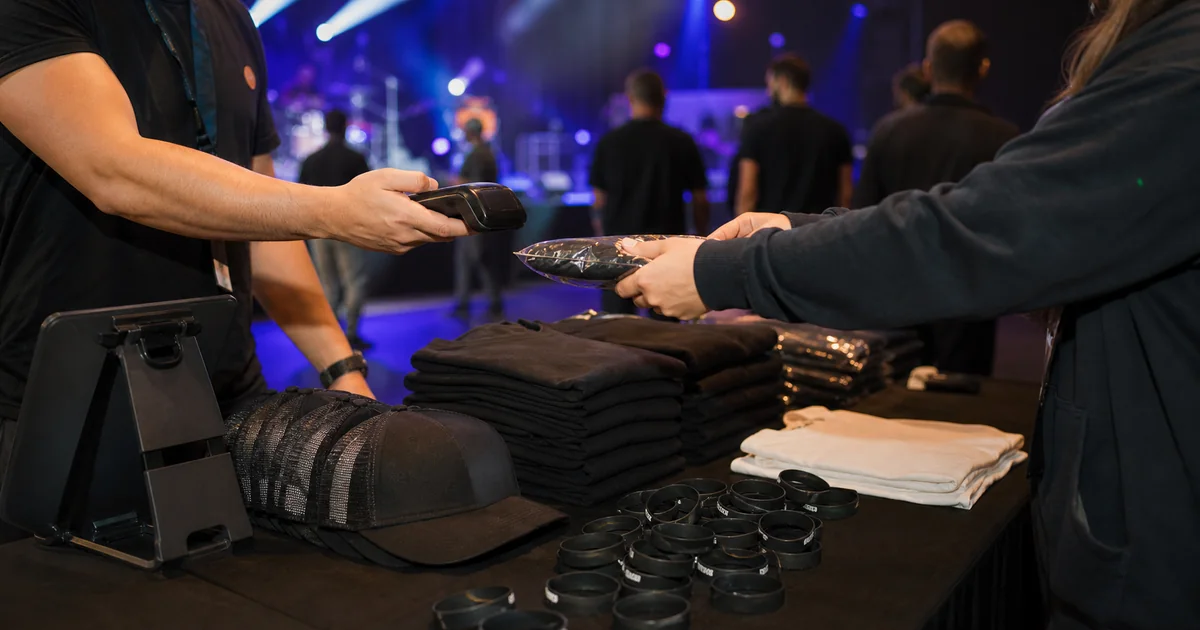
Branded merchandise is the most natural fit for music events. A T-shirt, hoodie, or tote bag featuring the event artwork or the artist's branding is something a genuine fan wants to own, and buying it in advance at checkout avoids the queuing and stock uncertainty of at-door merchandise. Limited-edition items create their own urgency, since buyers who want a specific design know that ordering in advance is the only way to guarantee availability.
Upgrade AddOns also work well for music events: early entry to skip the general queue, an exclusive meet-and-greet session, a backstage pass, or a reserved standing area at the front. These are genuine experiential upgrades that justify a premium price and often create the most memorable moments of the event for the buyers who choose them.
Sports events and club fixtures
Sports clubs have a natural merchandise ecosystem: replica kits, scarves, branded training gear, and supporter accessories. An AddOn at ticket checkout captures sales from the most motivated buyers at exactly the right moment. For tournament events and finals, bespoke merchandise tied to the specific event, a finalist's shirt, a tournament program, a signed print, is a compelling offer that is only available to people who are already buying a ticket.
For participant sports events such as running races, charity walks, or cycling sportives, participant kit can be configured as an AddOn rather than a separate purchase. Size selection, color options, and technical specifications can be captured in the order, eliminating the need for a separate form or collection process.
Workshops and professional events
Workshop AddOns typically focus on materials and access: a physical workbook or resource pack, a recording of the session for post-event reference, a one-on-one consultation session, or a digital resource bundle. For professional development events where attendees are investing in their own skills or knowledge, materials that extend the value of the session are genuinely wanted and price-justified.
Catering AddOns (pre-event breakfast, lunch, refreshment package) work particularly well for full-day events where attendees would otherwise need to organise their own meals. Pre-ordering removes a logistical problem for the attendee and provides you with precise catering numbers in advance, reducing waste and the need for buffer stock.
Galas and formal events
Formal events lend themselves to personal touches as AddOns: a framed event program, a table photograph package, a charity auction lot included in the ticket bundle, or a post-dinner experience (a jazz bar access, a cocktail masterclass). For seated dinner events where the experience is closely curated, AddOns that personalise and enhance the evening are well-received at premium prices.
Charitable events can use AddOns as a donation mechanism: a "donate an additional amount to the cause" AddOn that lets buyers choose to contribute beyond their ticket price. This is one of the cleanest implementations of in-checkout fundraising available, because it does not feel like pressure and it captures giving at the moment of maximum commitment.
School and community events
School events often use AddOns for items that parents need to provide anyway: uniform pieces, books, materials, or contribution to shared resources. Capturing these purchases at ticket checkout removes the need for cash collection on the day and gives the school a precise pre-count of what is needed. Community events can use AddOns for raffle tickets, bake sale contributions, or community cookbook purchases, turning the checkout into a broader community engagement tool.
Pricing AddOns: the logic that makes buyers say yes
AddOn pricing follows different logic from ticket pricing. The buyer has already committed to the main purchase. The AddOn is an incremental decision made from a position of positive intent rather than evaluation. This means the psychological barrier to a "yes" is lower than it was for the ticket itself, which has two implications for how you price.
First, the AddOn price does not need to feel like a bargain to convert. It needs to feel fair and proportionate to what is being offered. A T-shirt priced at a reasonable, market-consistent level will convert well if the design is strong and the buyer has a genuine connection to the event. The same T-shirt offered at a steep discount loses margin without meaningfully increasing take-up, because the decision to buy is driven by want, not by price.
Second, the framing of the offer matters. An AddOn presented as "add to your order" rather than "buy separately" feels like a natural extension of the purchase already in progress. The copy for each AddOn should be specific about what is included, any size or variant choices required, and when or how the buyer will receive it. Uncertainty about fulfilment is one of the few things that will prevent a positive conversion at this stage.
For multiple AddOn options, the order in which they appear in the checkout affects take-up. Place your most popular or most relevant item first. An attendee scrolling through AddOn options is most likely to engage with the first one they see. If that first option is relevant and attractively described, a meaningful proportion will add it before continuing to checkout.
\n\nWhat to get right when you set AddOns up
\nAddOn descriptions are doing sales work at a moment when the buyer is already engaged. A thin description, just a product name and a price, leaves the buyer without enough information to commit and often results in an abandoned add, not an abandoned checkout, but a skipped opportunity. The description should answer the same questions a buyer would ask if they were standing next to you: what is this, what does it look like, when will I get it, and is there anything I need to choose now.
\nFor items with variants, such as clothing sizes, color options, or format choices, capture the selection at checkout using the AddOn's description field to instruct buyers clearly. If a buyer cannot work out which size to choose, or is unsure whether they are ordering a physical or digital item, they will skip it rather than contact you to clarify.
\nSet a realistic quantity limit on every AddOn you configure, even if your production capacity is not immediately constrained. A quantity limit creates natural urgency and prevents an over-order situation where you have committed to more items than you can source in time. It also gives you a clear signal of demand: if an AddOn sells out well ahead of the event, that is strong evidence that it should be central to your offer next time, not peripheral.
\nConfigure AddOns alongside your ticket tiers when you create the event, not after launch. An AddOn added three weeks into a ticket sale will be seen by a fraction of the buyers who came through in the first wave. Every buyer who purchased before the AddOn was visible is a missed opportunity that cannot be recovered by retrospective email campaigns at the same rate.
\n\nManaging fulfilment: pre-order vs at-door
The main operational question for physical AddOns is whether items are pre-produced to order or made available for collection at the event. Each model has different implications for cost, logistics, and buyer experience.
Pre-production to order means you manufacture or source exactly the quantity sold. No overstock, no unsold inventory, no waste. The trade-off is that you need a cut-off point for orders, typically a week or two before the event to allow production time, and you need a fulfilment process: collecting items at the event, posting them, or arranging a separate collection point. For items where personalisation matters or where stock carrying costs are significant, pre-production is almost always the right approach.
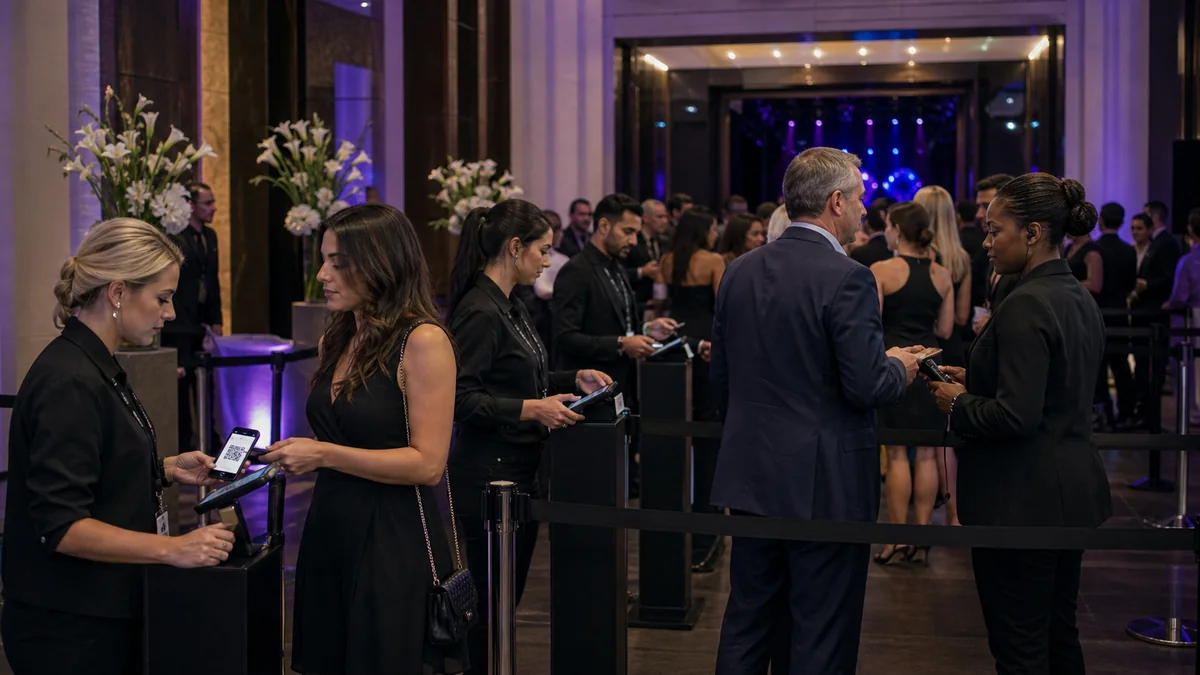
At-door collection means buying stock in advance and having items available for collection or purchase on arrival. This model allows for late-deciding buyers to add items on the day and reduces the logistical complexity of matching orders to individuals. The risk is overstock of unsold items and the need for a collection process that does not bottleneck entry for buyers collecting AddOns while others simply want to scan and enter.
A practical approach for most events: configure the AddOn in ShowRave's checkout for advance pre-orders, set a clear order deadline in the AddOn description ("orders close 7 days before the event"), and use the orders report in your dashboard to confirm exact quantities for production or sourcing. On the night, the orders report gives your team a clear list of what each buyer ordered, making collection straightforward without any additional paperwork.
Building AddOn revenue: the economics across multiple events
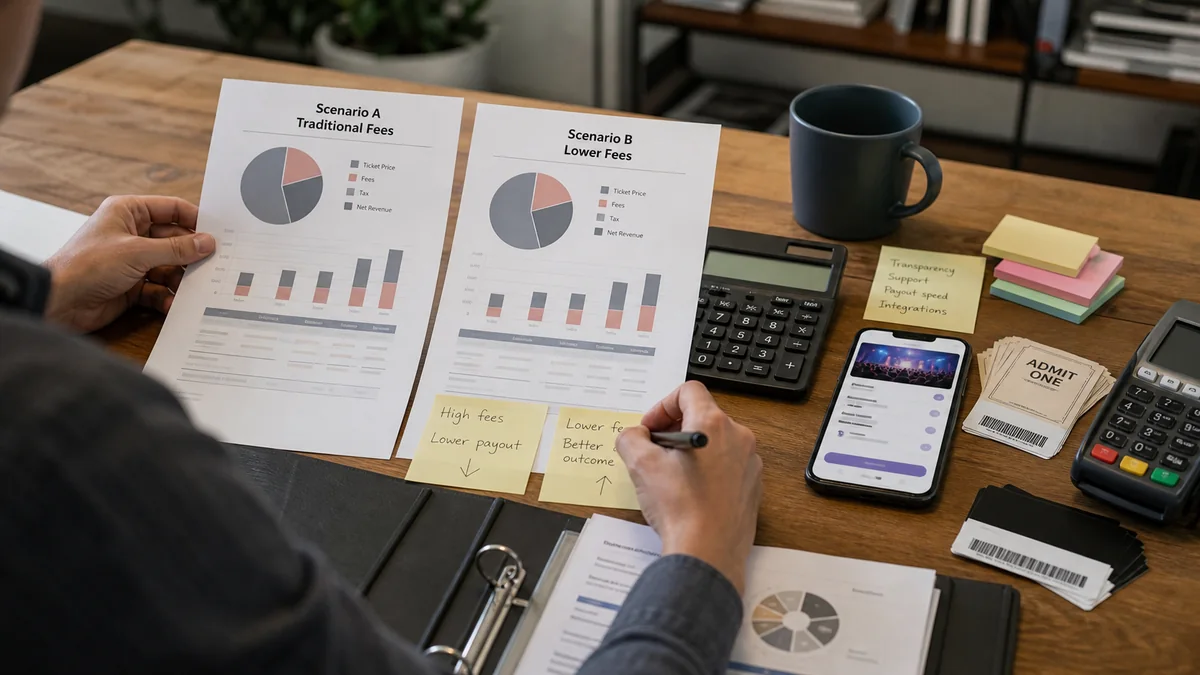
The most important thing about AddOns is not any individual sale. It is the aggregate effect on your average order value across all transactions. If 30% of your ticket buyers add a modestly-priced item at checkout, the total additional revenue across a 300-person event is significant without any additional marketing spend, venue cost, or effort beyond the initial setup.
That additional revenue compounds over time as you learn which AddOns your audience responds to, refine your descriptions, improve your timing, and build a merchandise offer that attendees actively look forward to seeing at checkout. Organizers who treat AddOns as a core part of their event commercial model from the start, rather than an afterthought enabled months in, consistently generate higher revenue from the same audience size. The setup cost is minimal. The long-run payoff, measured in additional income per event that requires no additional ticket sales to achieve, is substantial.