
An event brand is not a logo. It is an expectation.
When people say they are going to Glastonbury, or to a specific recurring club night, or to a monthly supper club they have attended for three years, they are not describing a ticket purchase. They are describing a relationship with a recurring experience. The event has become a brand not because it ran an advertising campaign but because it consistently delivered on an implicit promise: a specific type of experience, a specific quality level, a specific community of people, reliably and repeatedly. Buyers who have that relationship with an event brand do not need to be convinced to buy the next ticket. They need only to be told it is available.
Building that kind of audience relationship is the most commercially efficient investment an event organizer can make, because the return compounds with every edition. An event that relies entirely on advertising and cold acquisition starts each campaign from the same position. An event with an established brand starts each campaign from a position of accumulated trust and demonstrated experience, which produces faster and more reliable sales with progressively less marketing effort.
Consistency is the foundation of event brand trust
The most important characteristic of a recognised event brand is not originality, production quality, or marketing budget. It is consistency. An audience that knows what to expect from an event, has experienced those expectations being met, and has reason to believe they will be met again, is an audience with a brand relationship. An event that is unpredictable in quality, format, or delivery builds no trust regardless of how much it spends on marketing.
Consistency operates at every level of the event experience. The event page should feel like the event. The communication style in emails, social posts, and ticket confirmations should have a recognisable voice. The door experience should match the quality signal of the ticket price. The event itself should deliver what the promotional materials described. And the post-event follow-up should close the loop in a way that prepares the audience for the next edition.
For event organizers who run multiple different events or event types, maintaining consistency across different formats requires deliberate choices about what the brand stands for that transcends any individual event format. A promoter known for exceptional curation, for example, can apply that brand attribute to a music night, a festival, and a film screening because the curation is the promise, not the format. Identify the core brand attribute that runs through everything you do and make sure every edition reinforces it.
The attendee experience as brand building
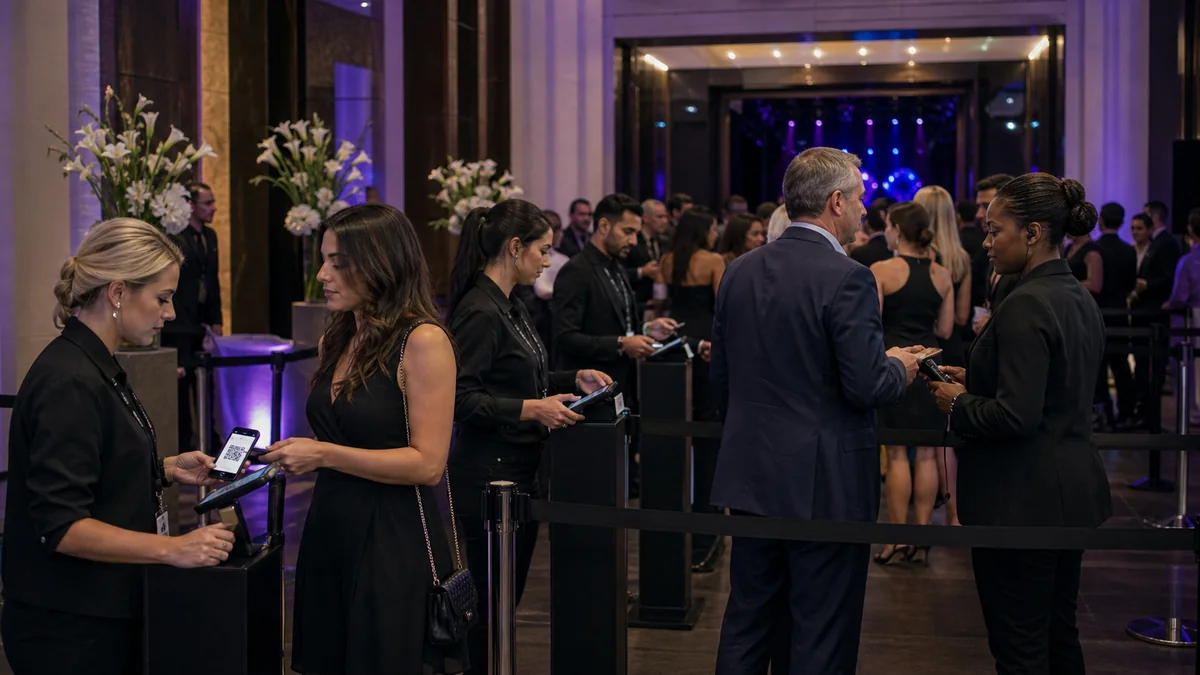
Every element of the attendee journey from ticket purchase to post-event follow-up is a brand interaction. The event page is the first impression. The confirmation email is the first communication after commitment. The pre-event logistics email is the service level the organizer demonstrates before the doors open. The door experience is the first physical brand touchpoint. The event itself is the core promise being delivered. The post-event email is the last interaction and the one that determines whether the buyer becomes a returning attendee.
The most powerful brand-building interactions are the ones that exceed expectations in a specific, memorable way. An attendee who received a confirmation email with a personalised note from the organizer will remember it. An attendee who was welcomed by name at check-in will mention it. An attendee who received a post-event surprise, an unexpected photo from the event, an early access code for the next edition, an unexpected personal touch, will tell people. These moments are not expensive to create. They require attention to the journey rather than just the headline event quality.
ShowRave's communication tools, the confirmation email, the automated pre-event reminders, and the post-event follow-up sequence, are the infrastructure for delivering a consistent, high-quality attendee journey. Customising each of these communications to reflect the event's specific character, rather than leaving them as generic platform messages, is one of the most accessible brand-building actions available to any organizer regardless of budget.
The compounding attendee database
A well-managed event brand is not just a reputation. It is a data asset. Every attendee who has been to an event and provided their contact details is a verified buyer whose future behavior, for this event type, is meaningfully predictable. They attended before. They are likely to attend again if the experience was positive and the next edition is communicated to them at the right time through the right channel.
The ShowRave attendee export, maintained consistently across every edition of every event, is how this data asset is built. The organizer who exports and files the attendee list after every event, retains it in a structured format, and uses it as the primary warm audience for subsequent events, has a compounding asset that grows with every edition. The organizer who does not retain the data starts each new event's marketing from a cold position regardless of how many events they have previously run.
For established event brands, this database is the primary reason that marketing spend decreases as a proportion of revenue over time. A first-time event needs to generate all of its audience through cold acquisition. A fifth-time event can generate a meaningful proportion of its audience through warm communication to past attendees before any paid promotion begins. The economics improve with every edition as long as the audience data is retained and managed.
The DP Generator as brand extension
When an attendee updates their social media profile picture with your event's branded frame, they are making a public statement about their identity: they are the kind of person who goes to this event. For events with strong community identity, such as a distinctive festival, a recognised club night, a beloved community celebration, this statement carries genuine social weight among the audience's personal network.
The DP Generator at/dp-generatoris the mechanism that converts this identity dynamic into promotion. Each profile picture update reaches an average social network with a personal endorsement from someone the viewer trusts. Across hundreds of attendees, the aggregate reach is substantial and the conversion rate is higher than any equivalent advertising spend because the recommendation is personal rather than commercial.
For recurring events, design the DP Generator frame as part of the event's visual identity rather than as an afterthought. A frame that is distinctively tied to the event's aesthetic, consistently updated for each edition, becomes a recognisable signal in itself. Regular attendees who update their profile picture with the event frame across multiple years are demonstrating an event relationship that their network observes and responds to. That sustained visibility is event brand building in the most literal sense: a brand that is carried by its most loyal audience into their personal social spaces.
When the brand is strong enough to pre-sell the next edition
The clearest indicator that an event brand has reached a threshold level of audience trust is the ability to pre-sell the next edition before it has been fully announced. An audience that trusts the event enough to buy a ticket based on the promise of another edition, without confirmed details, has a brand relationship with the organizer rather than just a transactional one with the specific event.
This threshold is reachable by any event that has delivered consistently enough for its audience to trust that the next edition will be worth attending before they know what it involves. It is not reserved for large commercial events. A monthly supper club with 40 seats, a quarterly comedy night at a 100-person venue, an annual charity gala: any of these can reach the pre-sell threshold with a loyal audience that has been built through consistent experience quality and direct communication.
The practical mechanism for leveraging this trust is announcing the next edition at the end of the current one and giving the attendees who are physically present the first opportunity to register. A QR code shared at the close of the event that links to the next edition's ShowRave page, briefly described as "same concept, different date, early access for tonight's guests," converts the peak of the current event's positive experience directly into advance sales for the next one. That conversion happens at the moment of highest enthusiasm and before the memory of the experience has faded.
Measuring whether the brand is actually building
Brand building is often treated as an intangible process with no clear measurement. For event organizers, there are specific metrics available from ShowRave's attendee data that indicate directly whether the brand is building or stalling.
The proportion of ticket sales coming from past attendees, as measured by cross-referencing the current event's buyer list against previous events' attendee exports, tells you how much of each campaign's revenue is earned from the existing loyal audience versus cold acquisition. If this proportion is growing edition over edition, the brand is building. If it is flat or declining, the organizer is growing the event by adding new buyers faster than they are retaining past ones, which is commercially less efficient and operationally more demanding.
The no-show rate is a brand health indicator in the opposite direction: it measures the gap between stated intent and actual commitment. An improving no-show rate across successive editions signals increasing audience investment in the event. A persistent or growing no-show rate signals that the audience relationship is not deepening, which is often a pre-indicator that ticket sales will become harder to generate rather than easier.
Track both metrics after every edition. The combination of increasing returning-buyer proportion and decreasing no-show rate is the clearest available signal that an event brand is building the kind of audience relationship that reduces marketing dependency over time. Both numbers are available from the ShowRave attendee export and the check-in data. The organizer who reviews them consistently builds the evidence base that makes every subsequent event decision sharper.
\n\n