
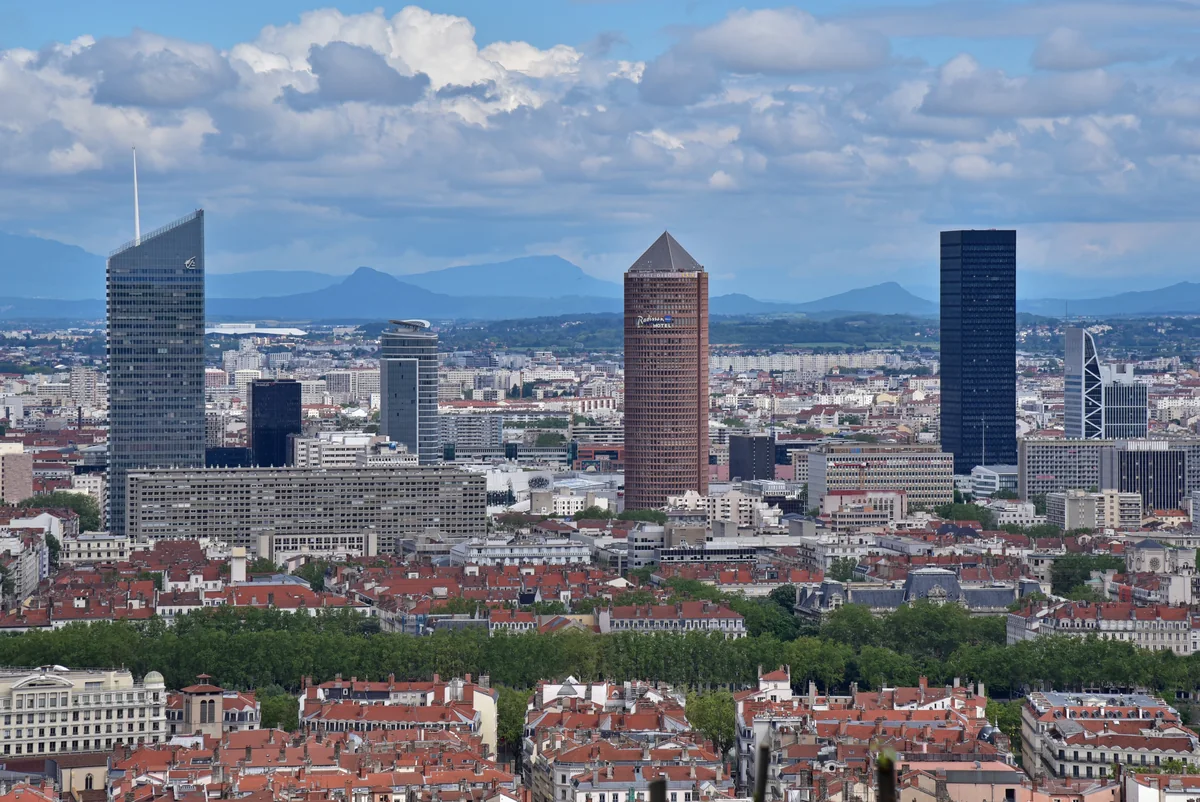
Things To Do in Lyon France

Discover events, experiences, and everything the city has on offer in Lyon. Browse the full event calendar or read the guide below.

Things To Do in Lyon

Discover events, experiences, and everything the city has on offer in Lyon. Browse the full event calendar or read the guide below.

Gastronomic Capital of France

Lyon's claim to be the gastronomic capital of France, which is to say one of the most serious food cities in the world, rests on a tradition that is grounded in the specific products of the surrounding region and expressed through the bouchon, a type of restaurant unique to Lyon: small, noisy, unhurried places serving traditional Lyonnais dishes with house wine from terracotta pitchers. Quenelles de brochet (pike quenelles in crayfish sauce), salade lyonnaise (frisée with lardons, croutons, and a poached egg), andouillette (chitterling sausage, emphatically not for the timid), tarte aux pralines, and the charcuterie for which the surrounding Rhône-Alps region is famous are the foundations of a cooking style that prioritises product quality and technique over presentation. The covered markets of Les Halles de Lyon Paul Bocuse, the indoor market named after the city's most celebrated restaurateur, is the definitive destination for the region's finest produce.

Silk, Traboules and the City's Character

Lyon was the center of the European silk industry from the sixteenth century through the nineteenth, and the traboules, the covered passageways that connect the streets of the Presqu'île and the Croix-Rousse hill through the courtyards and staircases of silk merchants' buildings, are the physical legacy of a trade that required the rapid transport of fragile fabric through the city in all weathers. The traboules, largely unknown to visitors who walk the streets without knowing to look for their unmarked doors, constitute a hidden city within the city whose exploration reveals a domestic architectural scale and quality entirely different from the streets above. The Croix-Rousse neighbourhood, where the canuts (silk weavers) lived and worked, retains its social character as a bohemian, politically independent district above the commercial city.

Roman and Renaissance Heritage

Lyon was the capital of the three Gauls (Lugdunum) under the Roman Empire and the most important city in Roman Gaul for three centuries, and the archaeological remains of this period are more extensive than anywhere in France outside the Mediterranean coast. The Gallo-Roman Museum on the Fourvière hill, built into the hillside above the Roman theatres it overlooks, holds one of the most important collections of Roman Gallic archaeology in France, with inscriptions, bronzes, and the Claudian Table (a bronze tablet recording a speech given by the Emperor Claudius to the Roman Senate in 48 AD) among its most significant objects. The Vieux-Lyon (Old Lyon) district below Fourvière is the largest Renaissance urban ensemble in France, with mansions built by the Italian banking families and merchants who made Lyon the financial capital of northern Europe in the fifteenth and sixteenth centuries.

Festivals, Culture and Seasonal Life

The Fête des Lumières (Festival of Lights) on and around the 8th of December is Lyon's defining event and one of the largest public festivals in Europe: for four consecutive evenings, the city's buildings and public spaces are illuminated by light installations designed by artists and studios from across the world, drawing up to three million visitors across the four nights to a city that transforms entirely for the occasion. The tradition originates in a votive procession giving thanks for the city's preservation from plague, and the residents' practice of placing lit candles on windowsills still coexists with the large-scale projections. Les Nuits de Fourvière in summer uses the Roman theatres as an outdoor performance venue for theatre, circus, dance, and music.

Sport, the Confluence and the City's River Life

Olympique Lyonnais is the most decorated club in the history of French women's football, having won the top domestic title consistently for over a decade and repeatedly reached the final of the UEFA Women's Champions League, giving Lyon a specific and internationally recognised football identity that extends well beyond the men's game. The men's club plays at the Groupama Stadium in Décines-Charpieu, one of the most modern and efficiently designed stadia built in Europe in the past decade, with a capacity of 59,000 and a matchday experience that ranks among the best in French football. The Berges du Rhône, the riverbank development completed in 2007 along the east bank of the Rhône through the city center, transformed a former urban motorway into a five-kilometre public promenade used daily by cyclists, runners, and residents at the outdoor terraces along its length. The Confluence district at the southern tip of the Presqu'île, where the Rhône and Saône finally join, is the most ambitious urban regeneration project in the city's recent history: the Musée des Confluences, housed in an architecturally striking building designed to evoke the meeting of the two rivers, covers the natural and human sciences in a collection and exhibition program of genuine depth. The Parc de la Tête d'Or, at 117 hectares the largest urban park in France after the Bois de Boulogne, contains a rose garden of international standing, a free zoo, and a lake used for boating throughout the summer. The Beaujolais Nouveau release each November, marked by celebrations across the city as the first wine of the harvest arrives from vineyards thirty minutes to the north, is a seasonal ritual that Lyon observes with more conviction than anywhere else.

More Cities in France
Ready to find events in Lyon?

Browse concerts, club nights, festivals, cultural events, and more. Book directly with the organizer.

Running an event in Lyon? Create a free listing
Browse Events in Lyon