Things To Do in Bratislava Slovakia

Discover events, experiences, and everything the city has on offer in Bratislava. Browse the full event calendar or read the guide below.

Things To Do in Bratislava

Discover events, experiences, and everything the city has on offer in Bratislava. Browse the full event calendar or read the guide below.

Old Town and Castle

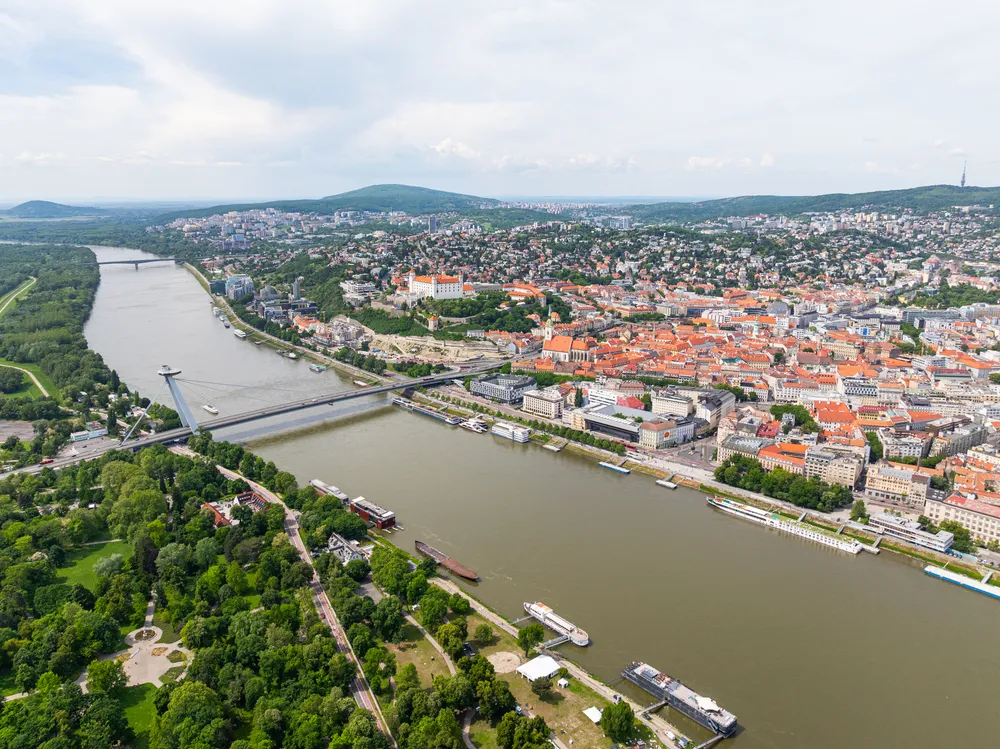
Bratislava's old town is compact — small enough to walk entirely in an afternoon — but architecturally rich, with Baroque palaces, the Primatial Palace (where the Peace of Pressburg was signed in 1805), and a series of well-maintained squares that give a clear sense of the city's importance as the capital of the Kingdom of Hungary for nearly 300 years. Above the old town, the Bratislava Castle sits on a hill above the Danube with views across the river to Austria and Slovakia's lowland south, its rebuilt white form a visible marker of a city that has been through several rounds of destruction and reconstruction.

Location and Day Trips

Bratislava occupies an unusually convenient geographical position. Vienna is 60 kilometres to the west — less than an hour by direct train — making the two cities close enough for a day visit in either direction. Budapest is 200 kilometres to the east, also reachable in under three hours. The Small Carpathian wine region begins at the city's northern edge, and several vineyards and wine towns are accessible within 30 minutes. This connectivity has made Bratislava increasingly popular as a base for exploring a broader region rather than a destination in itself, though the city itself has enough to justify independent attention.

Food and Nightlife

Bratislava's food scene has grown considerably in quality and confidence. The old town's restaurants range from traditional Slovak cooking — based on dumplings, pork, sauerkraut, and the smoked cheeses produced in the Carpathian villages — to a newer generation of places working with Slovak ingredients in more contemporary ways. The nightlife is concentrated in the old town and the nearby Obchodná Street area, with a bar and club scene that is lively, affordable, and largely unpretentious. Slovak wine — particularly the whites from the Small Carpathian region — is better than its international reputation suggests.

Quirky Character

Bratislava has a wry relationship with its own modesty. The communist-era statues and architectural interventions that were made throughout the old town — including a UFO-shaped restaurant on the Danube bridge and a series of bronze street sculptures that have become local landmarks — give the city a self-aware humour that visitors tend to find appealing. The Man at Work sculpture, emerging from a manhole cover on the main square, is the most photographed, but the broader sense of a city that does not take itself entirely seriously runs through the culture at a deeper level.

The Danube, Day Trips and Bratislava's Central European Position

Bratislava's position on the Danube and its proximity to Vienna and Budapest gives it a Central European accessibility that few capitals can match: the Austrian capital is 60 kilometres away and reachable in under an hour by bus, train, or river boat, making Bratislava the only capital city in the world where two other national capitals are within a single-day return day trip. The riverfront, redeveloped over the past decade with promenades, bars on pontoon boats, and public spaces, has returned the city to its waterway in a way that the communist-era road construction had severed. The Danubiana Meulensteen Art Museum, built on a peninsula in the Danube reservoir south of the city and connected to the bank by a narrow causeway, holds a collection of international contemporary art in a setting whose isolation and architecture make the visit itself an event. The Little Carpathian wine region begins at the edge of the city, and the wine route through villages such as Svätý Jur, Pezinok, and Modra — a traditional ceramics town — offers a compact introduction to Slovak wine culture within thirty minutes of the center. The SNP Bridge, completed in 1972 with its distinctive flying saucer observation restaurant suspended from a single pylon above the Danube, remains the most architecturally distinctive structure in the city and offers the best panoramic view of the old town, the castle, and the river from a single vantage point. Bratislava Castle, rebuilt and restored over several decades following wartime damage, houses the historical collections of the Slovak National Museum and anchors the skyline above the old town. The Slovak National Gallery, housed partly in the 18th-century Esterházy Palace and partly in a modernist wing added in the 1970s, holds the national collection of Slovak and central European art from the medieval period to the present. The Blue Church of St Elisabeth, a 1913 Secession building in pale blue majolica tilework by Edmund Lechner, is the most architecturally distinctive single building in Bratislava and one of the finest examples of Hungarian Art Nouveau in existence. The old town's concentration of baroque palaces, now housing embassies, municipal offices, and museums, reflects the city's former status as the capital of the Kingdom of Hungary during the period of Ottoman occupation of Budapest. The Museum of City History in the Old Town Hall, with its Gothic courtyard and tower offering the best elevated view of the old town, documents Bratislava's role as a coronation city for the Hungarian kings and a center of intellectual life during the Enlightenment.

More Cities in Slovakia
Ready to find events in Bratislava?

Browse concerts, club nights, festivals, cultural events, and more. Book directly with the organizer.

Running an event in Bratislava? Create a free listing
Browse Events in Bratislava