Culture, Festivals and the City's Creative Energy
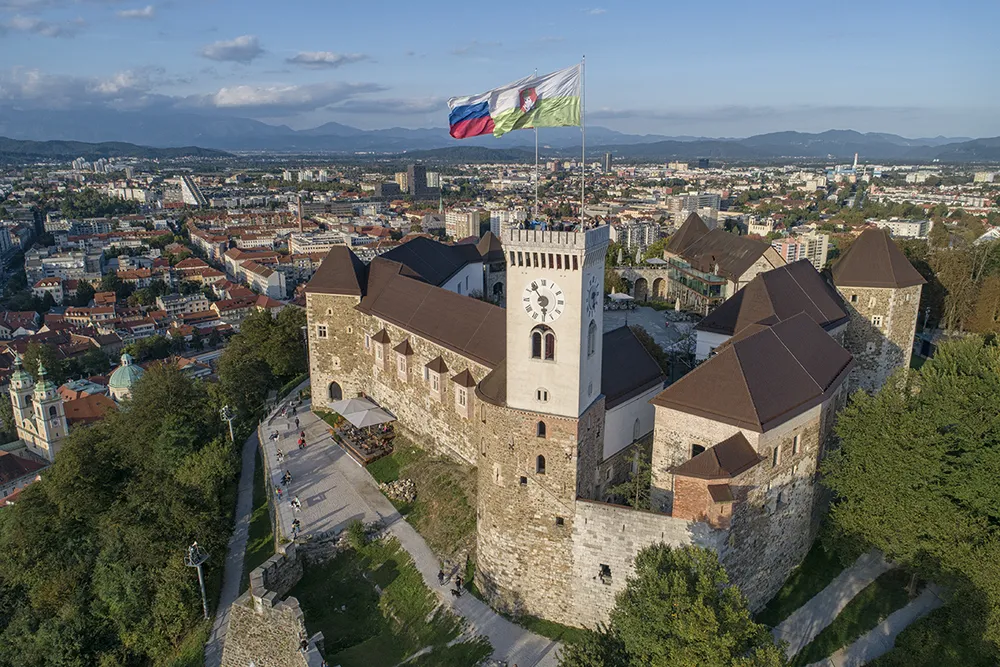
Ljubljana supports a cultural life that consistently exceeds what its modest size would predict, driven by a combination of state support for the arts, a strong university sector, and a civic identity that treats culture as a basic provision rather than a luxury. The Ljubljana Festival, held from late June through August, uses the castle courtyards, the open-air stage on the Križanke (a former monastery converted into a performance venue), and spaces across the old town for a program of theatre, classical music, dance, and jazz that draws both national and international audiences. The Metelkova City cultural center, an autonomous social center established in former military barracks in 1993, operates as an open creative space with galleries, nightclubs, and arts organizations in buildings whose decoration and improvised architecture have made it one of the most visited alternative cultural sites in the Balkans. The Museum of Contemporary History of Slovenia in the Tivoli Park building documents the 20th century from a specifically Slovenian perspective, covering the periods of Austrian, Yugoslav, and independent rule with an honesty that reflects a small nation's capacity to assess its own history without the distortions of imperial scale. The Dragon Bridge and the Triple Bridge, both designed by the same architect who reshaped the city in the early 20th century, are the most photographed structures in Ljubljana and the visual anchors of a city that uses its river and its bridges as the primary spaces of public social life. The outdoor summer program of the Ljubljana Festival, which includes concerts in the castle courtyard, opera in the Križanke amphitheatre, and jazz and world music events along the riverbank, transforms the city for two months into one of the most pleasant European festival environments available in a capital of its size and intimacy. The city's gallery network, centered on the Museum of Contemporary Art Metelkova (MSUM) and the former Šumica Palace, programs international contemporary art alongside Slovenian artists whose work addresses the specific experience of a small nation at the intersection of Central European, Balkan, and Mediterranean cultural zones. The Ljubljana Marathon in October, one of the most popular sporting events in Slovenia, brings the city's streets into use as a civic running event that reflects how the city's compact geography enables participation at a scale impossible in larger capitals.