Things To Do in Chiang Mai Thailand

Discover events, experiences, and everything the city has on offer in Chiang Mai. Browse the full event calendar or read the guide below.

Things To Do in Chiang Mai

Discover events, experiences, and everything the city has on offer in Chiang Mai. Browse the full event calendar or read the guide below.

Old City and Temples

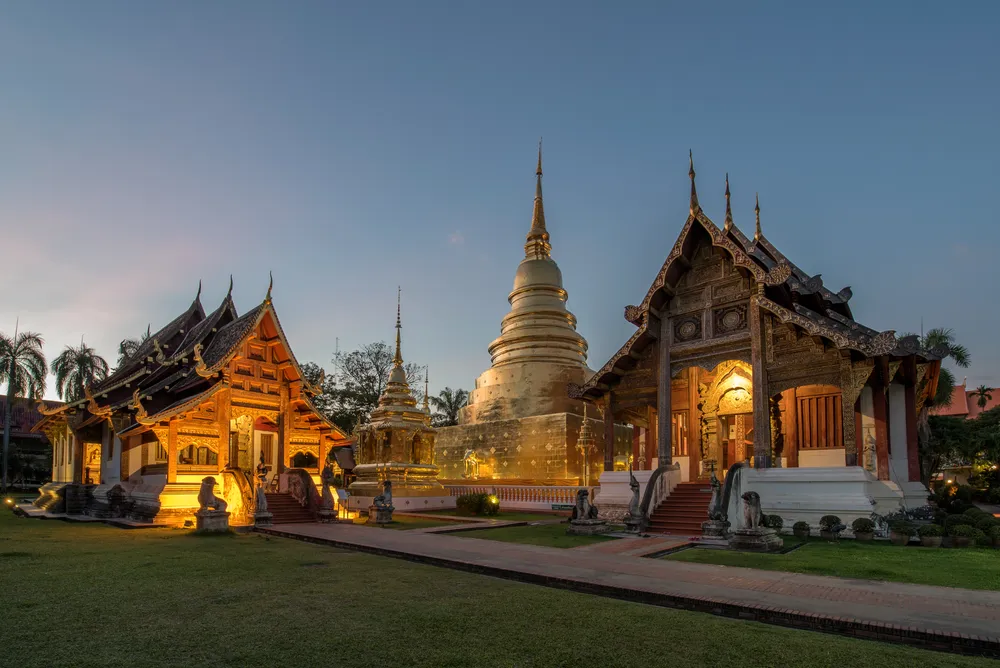
Chiang Mai's old city is enclosed within a square moat that dates to the 13th-century founding of the Lanna kingdom, and within those walls are more than thirty temples in various states of activity and preservation. Doi Suthep, the mountain temple visible from most of the city, sits on a forested peak reachable by a 306-step staircase flanked by serpent balustrades. The density of sacred sites within a compact area means that a day of wandering the old city without a plan almost always yields something worthwhile.

Crafts and Artisan Tradition

Chiang Mai is northern Thailand's center for traditional crafts, and the range and quality of what is made here reflects centuries of skilled production rather than a tourism-driven reconstruction. The city and its surroundings support workshops producing silk weaving, lacquerware, silversmithing, woodcarving, and ceramics, many of which welcome visitors. The Night Bazaar and Walking Street markets are the most accessible places to see and buy finished goods, but a trip to the craft villages south of the old city offers a more direct encounter with the production process.

Food and the Northern Kitchen

Northern Thai cuisine is distinct from the food found in Bangkok and the south, shaped by its Burmese, Yunnan, and Shan borders rather than the Gulf of Thailand. Khao soi — a coconut curry noodle soup with crispy noodles on top — is the signature dish, and the version served in certain small restaurants in Chiang Mai is the benchmark against which all others are measured. The Sunday Walking Street along Wualai Road is the best weekly introduction to northern food in an outdoor setting.

Nature and the Mountains

Chiang Mai sits in a valley surrounded by the mountains of northern Thailand, and the natural environment is immediately accessible. Doi Inthanon, Thailand's highest peak, is within a day trip of the city, with hill tribe villages, waterfalls, and cloud forest at its upper elevations. The region's rivers are used for rafting, and elephant sanctuaries — genuine conservation-focused operations rather than riding camps — offer a very different kind of wildlife encounter. The cool season, from November to February, is when the mountains and the city are at their best.

Doi Suthep, the Hill Tribes and the Mountains Around Chiang Mai

Chiang Mai's position in a valley surrounded by mountains gives it access to a highland environment whose cultural and ecological character is entirely distinct from the lowland Thai culture of Bangkok and the central plains. Doi Suthep, the mountain immediately west of the city rising to 2,565 metres, is dominated by the Wat Phra That Doi Suthep temple at 1,073 metres, a 14th-century royal monastery whose gilded chedi is visible from the city below and whose approach via 309 steps flanked by naga serpent balustrades is one of the most photographed routes in northern Thailand. The Doi Inthanon National Park, 60 kilometres south and containing Thailand's highest peak at 2,565 metres, provides waterfalls, cloud forest, and highland bird species in a landscape that bears no resemblance to the tropical Thailand of the coast. The hill tribe communities of the mountains — Karen, Hmong, Akha, and others — each with distinct languages, textile traditions, and agricultural practices, are accessible through responsible trekking operations based in Chiang Mai that have been operating for over 40 years and offer multi-day routes through villages where the specific traditions of each community can be observed and engaged with directly.

The Sunday Walking Street, Night Bazaar and Chiang Mai's Market Culture

Chiang Mai's market culture is the most varied in northern Thailand and operates on a weekly cycle that structures the social life of both residents and visitors. The Sunday Walking Street on Wualai Road, running from the Chiang Mai Gate south through the silversmithing quarter, fills with craft vendors, street food stalls, and performers every Sunday evening and is the largest and most atmospheric walking market in the city, drawing crowds that make the street impassable by vehicle from late afternoon. The Saturday Walking Street on Wualai Road's parallel artery operates the same format on Saturday evenings with a slightly different vendor mix. The Night Bazaar on Chang Klan Road, operating daily, is the most tourist-oriented of the markets but remains the most convenient destination for northern Thai handicrafts — lacquerware, silver jewellery, hill tribe textiles, and carved wooden items — at competitive prices. The Warorot Market (Kad Luang), the oldest market in Chiang Mai and the primary wholesale and retail market for the city's residents, operates daily across multiple floors with fresh produce, dried goods, textiles, and the full range of northern Thai street food at prices aimed at locals rather than visitors, and represents the working commercial life of the city below the level of its tourist infrastructure. The Three Kings Monument in the city center, depicting the three rulers who founded Chiang Mai in 1296, is the symbolic heart of Lanna cultural identity and the site of the most important public ceremonial events in the city. The Chiang Mai Arts and Cultural Center beside the monument provides the most comprehensive overview of Lanna history and culture, from the kingdom's founding through the period of Burmese domination to the incorporation into the Thai state, in well-designed galleries that contextualise the temples and markets of the city for visitors arriving without prior knowledge. The Bo Sang handicraft village, 9 kilometres east and specialising in hand-painted paper parasols, ceramics, silverwork, and lacquerware, represents the artisan production tradition of the Chiang Mai basin and is best visited on a weekday morning when the workshops are active rather than at weekends when the tourist traffic peaks.

More Cities in Thailand
Ready to find events in Chiang Mai?

Browse concerts, club nights, festivals, cultural events, and more. Book directly with the organizer.

Running an event in Chiang Mai? Create a free listing
Browse Events in Chiang Mai