
Things To Do in London United Kingdom

Discover events, experiences, and everything the city has on offer in London. Browse the full event calendar or read the guide below.

Things To Do in London

Discover events, experiences, and everything the city has on offer in London. Browse the full event calendar or read the guide below.

Arts, Museums and Cultural Institutions

London's national museums and galleries are, with the exception of some special exhibitions, free to enter, which means that the British Museum, the Natural History Museum, the Victoria and Albert Museum, the National Gallery, the Tate Modern, the National Portrait Gallery, and the Science Museum are accessible to everyone on every visit. The British Museum holds one of the largest and most comprehensive collections of human history and culture ever assembled, including objects of such significance and such contested ownership that the question of their repatriation is one of the defining international cultural debates of the current era. The Tate Modern, in the converted Bankside Power Station, is the most visited modern art gallery in the world. The Barbican Center, the Royal Festival Hall, the Royal Opera House, and the Southbank Center between them program the most diverse and extensive performing arts calendar of any city in Europe.

Finance, Business and the City

London is the financial capital of Europe and one of the two global financial centers alongside New York. The City of London (the Square Mile), whose governance structure dates from the medieval period and whose financial preeminence predates the Industrial Revolution, hosts the Bank of England, the London Stock Exchange, Lloyd's of London, and the European operations of the majority of the world's significant investment banks. Canary Wharf, built on the former Isle of Dogs docklands from the late 1980s, extended London's financial district into a new cluster of towers that houses the European headquarters of HSBC, Barclays, Citibank, and JP Morgan. London's position as a global hub for legal services, accountancy, asset management, and insurance reflects an ecosystem built over centuries rather than decades.

Multicultural Food and the London Table

London's food landscape is the direct expression of a city that has been a destination for immigration from every part of the world for three centuries, and the result is a culinary diversity that places it among the world's great food cities in breadth if not always in the narrowly defined national tradition. Brick Lane in Tower Hamlets, Brixton Market, the Vietnamese restaurants of Kingsland Road, the Cantonese seafood restaurants of Gerrard Street in Chinatown, the West African food of Peckham, the South Asian cooking of Southall, and the Levantine restaurants of Edgware Road are different expressions of the same reality. Borough Market under London Bridge is the most celebrated food market in the country. The Michelin-starred restaurant population of London is among the highest of any city in the world.

Theatre, Performance and Entertainment

The West End theatre district, concentrated around Shaftesbury Avenue, the Strand, and Covent Garden, is the world's second-largest theatre market after Broadway and the one with the longer continuous tradition. The distinction between the commercially produced West End and the subsidised National Theatre, the Old Vic, the Young Vic, the Almeida, the Donmar Warehouse, and the Royal Court represents a breadth of theatrical ambition that no other English-speaking city matches. The O2 Arena in Greenwich, the Wembley Arena, and the Royal Albert Hall represent three entirely different concert venue traditions at three entirely different scales. The comedy circuit, the pub theatre tradition, the fringe venues at Soho Theatre and the Bush Theatre, and the spoken word scene produce an entertainment calendar of unusual variety.

History, Architecture and the Built City

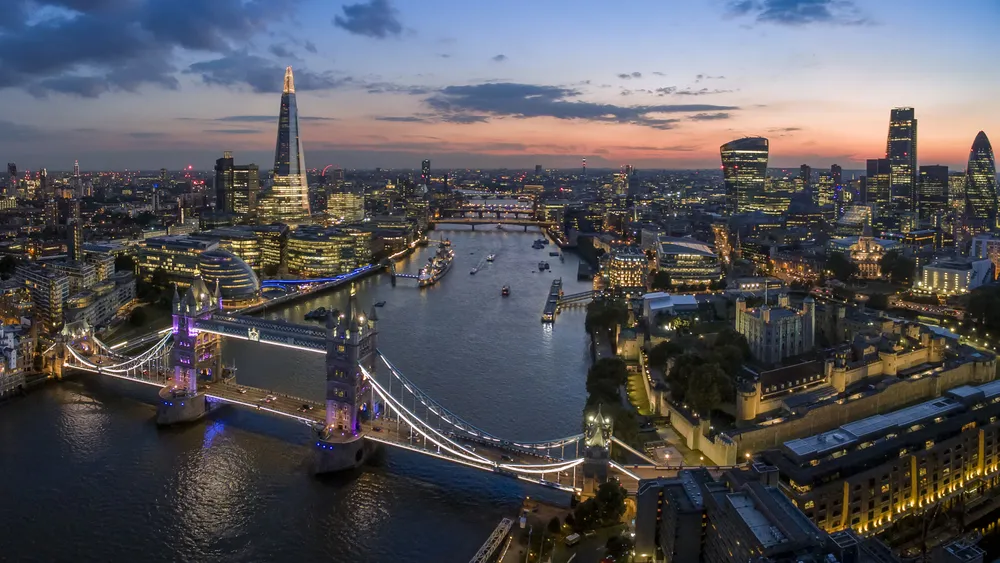
London's history is visible in the street plan, whose medieval core resisted the grid imposed on most European cities as they expanded, and in the buildings that survived the 1666 Great Fire, the Blitz bombing of 1940-41, and the postwar redevelopment that erased many of the gaps left by bombs. The Tower of London, in continuous use as a royal fortress, palace, prison, and now a museum since the eleventh century, is the most visited paid heritage attraction in Britain. Westminster Abbey and the Palace of Westminster, St Paul's Cathedral, Greenwich with the Royal Observatory and the Cutty Sark, and the Georgian squares of Bloomsbury and Islington represent different centuries of a city that has never stopped building. The more recent additions to the skyline, the Shard, 22 Bishopsgate, the Gherkin, and the Walkie-Talkie, represent a commercial property market that has treated height as a statement of financial confidence.

Parks, Royal Parks and the City's Green Space

London's eight Royal Parks contain over 5,000 acres of publicly accessible green space within the city, a resource that distinguishes it from most comparable world capitals. Hyde Park, the largest of the central parks, contains the Serpentine Gallery, the Serpentine Lido, and the long-established tradition of free assembly at Speaker's Corner, maintained without legal interruption since the 1860s. Regent's Park holds an open-air theatre running Shakespeare and musicals through the summer months, formal rose gardens in the Inner Circle, and the northern boundary of London Zoo. Richmond Park in the southwest, at 955 hectares the largest urban park in the United Kingdom, supports a wild deer herd that has grazed the land since the 17th century and is used daily by cyclists, riders, and walkers in quantities that would fill a mid-sized football stadium. The chain of parks running from St James's Park through Green Park to Hyde Park and Kensington Gardens forms a continuous green corridor through the center of the city that can be walked without crossing a major road. Hampstead Heath to the north offers wilder terrain, open-air swimming ponds, and views across the city from Parliament Hill that are available from no comparable accessible outdoor point. The quality and extent of London's public green space is one of the city's most consistently undervalued assets.

More Cities in United Kingdom
Ready to find events in London?

Browse concerts, club nights, festivals, cultural events, and more. Book directly with the organizer.

Running an event in London? Create a free listing
Browse Events in London