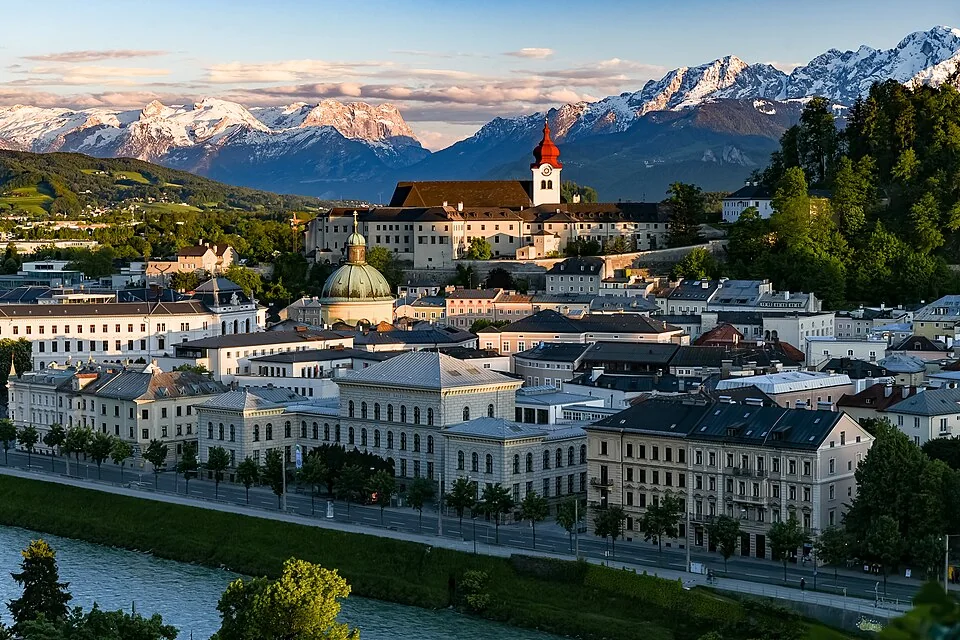
The Salzkammergut, Hallstatt and the Landscape Around Salzburg
The landscape around Salzburg is among the most celebrated in the Alpine world, and the city's position at the edge of the Salzkammergut lake district gives it access to natural scenery that has attracted visitors since the Romantic period. Hallstatt, 75 kilometres east and reached by a combination of train and ferry across the Hallstättersee, is the village whose setting between a vertical mountain face and a glacial lake has made it the most photographed village in Austria and a UNESCO World Heritage Site for both its natural setting and its archaeological significance: the Hallstatt culture, the first phase of the European Iron Age, takes its name from the salt mines above the village worked continuously for 7,000 years. The Wolfgangsee, the Mondsee, and the Fuschlsee each provide swimming, boating, and lakeside walking within an hour of Salzburg. The Hohenwerfen fortress, 40 kilometres south in the Salzach valley, is a 12th-century castle on a rock promontory that is visible from the motorway and whose falconry demonstrations and interior displays make it one of the most complete medieval fortress experiences in Austria. The Untersberg, directly accessible from the city by cable car, provides the most extensive high-plateau walking and panoramic views of Salzburg, the Bavarian plain, and the surrounding Alps from any single ascent. The Hellbrunn Palace, 4 kilometres south and accessible by bicycle along the river path, is the most entertaining baroque pleasure garden in Austria: the 17th-century Archbishop Wolf Dietrich commissioned trick fountains throughout the garden that were designed to soak unsuspecting guests, and these practical jokes - still operational - give the visit a physical immediacy absent from more reverential heritage sites. The Christmas Market in front of Salzburg Cathedral, operating in late November and December and one of the oldest and most atmospheric in the German-speaking world, draws visitors for the combination of the baroque setting, the mulled wine, and the handcraft stalls under the cathedral facade. The Salzburg Museum in the New Residence presents the city's history from its Celtic and Roman origins through the prince-archbishopric to the present in permanent galleries that provide the most complete contextualisation of the city's architectural and musical heritage available in a single location.