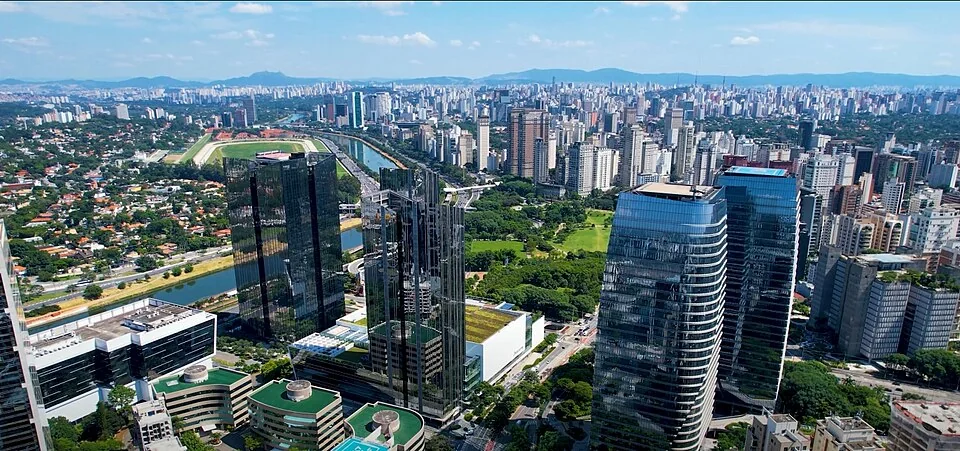
Green Spaces, Parks and Escaping the City
São Paulo's reputation as a concrete megalopolis obscures the fact that it contains a substantial amount of green space, from the Parque Ibirapuera to the Atlantic Forest reserves on its southern and northern edges. The Parque Ibirapuera, designed by the landscape architect Roberto Burle Marx and opened in 1954, is the Central Park of São Paulo and contains within it the MAM (Museum of Modern Art), the Afro Brasil Museum, and the Bienal Pavilion, making it one of the few urban parks in the world where a significant program of cultural institutions coexists with extensive open grassland, cycling tracks, and the kind of weekend social life that brings every stratum of the city's population into the same space. The Serra da Cantareira State Park to the north, the largest urban forest reserve in the world, is reachable by metro and bus and offers hiking through Atlantic Forest that feels remote despite being within the municipal boundary. The Embu das Artes town, one hour southwest by bus, has a weekly craft market and colonial center that provides an entirely different register of Brazilian urban life from the megacity. The city's relationship with its own geographic extremes is part of daily life: the metropolitan traffic, the contrast between gated condominiums and favela communities visible from the same elevated highway, and the simultaneous existence of world-class restaurants and street food of extraordinary quality within walking distance of each other make São Paulo a city that cannot be understood through any single lens and rewards honest attention more than any curated experience of it. The Pinacoteca do Estado, housed in a renovated 1905 building in the Luz neighbourhood, holds the most significant collection of Brazilian art from the 19th and early 20th centuries and anchors a cultural quarter alongside the Sala São Paulo concert hall. The MASP (Museu de Arte de São Paulo), whose collection of European and Brazilian painting is the most significant in Latin America, sits on the Avenida Paulista elevated on red concrete pillars above a free public plaza used daily for markets, skateboarding, and political gatherings in a combination of high culture and democratic public use found nowhere else in the city. The Avenida Paulista itself, the most symbolically important street in São Paulo and the location of the state government buildings, major banks, and cultural centers including the FIESP cultural center with its free exhibitions, closes to traffic on Sundays and becomes the city's most populous public space, filled with cyclists, skaters, street performers, and the kind of cross-section of São Paulo society that the city's residential segregation otherwise prevents from occupying the same ground simultaneously.