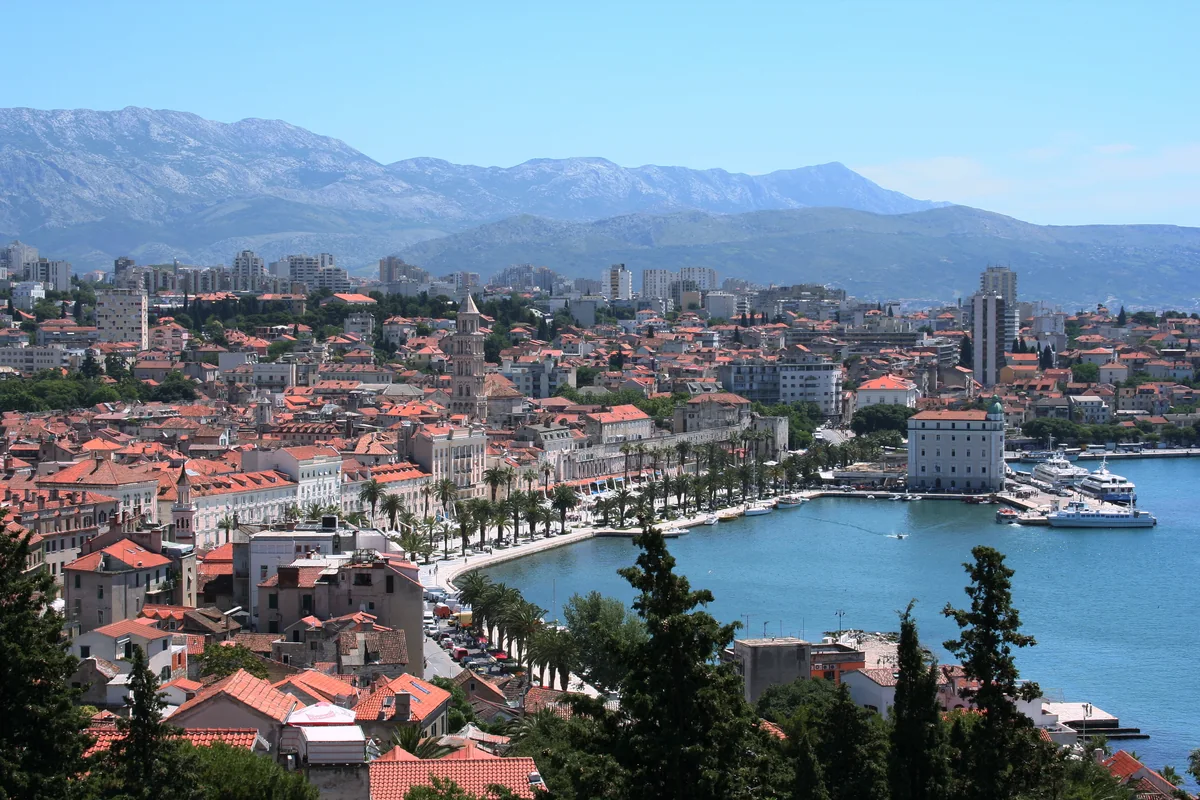
The Riva Promenade, Marjan Hill and Split's Urban Life
The Riva, Split's palm-lined seafront promenade running along the southern face of Diocletian's Palace walls, is the primary social space of the city: a kilometre of café terraces, outdoor seating, and waterfront views where the entire population of Split appears to congregate in the evening hours in a performance of urban sociability that is entirely natural rather than staged for visitors. The Marjan peninsula, a forested hill of Aleppo pine rising immediately west of the old town and accessible by steep paths through residential neighbourhoods, provides hiking, sea viewpoints, and a complete escape from the urban density of the palace district within a 15-minute walk of the main square. The Croatian Maritime Museum in the Gripe Fortress on the hill above the old town and the Ivan Meštrović Gallery - the purpose-built home and studio of Croatia's most important sculptor, housing the largest collection of his work in a Baroque villa on the Meje waterfront - extend the cultural program of the city beyond the Roman heritage. The central fish market at the eastern gate of the palace, operating from early morning, is the most direct expression of Split's relationship with the Adriatic and supplies the city's restaurants with fresh catch in a setting unchanged in character for centuries. The Meštrović Gallery, the former summer residence and studio of Ivan Meštrović on the Meje waterfront, holds the largest single-artist collection in Croatia in a building designed by the sculptor himself and presenting the full range of his monumental and intimate work in marble, bronze, and wood from the early 20th century to his death in 1962. The ferry connections from Split's harbour to the islands of Brač, Hvar, Šolta, and Vis - with Hvar's medieval town and lavender fields and Vis's relative isolation making them the most visited day trip destinations from the city - give Split its function as the primary gateway to the central Dalmatian islands and ensure that its own attraction as a destination is amplified by the wider context of the Dalmatian coast.