Café Culture, Markets and Zagreb's Everyday Life
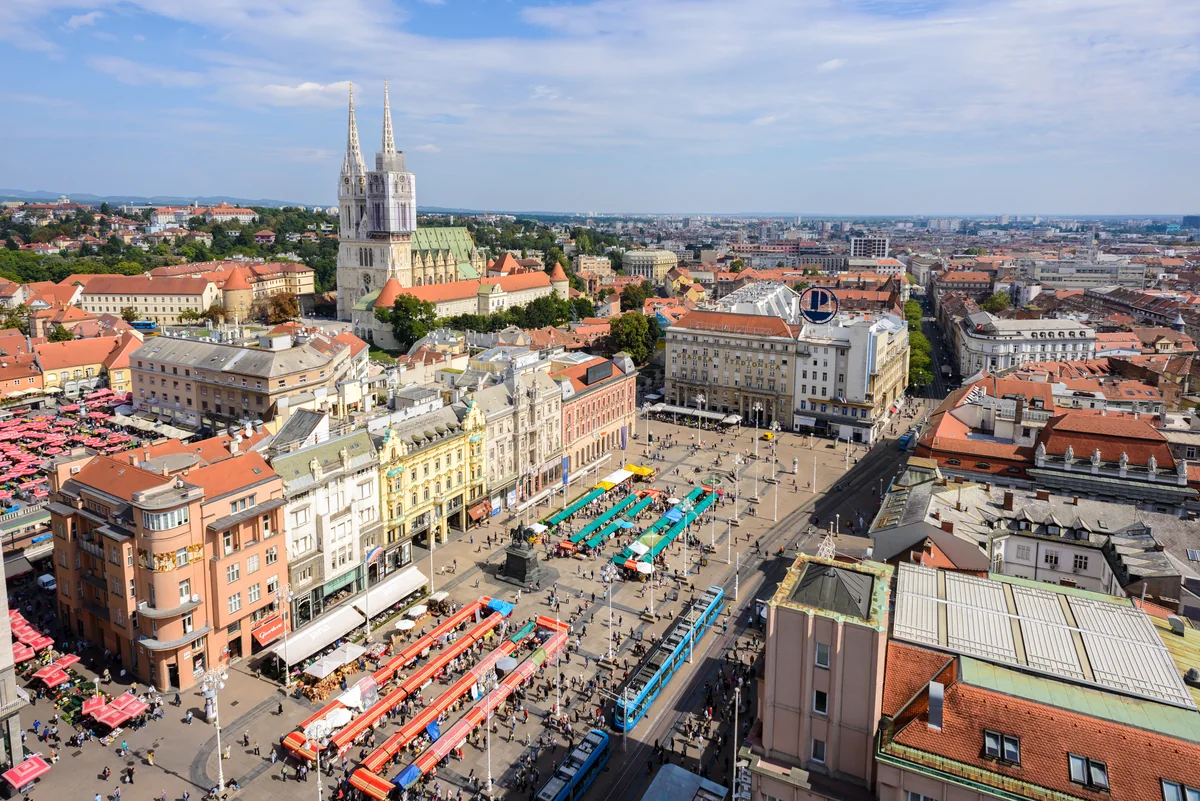
Zagreb operates at a pace and social intensity that sets it apart from the coastal cities that draw the majority of visitors to Croatia. The špica - the Saturday morning ritual of coffee, conversation, and visible social presence in the cafés of Tkalčićeva Street and the surrounding terraces - is one of the most deeply rooted urban social customs in Central Europe and the most reliable way to understand the city's particular relationship with public space and social life. The Dolac market above Ban Jelačić Square, open daily and at its fullest on Saturday mornings, is the central food market of the city and functions as a social institution as well as a supply point for the city's restaurants, with red umbrella stalls selling produce from farms within a two-hour radius of the city. The Museum of Broken Relationships, which opened as a temporary exhibition in Zagreb in 2006 before becoming a permanent institution and inspiring a book and travelling exhibition, holds a collection of donated objects from ended relationships accompanied by the donors' accounts and has become one of the most visited museums in Croatia. The Mirogoj cemetery, designed by Herman Bollé in 1876 and enclosed by an arcaded Renaissance wall, is one of the most architecturally distinguished cemeteries in Europe and the resting place of figures central to Croatian cultural and political history. The city's art nouveau and Viennese Secession architecture, concentrated in the Donji Grad lower town built in the late 19th and early 20th centuries, provides a consistent streetscape that reflects Zagreb's status as a provincial capital within the Austro-Hungarian empire. The Strossmayer Gallery of Old Masters, donated to the city by the bishop and cultural patron Josip Juraj Strossmayer and housed in the Croatian Academy of Sciences and Arts, holds the finest collection of pre-modern European painting in Croatia, with works spanning Italian, Dutch, Flemish, and French schools from the 14th to 19th centuries. The Museum of Contemporary Art in Novi Zagreb, opened in 2009 in a building by Igor Franić, holds the national collection of Croatian and international contemporary art from the 1950s to the present in purpose-built gallery spaces that make it the most professionally presented contemporary art venue in the country. The Lauba House for People and Art, a contemporary art space in a converted factory building in the western part of the city, programs exhibitions of Croatian and international contemporary art in a format that has established it as the most dynamic private art venue in Zagreb. The Jarun Lake recreational area in the south-west of the city, created for the 1987 World University Games, provides outdoor swimming, cycling, and rowing within the city limits.