Things To Do in Tallinn Estonia

Discover events, experiences, and everything the city has on offer in Tallinn. Browse the full event calendar or read the guide below.

Things To Do in Tallinn

Discover events, experiences, and everything the city has on offer in Tallinn. Browse the full event calendar or read the guide below.

Medieval Old Town

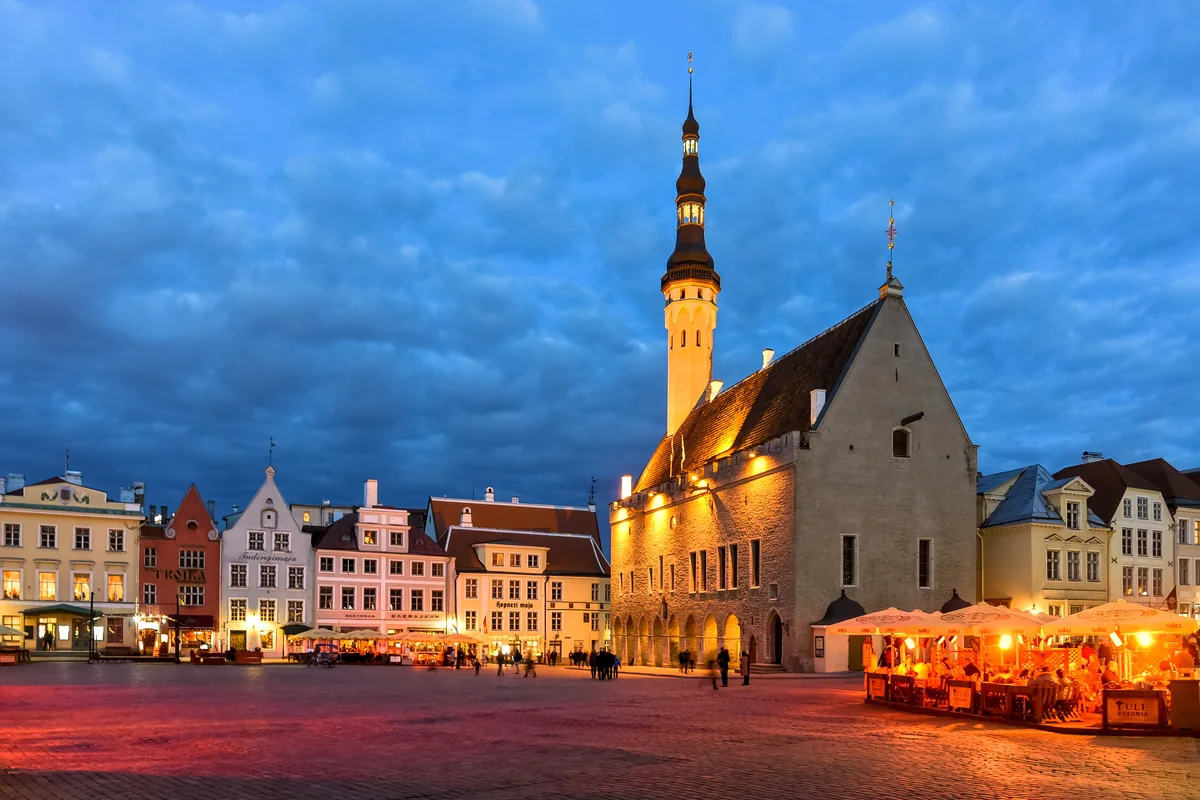
Tallinn's UNESCO-listed old town is one of the best-preserved medieval cities in northern Europe. The limestone towers and walls of the lower town — built by the Teutonic Knights and the Hanseatic merchants who followed them — still enclose a street plan and an architectural character that has survived every subsequent occupying power largely intact. Toompea, the upper hill town that served as the seat of successive rulers, looks down over the merchant quarter with a directness that maps the social hierarchy of the 13th century onto the city's topography.

Digital Society and Innovation

Estonia has built one of the most digitally advanced societies in the world, and Tallinn is its showcase. The country was the first to introduce online voting in national elections, offers e-residency to foreign nationals, and has produced a remarkable number of significant technology companies relative to its small population. The Ülemiste City technology campus, adjacent to the airport, concentrates much of the tech industry, but the culture of digital-first thinking runs through government services, banking, and daily life in ways that visitors notice immediately.

Food and the Growing Restaurant Scene

Tallinn's restaurant scene has grown considerably in ambition and quality over the past decade. The old town's tourist-facing restaurants have improved as competition has increased, and the neighbourhoods outside the walls — particularly Kalamaja and Telliskivi, in converted factory buildings near the former train depot — have developed a creative food and café culture that is distinctly contemporary. Estonian cooking uses rye bread, smoked fish, elk, and the wild mushrooms and berries that grow in the surrounding forests in quantity.

Music and Song Festival Tradition

Estonia's Song Festival tradition — a mass choral gathering held every five years in Tallinn — is one of the most significant cultural events in the country and carries historical weight that reaches back to the national awakening of the 19th century. The Tallinn Song Festival Grounds, which can accommodate tens of thousands of singers on stage and hundreds of thousands of audience members, were built specifically for this event and are a focal point of Estonian identity. The tradition of choral singing runs through Estonian cultural life at every level and finds expression in a year-round program of concerts and festivals.

Soviet-Era Tallinn, Kalamaja and the City's Recent History

Tallinn's Soviet period, which lasted from 1940 to 1991 with the interruption of German occupation from 1941 to 1944, left a physical and cultural legacy that the city engages with more directly than many of its Baltic counterparts. The Viru Hotel, built in 1972 as a showcase for Soviet hospitality and now containing a KGB museum in its secret top-floor suite from which the hotel and its guests were monitored, is the most viscerally specific site of Cold War history in the city. The Kalamaja neighbourhood, a district of 19th-century wooden workers' houses west of the old town that was neglected throughout the Soviet period, has been transformed since independence into the most creative quarter of the city, with the Telliskivi Creative City — a cluster of former railway workshops housing restaurants, studios, and market spaces — at its center. The Seaplane Harbour Museum, housed in a monumental 1917 reinforced concrete seaplane hangar on the Kalamaja peninsula, holds Estonia's maritime heritage collection including the icebreaker Suur Tõll and submarine Lembit in a building whose engineering is itself an exhibit. The Balti jaam flea market outside the main railway station operates daily with vintage clothing, Soviet collectibles, tools, and produce in an informal economy that survived independence and reflects a specifically post-Soviet urban commercial culture.

Digital Innovation, the Song Festival and Estonia's National Identity

Estonia's international reputation as a digital society — the country that invented Skype, pioneered e-government, and established digital residency — originates partly in the innovation ecosystem centered on Tallinn. The Ülemiste City technology campus adjacent to the airport houses over 500 technology companies and has made Tallinn one of the highest per-capita producers of tech unicorns in the world. The Estonian History Museum at Maarjamäe, on the coastal road northeast of the old town, holds the national historical collection in a 19th-century manor adjacent to a Soviet-era memorial complex that the museum now interprets as part of the country's complex 20th-century history. The Song Festival Grounds at Pirita, where the Estonian Song Celebration has been held since 1869 in one of the longest continuous choral traditions in Europe, was the site of the Singing Revolution of 1987 to 1991, when mass gatherings of hundreds of thousands of Estonians singing national songs became the primary vehicle for the peaceful restoration of independence from the Soviet Union. The grounds contain the large arched stage and the terraced audience bowl, and the Song Celebration itself — held every five years and drawing up to 100,000 singers to the stage in a single performance — is the most significant cultural event in Estonia and a UNESCO Intangible Cultural Heritage of humanity. The Open Air Museum at Rocca al Mare, a 79-hectare site on the western coast of the Kopli peninsula, presents over 70 historic Estonian farm buildings, windmills, and village structures relocated from across the country in a forest setting that is one of the most comprehensive rural heritage collections in northern Europe. The Kadriorg Palace and its park, built by Peter the Great as a summer residence after the Russian conquest of Tallinn in 1710, houses the foreign art collection of the Art Museum of Estonia in a baroque palace whose restored formal gardens provide the most elegant public park in the city, adjacent to the contemporary KUMU art museum designed by Pekka Vapaavuori.

More Cities in Estonia
Ready to find events in Tallinn?

Browse concerts, club nights, festivals, cultural events, and more. Book directly with the organizer.

Running an event in Tallinn? Create a free listing
Browse Events in Tallinn