Things To Do in Tartu Estonia

Discover events, experiences, and everything the city has on offer in Tartu. Browse the full event calendar or read the guide below.

Things To Do in Tartu

Discover events, experiences, and everything the city has on offer in Tartu. Browse the full event calendar or read the guide below.

University City

Tartu is Estonia's intellectual capital, shaped by the University of Tartu that has operated since 1632. The university is the oldest and largest in the Baltic states, and its presence defines the character of the city — the proportion of young people is high, the bookshops and cafés are used seriously, and there is a general sense that ideas are taken more seriously here than in a city of comparable size might normally support. The university's main building, with its neoclassical colonnade on the Toome Hill, is the architectural centerpiece of the city.

Culture and Museums

Tartu holds a disproportionate share of Estonia's cultural institutions given its size. The Estonian National Museum — a vast new building opened in 2016 on the site of a Soviet-era airfield — is the most important museum in the country for understanding Estonian identity, culture, and history. The city also hosts the AHHAA science center, considered one of the best in northern Europe, and a strong program of contemporary art in the Art Museum of Estonia and several independent galleries. Tartu was European Capital of Culture in 2024.

Food and Student Culture

Tartu has a lively food and café culture driven by its student population and the general Estonian seriousness about good ingredients. The Aparaaditehas creative hub, in a converted factory on the edge of the center, houses a concentration of independent restaurants, design studios, and event spaces that have become the most interesting part of the city for eating and socialising. The town hall square is surrounded by cafés that serve the street-level social life of the city, and the overall standard of coffee and baking reflects the influence of the Scandinavian food culture that has been absorbed across the region.

The University, Academic Life and Tartu's Intellectual Identity

Tartu's identity is inseparable from the University of Tartu, founded in 1632 by the Swedish king Gustav II Adolf and the second oldest university in the Nordic and Baltic region. The university's main building on Toomemägi hill, a neoclassical palace completed in 1809, and the anatomy theatre built within the ruins of the medieval cathedral on the same hill together make the university campus the most architecturally compelling site in the city. The university library, the largest academic library in Estonia with over four million items, and the university history museum in the main building document the institution's role in the development of Estonian national culture, science, and the standardisation of the Estonian language as a literary medium. Tartu houses a significantly larger proportion of students relative to its total population of 93,000 than any other Estonian city, and the student culture of the streets around the university and the bars of Raekoja plats (Town Hall Square) gives the city an evening energy consistent with a city twice its size. The Estonian National Museum, opened in 2016 in a landmark building on the site of the former Soviet airbase at Raadi, presents the history and culture of the Estonian people from prehistory to the present in the most ambitious museum project in Estonian history.

The Old Town, Toome Hill and Tartu's Urban Character

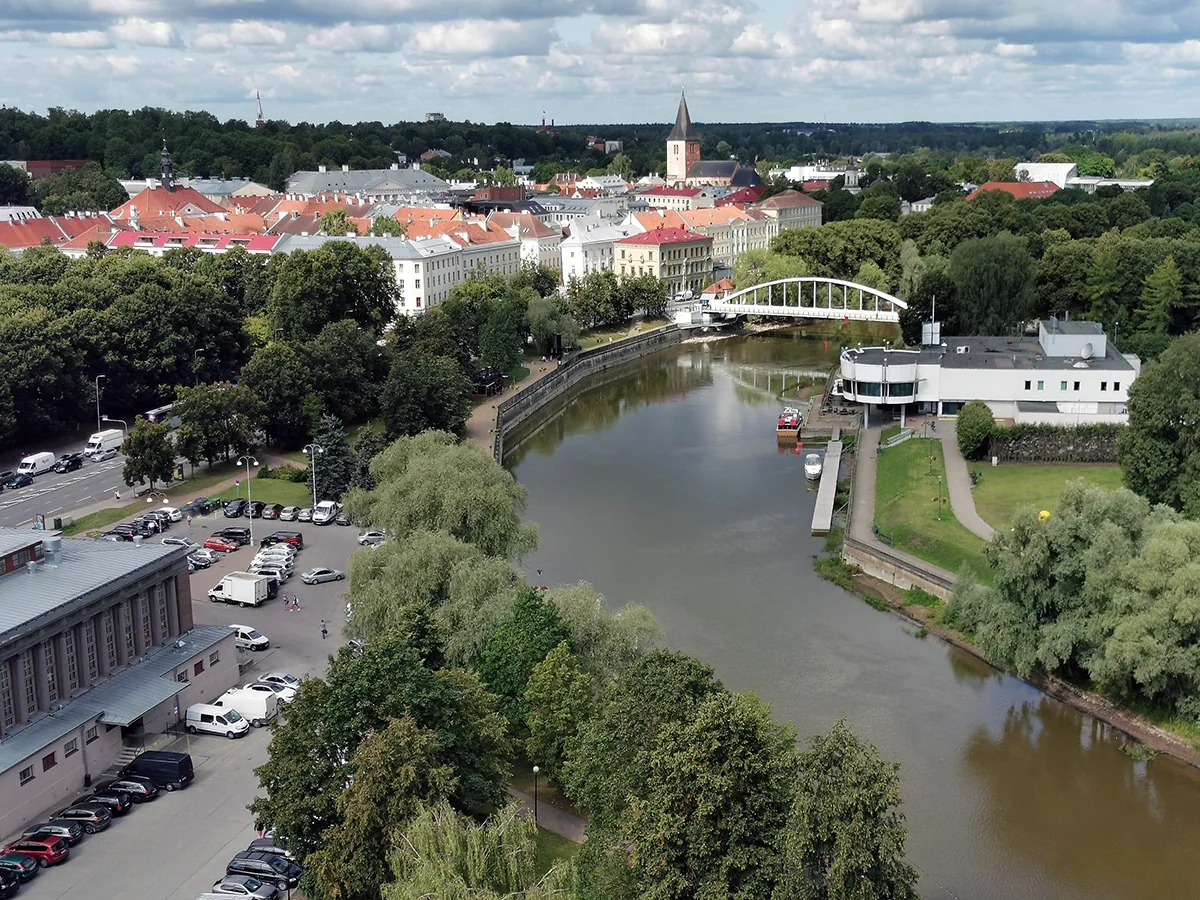
Tartu's old town, centered on Raekoja plats with its pastel-colored town hall completed in 1789, has a scale and cohesion that makes it one of the most pleasant town squares in the Baltic states. The adjacent streets of university buildings, student cafés, and independent bookshops create a neighbourhood whose character is entirely shaped by the presence of the university and the intellectual life it generates. Toomemägi (Cathedral Hill), rising above the old town and containing the ruins of the 13th-century cathedral, the university's white neoclassical buildings, and an observatory still in operation, provides the most rewarding elevated walk in central Tartu, with views across the Emajõgi river and the city rooftops and a silence that the flat city below does not offer. The Emajõgi river, flowing through the city to Lake Peipus — the fourth largest lake in Europe and the border with Russia — provides a waterway used by the city's student rowing clubs and by summer excursion boats that travel downstream to the lake and its fishing communities.

The AHHAA Science Center, Tartu's Museums and Cultural Program

The AHHAA Science Center, one of the most visited attractions in Estonia, presents natural science, technology, and health in interactive exhibitions designed for children and families in a purpose-built building on the Emajõgi riverbank. The Estonian National Museum at Raadi, 10 minutes from the city center, is the most architecturally ambitious building completed in Estonia in the 21st century: its 335-metre glass roof extending along the former runway of the Soviet military airbase incorporates the landscape of the base as part of the museum's narrative about occupation, memory, and national identity. The Tartu City Museum in the old town, the Tartu Art Museum in a neoclassical building on Raekoja plats, and the Estonian Sports Museum together provide a museum infrastructure that reflects the city's investment in presenting its own history at multiple levels of specificity. The annual Tartu literary festival Prima Vista in May and the Tartuff outdoor film festival in August bring international and Estonian writers and filmmakers to a city that takes its role as the intellectual capital of Estonia seriously enough to maintain the infrastructure to support that claim.

More Cities in Estonia
Ready to find events in Tartu?

Browse concerts, club nights, festivals, cultural events, and more. Book directly with the organizer.

Running an event in Tartu? Create a free listing
Browse Events in Tartu