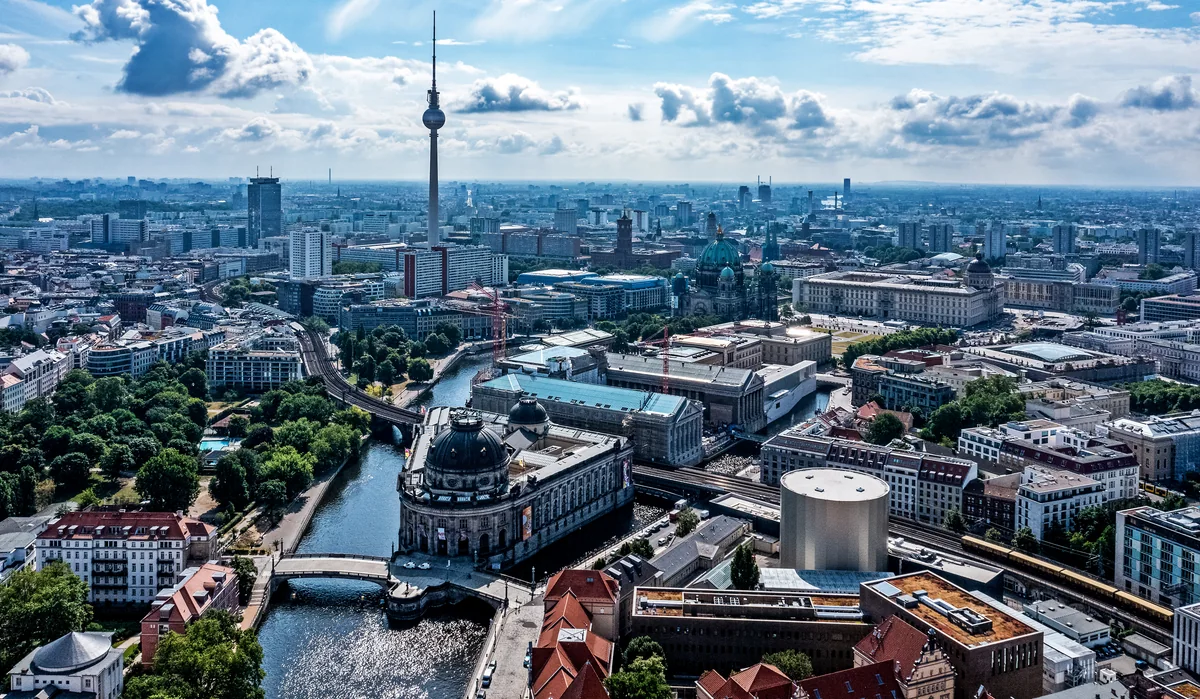
Architecture, Memorials and the City's Rebuilt Fabric
Berlin's built environment is unlike any other European capital because so much of it was destroyed and then rebuilt under two entirely different political systems within a single generation, producing a city whose architecture is a direct record of ideology. The Hansaviertel in the Tiergarten, designed by architects from across the world for the 1957 International Building Exhibition (Interbau) as a showcase of western democratic modernism, sits physically and symbolically within sight of the pre-war monuments it was built to contrast with. The Jewish Museum, opened in 2001 in a zinc-clad building whose distorted geometry and underground passages make architecture itself the medium of expression, is one of the most discussed museum buildings of the past thirty years. The Holocaust Memorial south of the Brandenburg Gate, an installation of 2,711 concrete slabs of varying heights across a full city block, produces an experience that is simultaneously public art, historical reflection, and urban space, and which resists the interpretive certainties that most memorials impose. The rebuilt Stadtschloss at the Humboldt Forum, opened progressively since 2020, houses collections from the ethnological museums in a reconstruction that has generated the most sustained architectural and ethical debate of any building project in recent German history. The city's residential neighbourhoods, particularly the Altbau apartment buildings of Prenzlauer Berg and Kreuzberg whose late 19th-century fabric survived the war in varying states, carry a domestic architectural quality that gives Berlin its most liveable and specifically local character. The IBA (International Building Exhibition) tradition that shaped post-war construction in the Hansaviertel and later Kreuzberg has continued through successive iterations, making Berlin one of the most consistently documented laboratories of urban architectural experiment in Europe.