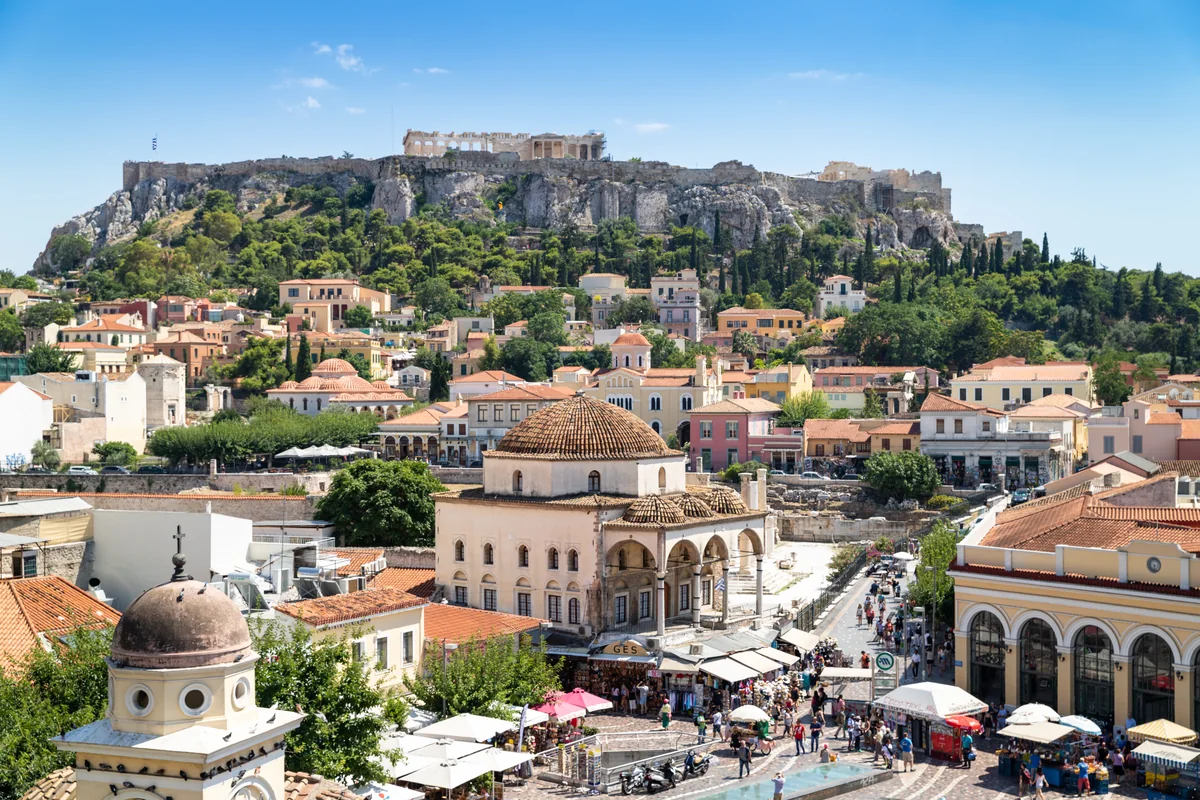
Neighbourhoods, Street Life and the Contemporary City
Athens operates at street level with an intensity and sociability that its ancient monuments can distract visitors from noticing. The Exarcheia neighbourhood, historically the most politically radical district in the city, has a concentration of independent bookshops, record shops, political cafés, and bars that gives it a specific intellectual character maintained across decades of urban change. Koukaki and Pangrati, south and east of the Acropolis respectively, have developed restaurant and café cultures driven by the local resident populations rather than by tourism, producing neighbourhood eating that is more honest and frequently better than the tourist-facing terraces around the major sites. The Monastiraki flea market, at its most concentrated on Sunday mornings when the surrounding streets fill with stalls, furniture, and vintage objects, is the most characterful market setting in the city. The Athenian summer outdoor cinema tradition, whose rooftop and garden cinemas project films against the Athenian sky from May through September with the Acropolis visible in some venues from the audience seating, is a specifically Athenian pleasure of a kind that no other city can replicate. The First Cemetery of Athens, south of the Panathenaic Stadium, is a place of extraordinary sculptural richness and a key destination for anyone seriously interested in Greek art beyond the ancient period. The Kolonaki neighbourhood on the slopes below Lycabettus Hill is the city's most affluent retail and café district, with a concentration of galleries, independent boutiques, and restaurants that reflects an Athenian bourgeois culture maintained through considerable economic turbulence. The Lycabettus Theatre, a stone outdoor amphitheatre cut into the rock at 300 metres above sea level, programs summer concerts with views across the city to the Saronic Gulf that no other venue in Athens can match. The Athens Riviera south of the city, extending from Faliro through Vouliagmeni to Sounion, offers beaches, seafood restaurants, and the ruined Temple of Poseidon on a cape at the tip of the Attica peninsula that can be reached in under an hour and whose setting at sunset over the Aegean is one of the great views of the eastern Mediterranean. The Archaeological Museum of Piraeus holds a collection of bronze sculptures recovered from the sea that are among the finest surviving examples of ancient Greek bronzework.