
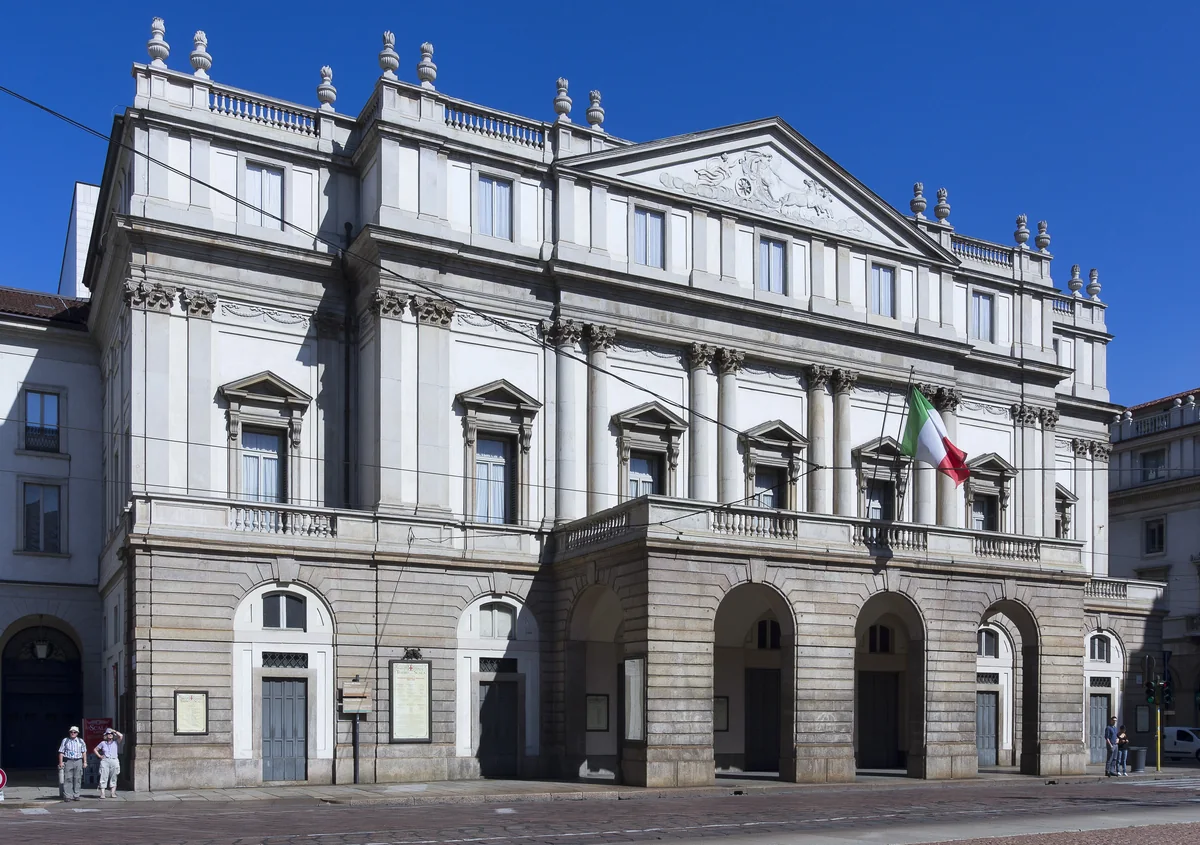
Things To Do in Milan Italy

Discover events, experiences, and everything the city has on offer in Milan. Browse the full event calendar or read the guide below.

Things To Do in Milan

Discover events, experiences, and everything the city has on offer in Milan. Browse the full event calendar or read the guide below.

Fashion, Design and the Luxury Industry

Milan is the global capital of fashion and the city from which the Italian luxury industry operates, a position built on a concentration of design houses, manufacturing expertise, textile industry, and retail infrastructure that has no equivalent anywhere else. The Quadrilatero della Moda (Fashion Quadrangle) in the city center, bounded by Via Montenapoleone, Via della Spiga, Corso Venezia, and Corso Vittorio Emanuele II, is the most expensive retail real estate in Italy and one of the highest-value luxury shopping streets in the world. Milan Fashion Week, held twice yearly, is one of the four major fashion weeks alongside Paris, London, and New York. The Salone Internazionale del Mobile (Furniture Fair) and its satellite events during Design Week in April constitute the most important international design event of the year in any discipline.

Business, Finance and the Economic Capital

Milan is the economic capital of Italy and the city from which Italian finance, industry, and commerce are predominantly managed. The Milan Stock Exchange (Borsa Italiana) is one of the most active in Europe, and the concentration of investment banks, private equity firms, and corporate headquarters in the Porta Nuova district and the city center reflects a business density comparable to Frankfurt or Zurich. The Fiera Milano exhibition complex in Rho, northwest of the city, is one of the largest trade fair complexes in the world and hosts events spanning fashion, furniture, technology, and food across the calendar. The city's professional services sector, legal community, and manufacturing industry represent the foundations of Italy's strongest regional economy.

Art, Heritage and Cultural Life

The Pinacoteca di Brera holds the most important collection of Italian painting north of Rome, with works from the Venetian, Lombard, and Bolognese schools in a setting within an eighteenth-century palazzo that is itself a significant architectural experience. The Pinacoteca Ambrosiana holds an important collection including drawings by Leonardo da Vinci. Santa Maria delle Grazie, a Dominican church in the Corso Magenta area, contains on the wall of its former refectory one of the most recognisable paintings in human history, a depiction of the Last Supper painted at the end of the fifteenth century in an experimental technique that has required continuous conservation ever since. The church and painting are a UNESCO World Heritage Site.

Food, Risotto and the Milanese Table

Milanese cooking is Northern Italian food at its most refined and richest: butter rather than olive oil, braised meats, saffron risotto, and the specific character of Lombard dairy products and rice from the Po valley. Risotto alla milanese, made with saffron and bone marrow and served as a specific dish rather than as the generic background starch it becomes in weaker hands, is the city's defining contribution to Italian cooking. Cotoletta alla milanese, a bone-in veal chop flattened and fried in breadcrumbs to an improbable size, is arguably the original from which the Viennese Schnitzel derives. The Navigli district, built around the former navigation canals of the city that have been partially restored as a waterside social and restaurant district, is the most atmospheric area for evening dining and drinking.

Fashion, Design and Milan's Creative Industries

Milan is the capital of Italian fashion and one of the four global fashion capitals, hosting the biannual Milan Fashion Week in February and September that draws buyers, press, and industry professionals from around the world to shows in the Quadrilatero della Moda and across the city's historic showrooms. The Quadrilatero — the rectangle of streets between Via Montenapoleone, Via della Spiga, Via Sant'Andrea, and Via Manzoni — concentrates the flagship stores of every major Italian and international luxury house in a density of retail ambition that is the commercial equivalent of its architectural heritage. The Salone del Mobile, held annually in April at the Fiera di Milano exhibition center in Rho and the largest design fair in the world, draws 400,000 visitors to the main exhibition and to the Fuorisalone events that transform the entire city — showrooms, courtyards, and streets from Brera to Isola to the Navigli canals — into an extended design festival for a week. The Museo del Novecento in the Arengario, presenting Italian art of the 20th century from the Futurists through Arte Povera, and the Pinacoteca di Brera with its northern Italian Renaissance collection, anchor the museum circuit of a city whose cultural infrastructure matches its commercial ambition.

The Navigli, Brera and Milan's Neighbourhood Life

The Navigli district, where two of Milan's surviving navigable canals — the Naviglio Grande and the Naviglio Pavese — flow through a neighbourhood of 19th-century warehouses and courtyard buildings now occupied by bars, restaurants, and artisan studios, is the most animated outdoor social environment in the city. The Sunday Naviglio Antique Market along the Naviglio Grande, one of the largest antique and vintage markets in Italy by vendor count, fills the canal towpath for several hundred metres on the last Sunday of each month and is the most varied market in Milan for furniture, art objects, and collectibles. The Brera neighbourhood, north of the city center, combines the Pinacoteca di Brera with a concentration of galleries, independent boutiques, and restaurants in a pedestrian-scale urban environment that contrasts with the corporate scale of the fashion district. The Isola neighbourhood, separated from the center by the railway and for years an overlooked working-class district, has developed since the construction of the Porta Nuova skyscraper complex nearby into the most dynamic creative quarter in Milan, with independent food shops, natural wine bars, and the Bosco Verticale (Vertical Forest) towers whose planted facades have become the most photographed residential buildings in Italy.

More Cities in Italy
Ready to find events in Milan?

Browse concerts, club nights, festivals, cultural events, and more. Book directly with the organizer.

Running an event in Milan? Create a free listing
Browse Events in Milan