Things To Do in Rome Italy

Discover events, experiences, and everything the city has on offer in Rome. Browse the full event calendar or read the guide below.

Things To Do in Rome

Discover events, experiences, and everything the city has on offer in Rome. Browse the full event calendar or read the guide below.

Ancient Heritage, the Forum and the Colosseum

Rome contains more layers of significant history within a single walkable area than any other city in the world. The Roman Forum, the Palatine Hill, and the Colosseum together constitute the largest intact ancient urban complex in existence, the physical evidence of a civilisation that shaped European law, language, architecture, and governance for two millennia. The Colosseum itself, completed in 80 AD with a capacity of around 50,000, is the largest amphitheatre ever built and remains the most visited monument in Italy. The Pantheon, completed around 128 AD, is the best-preserved ancient Roman building and the source of the concrete dome construction technique that has been used in every domed building since, including St Peter's Basilica visible across the city.

The Vatican and Papal Rome

Vatican City, an independent sovereign state within Rome with a population of about 800, is the center of the Roman Catholic Church and holds an artistic patrimony whose value cannot be calculated. The Sistine Chapel, with its ceiling painted in four years in the early sixteenth century by a single artist working from scaffolding in conditions of considerable discomfort, is the most visited painted interior in the world. St Peter's Basilica, whose dome defines the Roman skyline, is the largest church in the world and the culmination of contributions by the most significant architects of the Renaissance and Baroque periods. The Vatican Museums hold one of the world's greatest art collections, including the Raphael Rooms, the Egyptian collection, and works collected by popes over five centuries.

Food, Pasta and the Roman Table

Roman cooking is one of the most specifically local of any great European food tradition: cacio e pepe (pasta with aged sheep's cheese and black pepper), carbonara (pasta with egg, guanciale, and pecorino), amatriciana (pasta with tomato, guanciale, and pecorino), and coda alla vaccinara (oxtail braised with tomato and bitter chocolate) are dishes whose Roman versions bear little resemblance to the international interpretations and whose preparation requires specific local ingredients that are not available elsewhere. The Testaccio neighbourhood, built on the site of the former slaughterhouse and the historic working-class quarter of the city, is where these dishes are made and eaten in their most authentic form. Pizza al taglio (pizza by the slice, from trays in bakeries) is a different product entirely from the round pizza familiar internationally and is one of Rome's most specific daily pleasures.

Baroque Art and the City's Churches

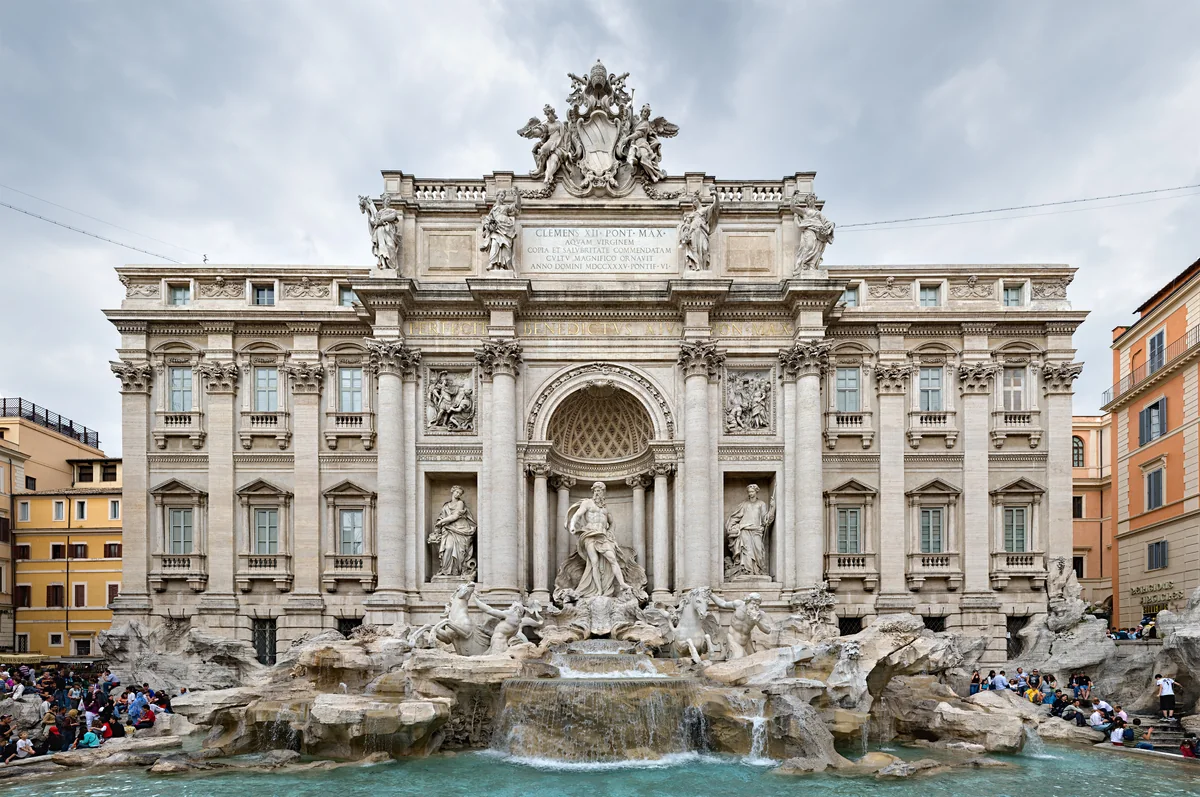
Rome's 900-odd churches contain an art collection whose scale and quality is entirely disproportionate to the institution of the church as it now exists: paintings, sculptures, and architectural interiors of the highest quality are accessible in buildings whose doors are open and whose admission is free. The Basilica di Santa Maria Maggiore, San Luigi dei Francesi (with three paintings by Caravaggio in the Contarelli Chapel), Santa Maria della Vittoria (with the Bernini marble group of the Ecstasy of Saint Teresa), and San Pietro in Vincoli (with the statue of Moses by Michelangelo) are four examples of buildings that contain individual works of art of world significance. The Piazza Navona, built on the site of a Roman stadium and now surrounded by baroque architecture and fountains, and the Trevi Fountain are two of the city's public spaces that represent the baroque project at its most public and theatrical.

Piazzas, Fountains and the Street Life of Rome

Rome functions as a city of outdoor rooms, and the piazzas that punctuate its dense fabric are as important to daily life as any building or monument. The Piazza Navona, constructed on the footprint of a Roman stadium, is the most theatrical of the baroque public spaces, its three fountains arranged along the long axis of what was once a chariot racing track. The Campo de' Fiori, a daily produce and flower market in the morning that becomes one of the city's most animated outdoor bars in the evening, demonstrates the Roman capacity to hold entirely different social functions within a single physical space at different hours. The Pigneto neighbourhood in the east and the Trastevere across the river each carry a distinct social identity built around independent bars, local restaurants, and street life that operates at a human scale missing from the more visited parts of the historic center. The aperitivo hour, observed with seriousness from around six in the evening, involves Aperol or Campari spritz served with a small selection of food in a ritual that is as much about pausing the day as about drinking. The Janiculum hill above Trastevere offers the most complete panoramic view of the city available from ground level, and the cannon fired there each day at noon has been an unbroken Roman civic ritual since 1847. The city's relationship with its own past is expressed not in reverence but in the casual coexistence of ancient, baroque, and modern that characterises every street in the historic center. The Apertura Straordinaria program, which opens the state rooms of private palaces, convent gardens, and archaeological sites not normally accessible to the public, runs across several weekends each year and gives access to a layer of the city that even frequent visitors rarely reach.

More Cities in Italy
Ready to find events in Rome?

Browse concerts, club nights, festivals, cultural events, and more. Book directly with the organizer.

Running an event in Rome? Create a free listing
Browse Events in Rome