
Things To Do in Vaduz Liechtenstein

Discover events, experiences, and everything the city has on offer in Vaduz. Browse the full event calendar or read the guide below.

Things To Do in Vaduz

Discover events, experiences, and everything the city has on offer in Vaduz. Browse the full event calendar or read the guide below.

Capital of a Microstate

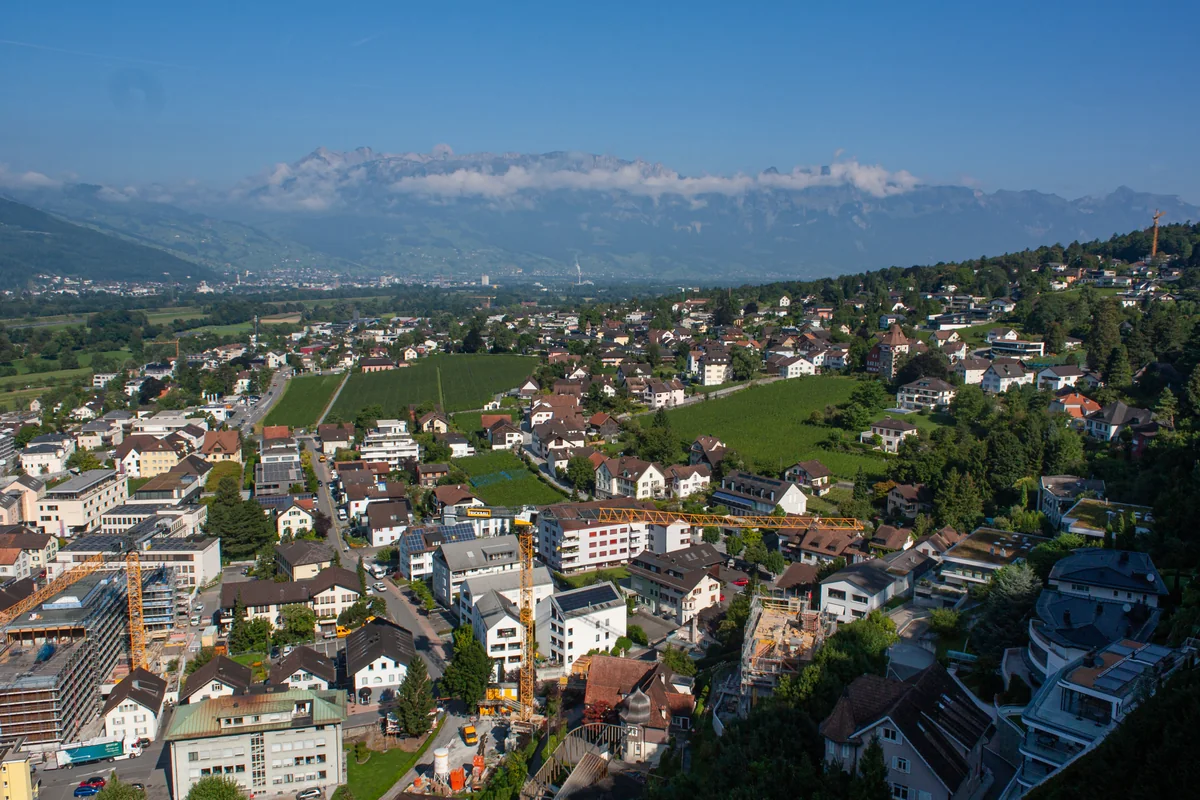
Vaduz is the capital of Liechtenstein, one of the smallest countries in the world — a principality of 160 square kilometres sandwiched between Switzerland and Austria in the Rhine Valley. The city itself is modest in scale, with a main street that functions as the commercial center and a population of around 5,000. What it lacks in size it compensates for with the Vaduz Castle, the 12th-century residence of the reigning prince that sits on a forested hill above the town and is visible from the valley floor, and with a surprisingly strong set of cultural institutions for a city of its dimensions.

Art and Museums

The Kunstmuseum Liechtenstein, a black concrete cube in the town center, holds one of the better collections of modern and contemporary art in the Alpine region, with a strong permanent collection alongside a serious temporary exhibition program. The Liechtenstein National Museum covers the history and natural history of the principality in a suitably compact format. The royal family's own art collection, accumulated over centuries, includes significant Old Masters works and is one of the most important private collections in Europe, though it is exhibited selectively.

Rhine Valley and Outdoor Life

The Rhine Valley in which Vaduz sits is wide, flat, and heavily farmed, with the Alps rising steeply on all sides. The combination of valley floor, forested hillsides, and high Alpine terrain within a very small area gives Liechtenstein a compressed outdoor landscape that supports hiking, cycling, and in winter, skiing at the Malbun resort in the mountains above the valley. The Rhine path, a long-distance cycling and walking route that follows the river from the Alps to the North Sea, passes through Liechtenstein and is at its most pleasant in this section.

The Kunstmuseum, the Prince's Collections and Vaduz's Cultural Institutions

Vaduz, with a population of around 5,700 and serving as the capital of Liechtenstein, sustains cultural institutions whose quality reflects the principality's wealth rather than its size. The Kunstmuseum Liechtenstein, opened in 2000 in a black concrete box designed by Morger, Degelo and Kerez, holds the national art collection alongside a program of temporary exhibitions of international contemporary art that makes it one of the most actively programd small art museums in the Alpine region. The Princely Collections of the House of Liechtenstein, one of the largest and most significant private art collections in the world with works by Rubens, Van Dyck, and Raphael among thousands of other objects accumulated over four centuries, are not permanently on display in Vaduz but portions are exhibited in the Liechtenstein Garden Palace in Vienna and occasionally in Vaduz itself. The National Museum in the old town documents the political and cultural history of the principality from its 1719 establishment through the 20th century in permanent galleries that include the original 1719 charter by which the Holy Roman Emperor elevated the territory to a principality. The Postage Stamp Museum in the center of Vaduz presents the complete philatelic production of Liechtenstein since 1912 in an archive that is visited by collectors from around the world.

Vaduz Castle, the Rhine Promenade and the Town's Daily Character

Vaduz Castle, the residence of Hans-Adam II Prince of Liechtenstein and his family, dominates the skyline of the capital from its promontory 120 metres above the town and is visible from the Rhine plain and the mountains of Switzerland and Austria across the valley. The castle is not open to visitors except on National Day — 15 August — when the Prince traditionally receives his subjects in the castle grounds and invites the population to the grounds for a public celebration that is one of the most accessible royal open days in any European monarchy. The Rhine promenade along the river bank west of the town center, connecting Vaduz to the adjacent municipalities and to the Swiss border crossing at Vaduz-Triesen, provides cycling and walking along the river whose embankment was managed by the principality itself. The vineyards on the slopes immediately behind the town, producing Pinot Noir under the Hofkellerei des Fürsten label, are visible from the main pedestrian street and give the town center an agricultural immediacy unusual for a national capital. The Städtle, Vaduz's main shopping street, has the highest density of jewellery and watch shops per metre of any street in Liechtenstein, reflecting the purchasing power of the international visitors and the principality's role as a luxury goods destination.

The Liechtenstein Trail, Alpine Access and the Principality's Landscape

The Liechtenstein Trail, a 75-kilometre long-distance walking route traversing the entire country from the Rhine delta marshes in the north to the Ruggeller Riet wetland in the south, passes through Vaduz and connects all eleven municipalities of the principality in a route that takes approximately three days to complete and is the most systematic way to understand the landscape, from the valley floor agriculture through the village settlements to the alpine pastures above the treeline. The Drei Schwestern (Three Sisters) ridge directly behind Vaduz provides a half-day hiking destination whose summit at 2,052 metres gives the most complete panorama available from any point above the capital. The Malbun ski resort at 1,600 metres, the principality's only ski area and accessible in 20 minutes from Vaduz, operates with a modest and manageable scale — 23 kilometres of piste — that reflects the principality's approach to its own resources: sufficient but not excessive. The border crossing between Liechtenstein and Austria at Schaanwald, and the Swiss border accessible at multiple points along the Rhine, are unmanned and uncontrolled, reflecting Liechtenstein's membership of the Swiss customs union and its use of the Swiss franc — practical arrangements that underline the depth of integration between the principality and its neighbours.

More Cities in Liechtenstein
Ready to find events in Vaduz?

Browse concerts, club nights, festivals, cultural events, and more. Book directly with the organizer.

Running an event in Vaduz? Create a free listing
Browse Events in Vaduz