
Things To Do in Kaunas Lithuania

Discover events, experiences, and everything the city has on offer in Kaunas. Browse the full event calendar or read the guide below.

Things To Do in Kaunas

Discover events, experiences, and everything the city has on offer in Kaunas. Browse the full event calendar or read the guide below.

Interwar Modernism

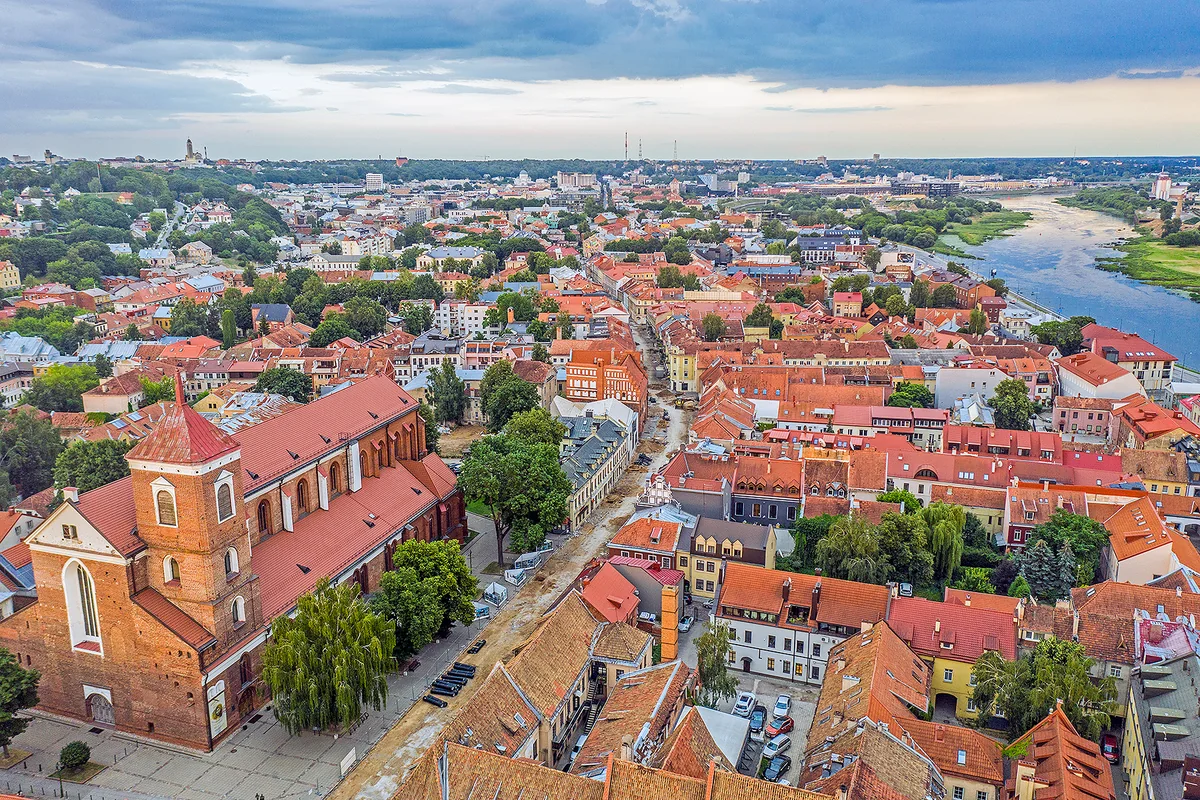
Kaunas was the provisional capital of Lithuania during the interwar period, and the architecture built during those two decades of independence reflects the ambition of a young state eager to express its modernity. The city center contains the highest concentration of Modernist architecture in the Baltic states — white-rendered apartment buildings, civic institutions, and commercial premises built in the 1920s and 1930s in a style influenced by the international Modernism of the period but with a distinctly Lithuanian character. The Old Town, built around a medieval castle and the confluence of the Nemunas and Neris rivers, provides a very different preceding layer.

Arts and Museums

Kaunas has an arts scene that has grown considerably in profile, partly through the city's designation as European Capital of Culture in 2022. The Čiurlionis National Art Museum holds the world's largest collection of works by the early 20th-century Lithuanian painter and composer of the same name, whose mystical, musically influenced canvases are unlike almost anything produced in the same period. The Ninth Fort, a former tsarist fortification on the edge of the city where tens of thousands of Jewish people were killed during the German occupation, is among the most sobering memorial sites in the Baltic region.

Food and the Old Town

The old town of Kaunas, focused on the Town Hall Square — known locally as the White Swan for the building's elaborate Baroque facade — is the most pleasant area for eating and drinking. The surrounding streets have a concentration of good restaurants, wine bars, and cafés that reflects the city's growing reputation as a cultural destination. Lithuanian food in Kaunas leans toward hearty, agricultural cooking — smoked meats, potato dishes, black rye bread, and the beer culture that the country takes seriously — alongside a newer generation of restaurants working with the same local ingredients in lighter and more contemporary ways.

The Old Town, Kaunas Castle and the City's Medieval Heritage

Kaunas's old town, at the confluence of the Nemunas and Neris rivers, is one of the best-preserved medieval town centers in Lithuania, with a market square, 15th-century town hall known as the White Swan for its baroque campanile added in 1771, and a concentration of Gothic churches that document the city's importance as a commercial and administrative center during the medieval period. Kaunas Castle, the only surviving castle from the medieval Lithuanian state and built in the 14th century to defend the confluence of the two rivers, is partially restored and houses a branch of the Kaunas City Museum in a setting whose riverside position and partially ruined state give it a more authentic atmosphere than many fully restored equivalents. The Perkūnas House, a late Gothic red-brick building of the 15th century in the old town that served successively as a Hanseatic trading office, a Jesuit school, and a warehouse, is the finest individual secular Gothic structure in Lithuania. The Church of Vytautas the Great, built in 1400 as a thanksgiving for the Battle of Grunwald, anchors the old town at its southern end above the Nemunas riverbank.

The Modernist New Town, Laisvės Alėja and Kaunas Between the Wars

Kaunas served as the temporary capital of Lithuania from 1920 to 1939, when Vilnius was under Polish administration, and the investment made in state institutions during this period produced a remarkable collection of interwar modernist architecture along Laisvės Alėja — Freedom Avenue — and the surrounding streets. The long pedestrian boulevard, lined with chestnut trees and flanked by interwar buildings in functionalist, Art Deco, and national-romantic styles, is one of the most coherent examples of interwar urban planning in the Baltic states and anchors the New Town (Naujamiestis) district whose architecture was designated as a UNESCO World Heritage Site in 2023 under the category of interwar modernism. The Žaliakalnis (Green Hill) neighbourhood above the New Town, accessed by a funicular from Laisvės Alėja, preserves the residential character of the interwar professional class in wooden and brick houses along tree-lined streets with the most comprehensive collection of interwar domestic architecture in Lithuania.

The Ninth Fort, the Čiurlionis Museum and Kaunas's Cultural Life

The Ninth Fort on the northwestern edge of the city, one of nine 19th-century fortifications built around Kaunas as part of the Russian Empire's western defensive line, became a site of mass execution during the German occupation: approximately 50,000 people, the majority Jewish residents of Kaunas and Jews transported from across western Europe, were killed here between 1941 and 1944. The memorial museum at the site, with the surviving fort structure and a powerful monument by the sculptor Alfonsas Ambrazūnas, is one of the most significant Holocaust memorial sites in the Baltic states. The Mykolas Konstantinas Čiurlionis National Museum of Art holds the world's most comprehensive collection of work by the Lithuanian painter and composer whose symbolist paintings of cosmic and mythological themes, created between 1904 and 1910, are among the most distinctive works of early modernism in eastern Europe and whose musical compositions have been recorded by major international orchestras. The Kaunas Jazz Festival in April is one of the oldest jazz festivals in eastern Europe and a significant cultural event on the Lithuanian calendar.

More Cities in Lithuania
Ready to find events in Kaunas?

Browse concerts, club nights, festivals, cultural events, and more. Book directly with the organizer.

Running an event in Kaunas? Create a free listing
Browse Events in Kaunas