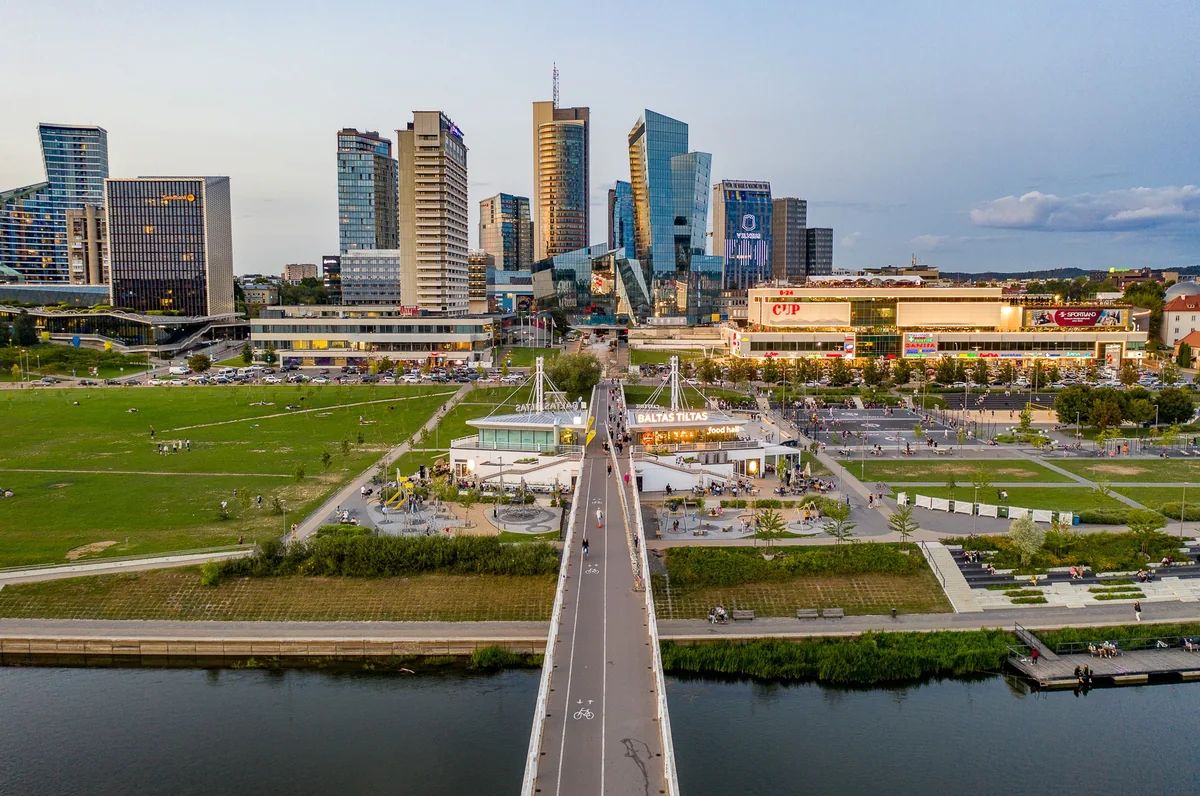
Baroque Vilnius, the Republic of Užupis and the City's Independent Spirit
Vilnius has the largest baroque old town of any city in northern Europe, a UNESCO World Heritage Site whose 1,487 classified buildings span five centuries of architectural development from the medieval foundations of Gediminas Tower through to the 18th-century baroque churches that define the city's skyline. The Church of St Anne, a Gothic red-brick structure so admired that Napoleon allegedly wished to carry it back to Paris on the palm of his hand, stands at the entrance to the Užupis quarter, the most characterful district in the city. Užupis declared itself an independent republic on 1 April 1997, complete with a constitution posted in multiple languages on the wall of Paupio Street that includes the right to be happy, the right to be unhappy, and the right to be unique - and has maintained its identity as an artists' quarter and conceptual republic ever since. The Hill of Three Crosses, above the old town, provides the most comprehensive view of Vilnius from any accessible point in the city, while the Gediminas Tower on the Castle Hill above Cathedral Square contains the National Museum of Lithuania's archaeological collections from the site. The Vilnius Choral Synagogue and the Paneriai Memorial site, where approximately 100,000 people - the majority of them Jewish residents of Vilnius - were killed during the Second World War, together represent a dimension of the city's history whose weight and scale is inseparable from any serious engagement with what Vilnius was and what it has become. The Jewish heritage of Vilnius, which was known as the "Jerusalem of Lithuania" before 1941 and was one of the most significant centers of Jewish religious scholarship and cultural life in eastern Europe, is documented in the Vilna Gaon Jewish State Museum and in the street maps that show the two ghetto districts established during the German occupation. The Trakai Island Castle, 28 kilometres west of Vilnius and set on an island in a lake within a national park, is the most visited historical monument in Lithuania and one of the most photogenic medieval castle sites in the Baltic region, accessible by train and bus from the capital. The Grūtas Park near Druskininkai, a sculpture park of Soviet-era statues removed from public spaces after Lithuanian independence in 1990, offers a deliberately provocative form of engagement with the Soviet period that has no direct equivalent elsewhere in the region. The Vilnius Street Art Festival each August brings international and Lithuanian muralists to walls across the city, creating an outdoor gallery that has made Vilnius one of the most visited destinations for street art in the Baltic region.