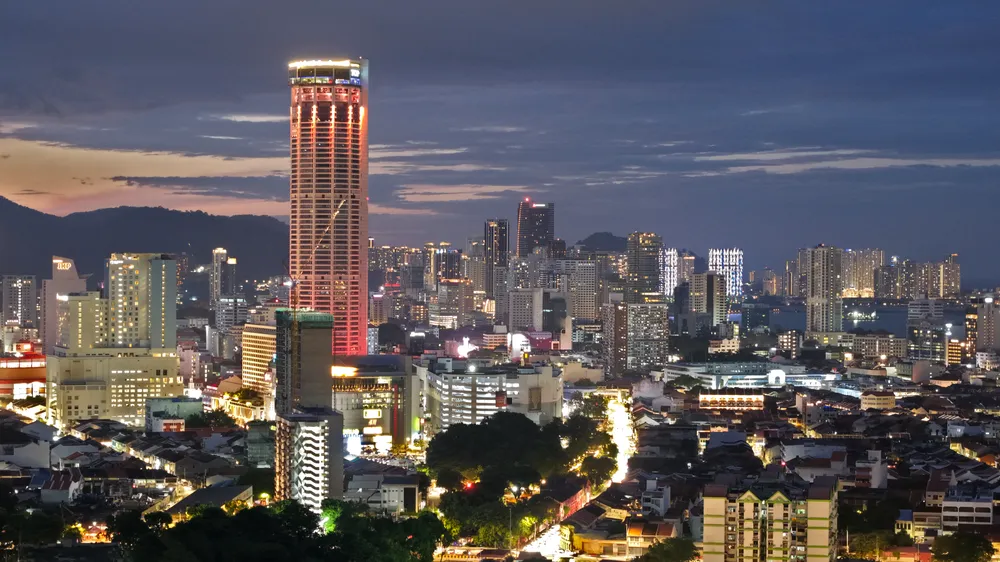
Penang Hill, Kek Lok Si and the Island Beyond the City
Penang Hill, rising 833 metres above George Town and accessible by the funicular railway that has operated since 1923, provides a panoramic view of the island, the Strait of Malacca, and the mainland beyond, along with a climate noticeably cooler than the city below. The hill station at the summit retains a collection of colonial bungalows in a forest setting that gives it a character entirely distinct from the urban heritage of the city below. Kek Lok Si Temple in Air Itam, the largest Buddhist temple complex in Malaysia and one of the most significant in Southeast Asia, is built on a hillside in a series of ascending terraces culminating in the 30-metre bronze statue of Kuan Yin, the Goddess of Mercy, visible from the city and the straits. The Botanical Gardens - the oldest in Malaysia, established in 1884 and known locally as the Waterfall Garden for its natural stream - covers 72 hectares of forest at the foot of Penang Hill and provides the most complete escape from the urban environment available within the city limits. The batik workshops and pewter studios in the Craft Cultural Complex, together with the Chowrasta Market's specialist stalls for Penang street food ingredients, dried goods, and traditional remedies, represent the production and material culture that has supplied the city's distinctive food and craft traditions for generations. The Penang National Park at the northwestern tip of the island, the smallest national park in Malaysia, contains a turtle sanctuary, a floating mosque accessible by boat, and trails through dipterocarp forest to beaches that are accessible only on foot or by sea. The Gurney Drive hawker center, rebuilt after the original was lost to development, remains one of the most visited night market food destinations on the island, drawing both residents and visitors for the char kway teow, Hokkien mee, and cendol that define the Penang culinary identity. The E&O Hotel on Farquhar Street, opened in 1885 and one of the great surviving colonial hotels of Asia, provides a reference point for the city's position as a grand port on the routes between Europe and the Far East.