Things To Do in Kuala Lumpur Malaysia

Discover events, experiences, and everything the city has on offer in Kuala Lumpur. Browse the full event calendar or read the guide below.

Things To Do in Kuala Lumpur

Discover events, experiences, and everything the city has on offer in Kuala Lumpur. Browse the full event calendar or read the guide below.

Skyline and Architecture

Kuala Lumpur's skyline is dominated by the Petronas Towers — twin skyscrapers that held the world height record for six years and remain two of the most photographed structures in Asia. The broader city center is a concentrated demonstration of late-20th-century ambition in glass and steel, with the KLCC park providing a garden counterpoint to the towers above it. The colonial district around Merdeka Square, with its mock-Tudor government buildings and the cricket ground where Malaysian independence was declared, offers a completely different architectural register.

Food Culture

Kuala Lumpur is one of the best cities in the world to eat, and the reason is the combination of Malay, Chinese, and Indian culinary traditions operating simultaneously at a high level. Nasi lemak, char kway teow, roti canai, bak kut teh, and banana leaf rice can all be found in excellent versions within a short distance of each other, often in the same hawker center. The Jalan Alor night food street, the Chow Kit wet market, and the Little India restaurants of Brickfields each give a different window into what the city eats.

Shopping

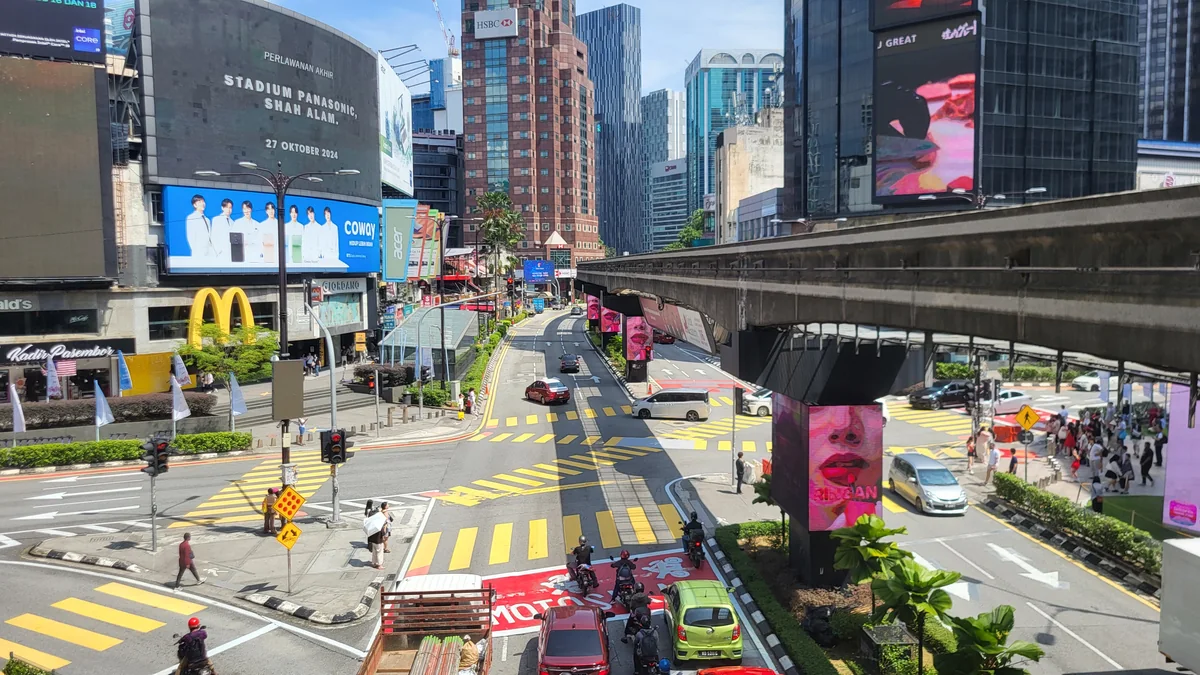
KL has positioned itself as a Southeast Asian shopping hub, with a cluster of large malls around KLCC and Bukit Bintang that includes Pavilion, Suria KLCC, and the Starhill Gallery. The city is also known for its electronics markets — the Low Yat Plaza district has been a destination for technology goods for decades — and for the Kasturi Walk and Central Market area, where Malaysian crafts and souvenirs are sold in a more navigable environment than the street markets.

Religious and Cultural Sites

The Batu Caves, a limestone hill north of the city containing a series of cave temples, are one of the most visited Hindu shrines outside India. The 272 steps to the main temple are guarded by a golden statue that has become as recognisable an image of KL as the Petronas Towers. Within the city itself, the Thean Hou Temple, the National Mosque, and the Jamek Mosque — built at the confluence of the two rivers that gave the city its name — all reflect the genuine religious plurality of Malaysian urban life.

Nightlife and Events

KL has a lively nightlife scene concentrated in the Bukit Bintang and KLCC areas, with rooftop bars, underground clubs, and live music venues operating across a range of styles and budgets. The city's events calendar has grown in ambition, with major international acts now routing through on Asian tours that previously stopped only in Singapore or Bangkok. KL hosts a number of strong annual festivals including a well-regarded food and drink festival and several music events that have developed strong regional followings.

Colonial Heritage, Green Spaces and the City's Character

Kuala Lumpur's colonial district around Merdeka Square contains the most intact collection of British administrative architecture in Southeast Asia, built in a Moorish-Gothic hybrid style that borrowed from the Islamic architectural tradition of the Malay peninsula while using the structural vocabulary of Victorian Gothic. The Sultan Abdul Samad Building, whose copper domes and striped brick clock tower dominate the square, was completed in 1897 and is now the most photographed colonial building in Malaysia. The adjacent Royal Selangor Club, where the city's British administration played cricket on the padang that fronts the square, still operates and the ground remains the most historically resonant green space in the city. Perdana Botanical Garden, formerly the Lake Gardens, is the largest urban park in KL and contains the National Museum, the Bird Park (one of the world's largest free-flight aviaries), and the Butterfly Park within a green setting that is the primary escape from the city's heat and density. The River of Life project, which has cleaned and illuminated the confluence of the Klang and Gombak rivers at the city's historic founding point, has created a new waterfront promenade that reconnects the modern city with the geography that gave it its name. The Petronas Towers' sky bridge, accessible by timed entry ticket, remains the most popular paid attraction in the city and gives the most direct encounter with the scale of the towers from within their structure. The Batu Caves Hindu temple complex north of the city, one of the most visited religious sites outside India, draws its largest crowds during the Thaipusam festival when hundreds of thousands of pilgrims climb the 272 steps in a procession of devotion that is one of the most dramatic public religious events in Southeast Asia. The city's night markets — the Jalan Alor food street, the Chow Kit wet market at dawn, and the Petaling Street night market with its mix of street food, copycat goods, and fresh produce — operate in a register entirely different from the air-conditioned malls and give the city a street-level energy that its international profile does not always convey. The Forest Research Institute Malaysia (FRIM) in Kepong, a 600-hectare research forest with canopy walkways, offers a rare expanse of tropical rainforest accessible within thirty minutes of the city center.

More Cities in Malaysia
Ready to find events in Kuala Lumpur?

Browse concerts, club nights, festivals, cultural events, and more. Book directly with the organizer.

Running an event in Kuala Lumpur? Create a free listing
Browse Events in Kuala Lumpur