Things To Do in Cluj-Napoca Romania

Discover events, experiences, and everything the city has on offer in Cluj-Napoca. Browse the full event calendar or read the guide below.

Things To Do in Cluj-Napoca

Discover events, experiences, and everything the city has on offer in Cluj-Napoca. Browse the full event calendar or read the guide below.

Student City and Creative Energy

Cluj-Napoca is home to the largest university in Romania, and the student population gives the city an energy that belies its relatively modest size. The city center fills with young people from across the country and increasingly from abroad, supporting a dense ecosystem of cafés, bookshops, independent cinema, and creative venues that keep hours and programming genuinely driven by curiosity rather than commercial necessity. Cluj is the kind of place where interesting things are always about to happen.

UNTOLD and Festival Culture

UNTOLD Festival has established Cluj as one of the most significant festival destinations in Europe. Held each August in the grounds of Cluj Arena, it draws hundreds of thousands of visitors to a multi-stage program anchored in electronic and dance music. The city's existing nightlife scene — centered on repurposed communist-era cultural centers and the clubs of the Mică neighbourhood — has grown considerably alongside the festival's rise, creating a year-round culture of events that far exceeds what comparable cities typically support.

Architecture and the Old Town

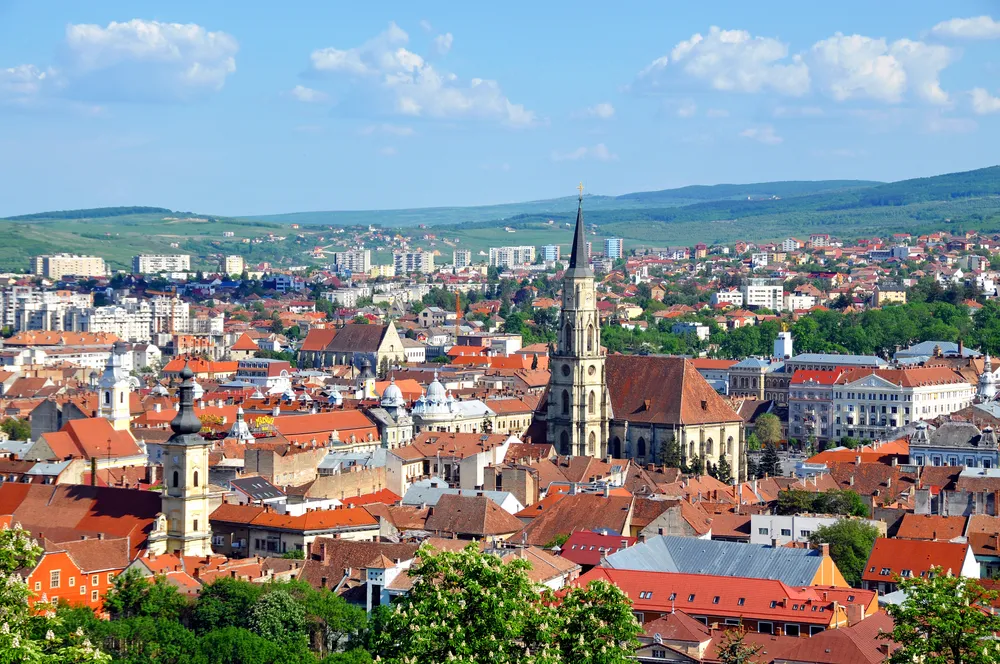
Cluj-Napoca has a layered architectural identity shaped by its position as a city that has belonged to several different states and cultures over the centuries. The old town around Unirii Square is a mixture of Baroque, Gothic, and Austro-Hungarian buildings that accumulated during centuries of Transylvanian history. The city's multicultural past — Romanian, Hungarian, Saxon, Jewish — left physical traces that are still legible in the streets, and the tension between those different claims to the city gives its history a particular texture.

Food and the Growing Restaurant Scene

Cluj has developed one of the most interesting food scenes in Romania, driven partly by its student population and partly by a cohort of chefs and producers who have chosen to stay rather than move to Bucharest. Traditional Transylvanian cooking — based on smoked meats, cabbage, sour cream, and hearty stews — provides the foundation, and a growing number of restaurants are finding ways to work with those traditions rather than simply repeating them. The weekly farmers' market in Unirii Square is worth an hour on any Saturday morning.

Academic Life, TIFF and Cluj's Cultural Renaissance

Cluj-Napoca is the unofficial capital of Transylvania and Romania's second city by economic output, with a population of around 320,000 that includes approximately 80,000 students across its seven universities — a proportion that gives the city an intellectual and social energy unusual for a city of its size. The Transylvania International Film Festival (TIFF), held each June and established in 2002, has become the largest film festival in Romania and one of the most important on the Eastern European circuit, programming international art cinema alongside Romanian productions in a format that uses the historic city center as its venue infrastructure. The Untold Festival, held in the Sports Complex each August and drawing over 350,000 attendees over four days, is one of the largest electronic music festivals in Europe and has transformed the city's international profile since its first edition in 2015. The Babeș-Bolyai University, one of the largest in Romania and operating formally in both Romanian and Hungarian, reflects the city's dual Romanian-Hungarian cultural identity rooted in its Habsburg history as Kolozsvár, the capital of Transylvania.

Transylvanian Heritage, the Apuseni Mountains and the Region Around Cluj

Cluj's position at the center of Transylvania gives it access to a region of extraordinary historical and natural variety. The fortified Saxon churches of the Transylvanian villages — a UNESCO World Heritage Site group of seven medieval fortified churches including Biertan, Viscri, and Prejmer — are accessible within two hours and represent a unique survival of medieval German-speaking village communities whose churches were built as fortresses against Ottoman and Tatar raids and whose physical fabric has been preserved largely intact. The Turda Salt Mine, 30 kilometres south, is one of the most spectacular converted industrial heritage sites in Europe: a 19th-century salt mine whose chambers reach 120 metres underground, now containing a subterranean amusement park, rowing lake, and concert space. The Apuseni Mountains to the west provide caving, hiking, and access to the Scarișoara Ice Cave, one of the largest underground glaciers in Europe, in a karst landscape of remarkable geological interest. The city's 19th-century central market hall, the St Michael's Church — one of the finest Gothic hall churches in Transylvania — and the Tailors' Bastion preserved in the city park together document a medieval urban heritage as rich as any in the region. The Botanical Garden of the Babeș-Bolyai University, founded in 1920 and covering 14 hectares in the city center with over 10,000 plant species, is the most visited public garden in Transylvania and a teaching and research institution whose Japanese garden, rose garden, and greenhouses are accessible to the public throughout the year. The National Museum of Transylvanian History, housed in a neoclassical building on the main square, holds the most comprehensive collection of Transylvanian archaeological and historical material in Romania, from Dacian goldwork through Roman provincial sculpture to medieval and early modern artefacts from the Hungarian and Habsburg periods. The Cluj-Napoca Philharmonic performs at the Palace of Culture, and the city's cafe culture — centered on the Unirii Square and the surrounding pedestrianised streets lined with Central European coffee houses and wine bars — reflects the Habsburg urbanism whose infrastructure still structures daily social life in a city whose architecture announces both Romanian and Hungarian civic ambition simultaneously. The National Theatre of Cluj-Napoca, performing in both Romanian and Hungarian in alternating programs, embodies the linguistic duality that distinguishes Cluj from every other city in Romania.

More Cities in Romania
Ready to find events in Cluj-Napoca?

Browse concerts, club nights, festivals, cultural events, and more. Book directly with the organizer.

Running an event in Cluj-Napoca? Create a free listing
Browse Events in Cluj-Napoca