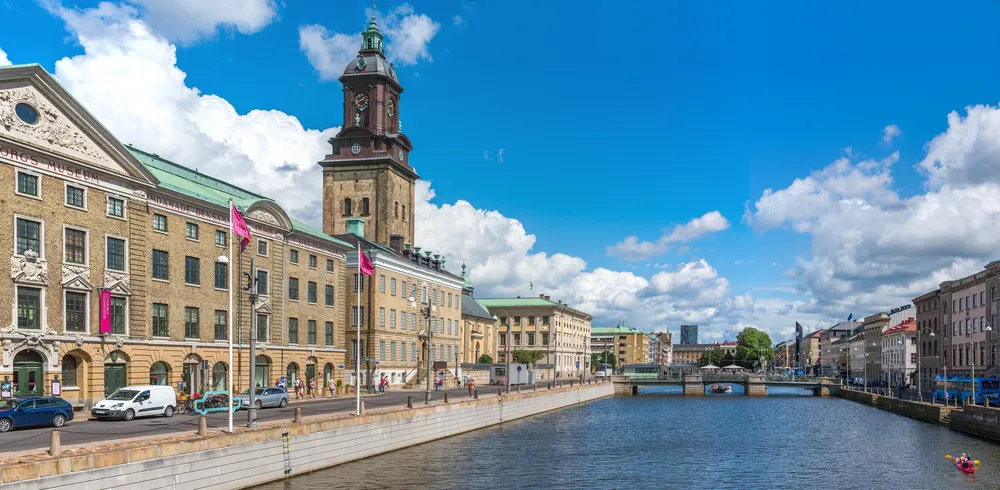
The Liseberg Park, Gothenburg's Museums and the City's Cultural Life
Liseberg, the amusement park opened in 1923 for the city's Gothenburg Exhibition, is the most visited attraction in Scandinavia by attendance and operates a full program from April to October alongside a Christmas market in November and December that draws over three million visitors annually. The park's combination of traditional rides, gardens, and concerts in a setting that respects its own history gives it a character distinct from purpose-built theme parks. Universeum, the national science center adjacent to Liseberg, houses a rainforest ecosystem, ocean shark tank, and space science galleries in a format aimed at children and families that is the most visited science museum in Sweden. The Gothenburg Museum of Art on Götaplatsen, with its Poseidon fountain and the 1920s cultural complex surrounding it, holds significant collections of Scandinavian art and French Impressionism. The Röhsska Museum of Design and Craft, the only specialist design museum in Sweden, presents decorative arts, fashion, and industrial design from East Asia, Europe, and Sweden across a permanent collection and program of temporary exhibitions. The Way Out West music festival in August, one of the most environmentally committed music festivals in Scandinavia, programs alternative rock, pop, and electronic music in Slottsskogen park and draws an audience that reflects Gothenburg's particular investment in independent music culture. The Gothenburg Botanical Garden, the largest botanical garden in Scandinavia with 16,000 plant species across 40 hectares, occupies a site that transitions from formal rock gardens and ornamental beds near the entrance to natural Swedish forest at the far end, providing a range of environments in a single visit. The garden's Japanese valley, rhododendron valley, and tropical greenhouse make it one of the most varied botanical gardens in northern Europe and the most visited outdoor public space in Gothenburg. Slottsskogen, the city's main free public park with a deer enclosure, ponds, and open meadows used for the Way Out West festival, and the Haga neighbourhood's preserved 19th-century wooden houses converted into cafés, vintage shops, and the bakeries that produce the enormous Swedish cinnamon buns for which Haga is locally famous, together constitute the most lived-in and least tourist-facing parts of central Gothenburg and the areas most revealing of how the city actually functions as a place for its residents.