Things To Do in Los Angeles United States

Discover events, experiences, and everything the city has on offer in Los Angeles. Browse the full event calendar or read the guide below.

Things To Do in Los Angeles

Discover events, experiences, and everything the city has on offer in Los Angeles. Browse the full event calendar or read the guide below.

Film, TV, and Entertainment Industry

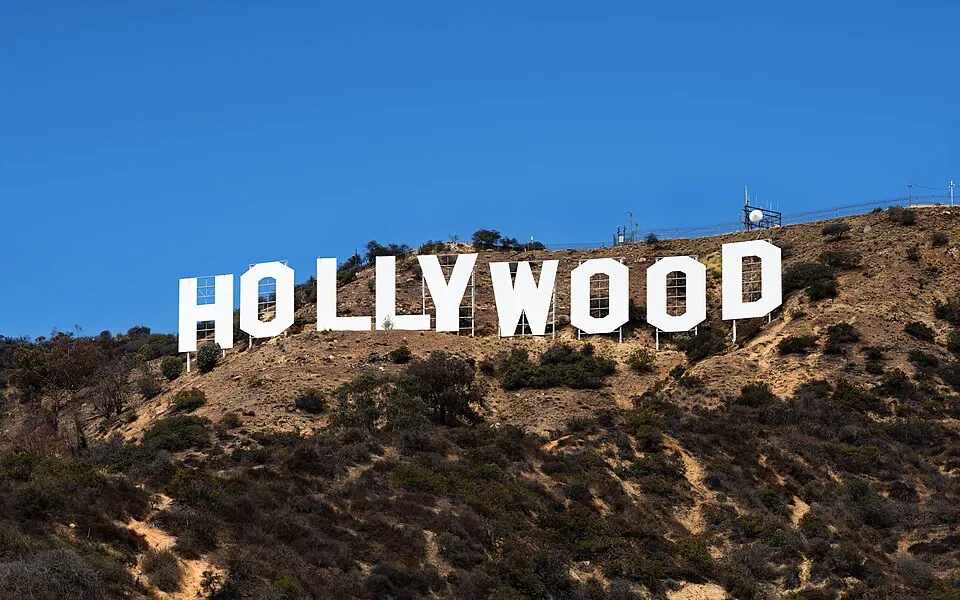
Los Angeles is the center of the global entertainment industry, and that fact shapes the city's culture and geography in ways that are both visible and invisible. Hollywood, Burbank, and the studio lots of Culver City and Century City produce the films and television that circulate worldwide, and the industry's presence creates an economy of agents, writers, producers, and crew that gives the city a population unusually oriented toward storytelling and performance. Studio tours, independent cinemas showing restored and rare prints, and the live taping of television programs are all accessible to visitors with some advance planning.

Beaches and Outdoor Life

The Los Angeles coast runs for more than 70 miles, with beaches at Santa Monica, Venice, El Segundo, Hermosa, and Malibu each having a distinct character. Venice Beach — with its boardwalk, outdoor gym, and the loosely organized civic life of its canal district — is the most visited and the most iconically LA. The Santa Monica pier anchors a beach that is genuinely beautiful when the marine layer burns off, as it usually does by midday. Beyond the coast, the mountains of the San Gabriel and Santa Monica ranges are within 45 minutes of the city center, offering hiking and skiing in the same region.

Food Culture

Los Angeles has one of the best and most diverse food scenes in the world, built on its Mexican, Korean, Japanese, Persian, Ethiopian, and Central American communities alongside a Californian produce tradition that has access to some of the best agricultural land in America. The taco trucks that operate from fixed locations throughout the city represent one end of the quality spectrum; the farmers' markets at Santa Monica, Hollywood, and local venues across the city represent another. The food culture is democratic in a way that many international cities are not — the best versions of many dishes are found in small neighbourhood spots rather than expensive restaurants.

Arts and Museums

Los Angeles has invested significantly in its cultural infrastructure over the past three decades, and the result is a city with genuinely world-class museums. LACMA — the Los Angeles County Museum of Art — holds the largest art collection in the western United States. The Getty Center, perched on a hilltop above the 405 freeway with views across the city to the Pacific, combines an outstanding collection of European art with architecture and gardens that are attractions in their own right. The Broad, the Hammer, and MOCA add further depth to a contemporary art scene that has grown considerably alongside the city's global profile.

Neighbourhoods

Los Angeles is not a single city but a collection of distinct communities loosely connected by freeways. Koreatown has the highest density of Korean businesses outside Korea. Little Tokyo and the broader Sawtelle Japantown area maintain Japanese cultural institutions across generations. East LA and Boyle Heights are the heartland of LA's Mexican-American culture. Silver Lake and Echo Park have an arts and music culture that has fed into the city's broader creative identity for decades. Understanding LA requires choosing a neighbourhood and going deep — the city rewards focus more than breadth.

Architecture, Modernism and the Built Environment

Los Angeles has a modernist architectural heritage that is underappreciated even by its own residents. The Case Study Houses program of the 1940s and 1950s, which commissioned experimental residential designs from architects working with new materials and construction methods for a magazine program, produced a series of buildings scattered across the hillsides of Pacific Palisades and the Hollywood Hills that are among the most influential houses of the 20th century. Several are open for tours, and the combination of glass walls, flat roofs, and integration with the landscape represents a specifically Californian modernism that has been absorbed into the city's visual identity without always being credited. The Disney Concert Hall, designed by Frank Gehry and opened in 2003, anchors the Grand Avenue cultural district downtown with a stainless steel exterior that has become as recognisable a symbol of the city as the Hollywood Sign. The Los Angeles Conservancy runs walking tours of the downtown historic core, whose Beaux-Arts and Art Deco buildings from the 1920s and 1930s are the finest concentration of that period's commercial architecture in California. The Bradbury Building on Broadway, completed in 1893 with a skylit iron-and-glass interior that has appeared in dozens of film productions, remains one of the most remarkable interior spaces in the American West. The city's sprawl means that its architectural heritage is distributed rather than concentrated, but the reward for following it across the metropolitan area is a picture of cultural ambition that the city's film-centered reputation consistently overshadows. The ongoing development of the Grand Avenue cultural corridor downtown, anchored by the concert hall and the planned expansion of the adjacent county museum of art, represents the most deliberate attempt yet to create a concentrated cultural district in a city whose cultural life has historically been distributed across its vast geography rather than gathered in a single center.

More Cities in United States
Ready to find events in Los Angeles?

Browse concerts, club nights, festivals, cultural events, and more. Book directly with the organizer.

Running an event in Los Angeles? Create a free listing
Browse Events in Los Angeles