
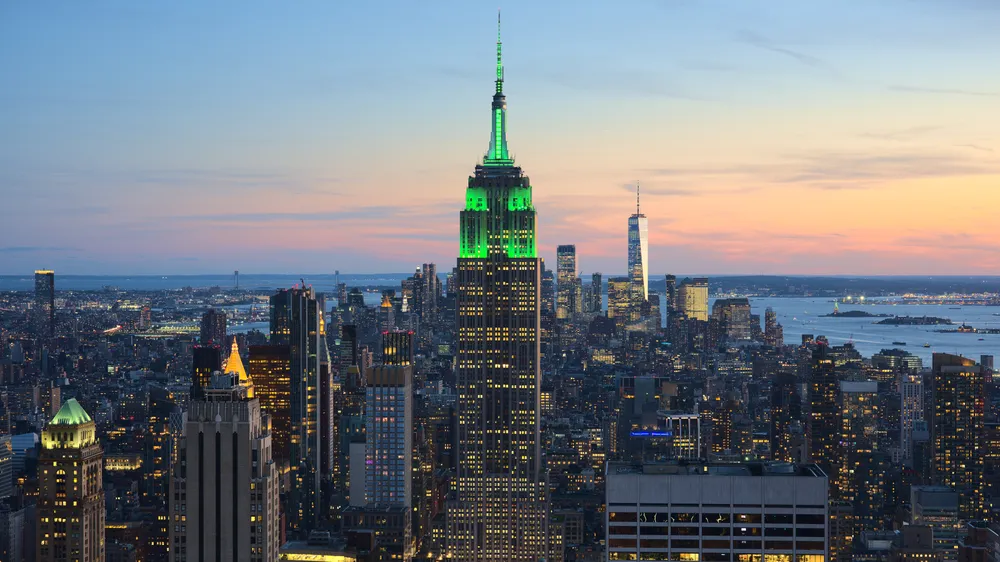
Things To Do in New York City United States

Discover events, experiences, and everything the city has on offer in New York City. Browse the full event calendar or read the guide below.

Things To Do in New York City

Discover events, experiences, and everything the city has on offer in New York City. Browse the full event calendar or read the guide below.

Arts, Culture and the World's Museums

New York City's cultural infrastructure is the largest and most diverse of any city in the world: the Metropolitan Museum of Art alone holds over two million objects spanning five thousand years of human civilisation, and it shares the city with the Museum of Modern Art (MoMA), the Guggenheim, the Whitney Museum of American Art, the American Museum of Natural History, the Frick Collection, the Brooklyn Museum, and dozens of significant independent institutions. Broadway is the defining center of English-language theatre, where a production's commercial and critical success determines its international reputation and export to the West End. Lincoln Center for the Performing Arts houses the Metropolitan Opera, the New York Philharmonic, the New York City Ballet, and the Juilliard School within a single campus. The city's gallery district in Chelsea, with over 200 commercial galleries concentrated in a small area, is the primary market for contemporary art globally.

Food, Neighbourhoods and Culinary Diversity

New York's food culture reflects its history as the primary port of entry for successive waves of immigration, each of which left a culinary deposit that has persisted and evolved in the city's neighbourhoods. The bagel, the New York slice of pizza, the pastrami on rye at a deli counter, dim sum in Flushing or Manhattan's Chinatown, jerk chicken on Flatbush Avenue, tacos in Jackson Heights, and the contemporary fine dining scene across all five boroughs constitute a food landscape that could not exist in a less demographically complex city. The New York slice, a large triangle of hand-tossed pizza eaten folded in half while walking, is one of the most specific and least replicable food items in the world: its character depends on the water, the flour, the coal or gas oven, and the pace at which it is consumed. The city has more Michelin-starred restaurants than almost anywhere except Tokyo.

Business, Finance and the Global Economy

New York is the financial capital of the world: the New York Stock Exchange and NASDAQ together represent the largest equities market by total value anywhere on earth, and the concentration of investment banks, hedge funds, private equity firms, and financial services companies in Midtown Manhattan and the Financial District constitutes an economic density matched nowhere outside of London. Wall Street is both an address and a concept that has shaped global capitalism for two centuries. The city is also the headquarters of the United Nations, and the concentration of diplomatic missions and international organizations gives it a geopolitical significance beyond its economic role. The World Trade Center rebuilt on the site of the September 11 attacks includes a museum, a memorial, and one of the tallest buildings in the western hemisphere.

Sport, Stadiums and Fan Culture

New York supports major professional franchises in every American sport, and the density of options means that the city's sporting calendar is effectively year-round. The Yankees and the Mets are baseball's two New York franchises, their rivalry a cultural marker rather than purely a sporting one. The NFL's Giants and Jets share the MetLife Stadium in New Jersey. The Knicks at Madison Square Garden are one of basketball's most storied franchises, the Garden itself being the most famous sports arena in the world by reputation. The New York Marathon in November, run through all five boroughs, is the largest marathon on the planet by field size and one of the defining mass-participation sporting events anywhere. The US Open tennis at Flushing Meadows in late August and early September is one of the four Grand Slam events.

Boroughs, Neighbourhoods and the City Beyond Manhattan

New York's neighbourhood character matters as much as its landmark attractions, and the outer boroughs contain communities distinct enough to function as cities in their own right. Brooklyn's transformation over the past two decades has made Williamsburg and Bushwick into global reference points for a creative and food culture that has been replicated across the world, but the borough also holds the Brooklyn Botanic Garden, the Brooklyn Museum with one of the most significant art collections on the east coast, and Coney Island at its southern tip. Flushing in Queens is one of the most significant Chinese and Korean commercial districts outside Asia, and the food courts of its indoor malls represent Chinese regional cooking of a quality and variety unavailable in most western cities. The Bronx contains the New York Botanical Garden, one of the great botanical institutions in the world, and the Bronx Zoo, the largest metropolitan zoo in the United States. Astoria in Queens maintains a Greek community of long standing with restaurants and cultural institutions that reflect decades of continuous occupation. The Staten Island Ferry, free as part of the public transport network, gives the harbour crossing and the view of the Lower Manhattan skyline that no paid attraction can replicate. The city's neighbourhood character is not static: every decade produces new concentrations of specific immigrant communities, specific creative industries, and specific food cultures that shift across the boroughs in patterns that make long-term familiarity with New York more rewarding than any single visit can be.

More Cities in United States
Ready to find events in New York City?

Browse concerts, club nights, festivals, cultural events, and more. Book directly with the organizer.

Running an event in New York City? Create a free listing
Browse Events in New York City