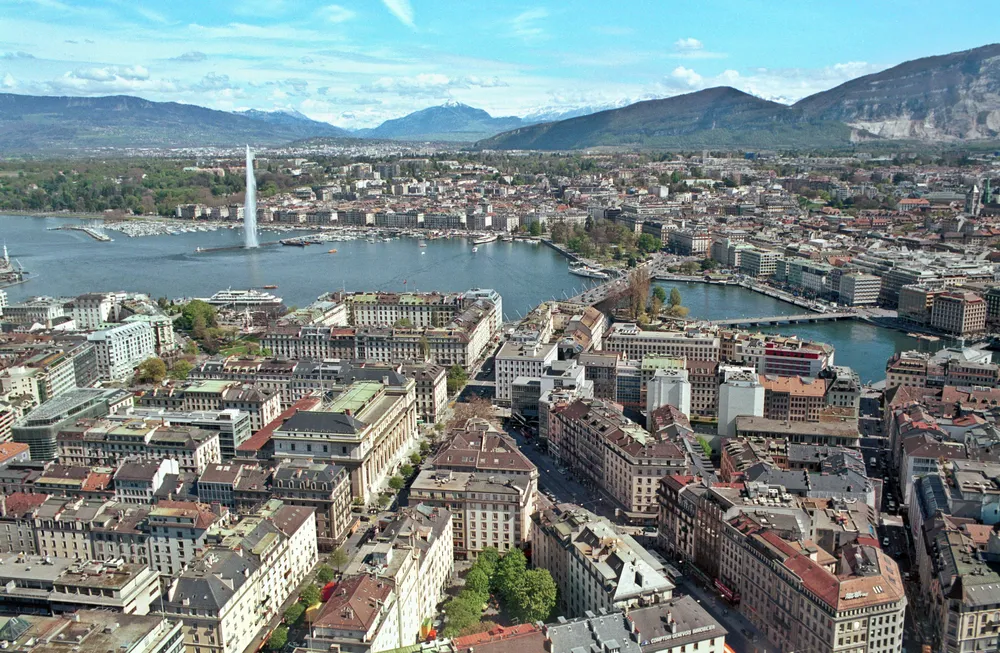
International Geneva, the Lake, and the City Beyond the Institutions
Geneva's identity as the headquarters of the International Red Cross, the World Health Organization, and dozens of other international bodies gives it a diplomatic and institutional weight entirely disproportionate to its population of around 200,000 people. The Palais des Nations, the European headquarters of the United Nations and the largest multilateral diplomatic venue in the world, can be visited on guided tours that give access to the Assembly Hall and the corridors through which much of the 20th century's international law and humanitarian framework was negotiated. The International Red Cross and Red Crescent Museum is one of the finest humanitarian history museums in existence, presenting the founding of the movement by Henry Dunant after the Battle of Solferino and the subsequent development of international humanitarian law through immersive exhibitions of genuine power. Lake Geneva itself, the largest lake in western Europe, provides the city's most democratic public space: the Jet d'Eau, the 140-metre water jet visible from across the city, operates as an unofficial civic symbol, while the lakeside promenades from the Jardin Anglais through to the Parc La Grange offer free access to one of the finest urban lakescapes in Europe. The old town quarter on the hill above the lake, with St Peter's Cathedral and the Maison Tavel, the oldest house in the city, provides a historic core whose scale and preservation contrast sharply with the city's international and financial character. The Carouge neighbourhood, historically a separate Sardinian-administered town and now the most characterful quarter of greater Geneva, has a Mediterranean street pattern of courtyards and arcaded buildings quite unlike the rest of the city and sustains the highest density of independent shops, artisan studios, and neighbourhood restaurants in the area. The Musée d'Art et d'Histoire, the largest fine arts museum in Switzerland, holds collections from Egyptian antiquities through to 20th-century Swiss art in a 1910 Beaux-Arts building that is itself a significant piece of the city's architectural heritage. The Patek Philippe Museum in the Plainpalais district holds the most comprehensive collection of antique timepieces and horological history in Switzerland, spanning five centuries of watchmaking in a city whose watch industry has defined the global understanding of precision craftsmanship. The city's concentration of auction houses, particularly Christie's and Sotheby's Geneva, places it at the center of the international market for fine watches, jewellery, and art. The Plainpalais district, home to the university, the Musée d'Art et d'Histoire, and a large open square that hosts a flea market on Wednesdays and Saturdays, is the most neighbourhood-rooted part of central Geneva and the area where the city's student and cultural life is most concentrated. The MAMCO contemporary art museum, housed in a former factory building in the same district, is the largest contemporary art museum in Switzerland and programs exhibitions of international significance that are frequently overlooked by visitors focused on the city's institutional heritage. The Bains des Pâquis, a public bathing establishment on a pier in the lake near the central station, serves as a social gathering place for Geneva residents of every background from May to September and in winter operates a hammam and fondue service on the same jetty.